

RJ45 Wall Plates and Grounding for Reliable Ethernet Setup
What Is an RJ45 Wall Plate and Why Does It Matter for Your Network?
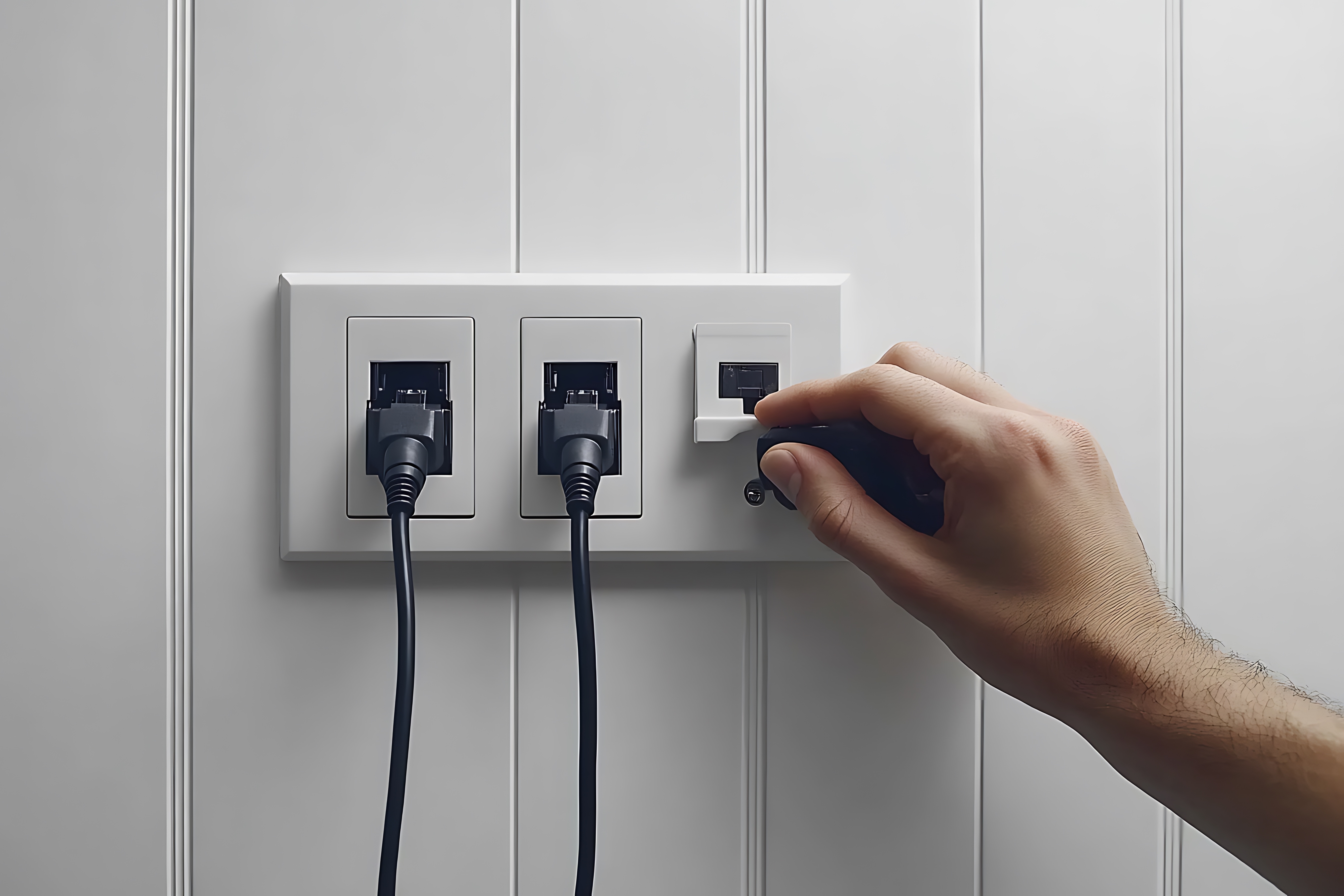
If you have ever looked at a finished home office or server room and noticed those clean, flush-mounted Ethernet ports built right into the wall, that is an RJ45 wall plate doing its job. It is one of those components that most people overlook until they are mid-installation, pulling cable through walls and suddenly realizing they need a professional-looking termination point. An RJ45 wall plate is essentially a faceplate that mounts into a standard electrical wall box and holds one or more keystone jacks -- those snap-in modules that accept your Ethernet cable on one side and your patch cord on the other. The result is a clean, organized, and permanent network port that does not have cables snaking across your floor or dangling from a desk. Whether you are wiring a single home office or outfitting an entire commercial space, understanding how these components work and what to look for is the difference between a setup that holds up for years and one that causes problems you will spend hours troubleshooting later.
How RJ45 Wall Plates Work: The Basic Mechanics
The setup is simpler than it looks, which is probably why so many people get intimidated by the terminology and then figure it out in about twenty minutes. Your structured cabling run -- typically Cat5e, Cat6, or Cat6A -- terminates at the back of a keystone jack using either a punch-down tool or a toolless mechanism depending on the jack style. That keystone jack then snaps into the wall plate frame. On the front, you plug in a standard RJ45 patch cable that connects to your device. The wall plate itself is just the housing that holds everything together and mounts cleanly against your drywall. Most plates come in single-port, dual-port, or higher-density configurations, so you can plan your cable runs accordingly. The keystone jack is where the actual signal performance lives -- that is where your cable pairs get terminated and where factors like insertion loss, crosstalk, and return loss become relevant if you are running high-speed applications. A poorly terminated jack or a cheap wall plate with loose tolerances can introduce signal degradation that your speed test will definitely notice.
Grounding Your RJ45 Wall Plate: Why It Is Not Optional
This is the part that gets skipped way too often, especially in DIY installations. Grounding is not just a recommendation for industrial environments -- it matters in residential and commercial setups alike, particularly when you are running shielded Ethernet cable like F/UTP or S/FTP. When you use shielded cable, that shielding needs a path to ground, otherwise it can actually work against you, acting as an antenna for interference rather than a barrier against it. Shielded wall plates and keystone jacks with metal housings allow that shield continuity to carry through to your grounding point at the patch panel or switch. An improper or missing ground in a shielded system can cause noise, intermittent drops, and a general headache that is surprisingly hard to diagnose without proper testing equipment. Even in unshielded systems, using metal or grounded wall plates in environments with significant EMI -- near power runs, HVAC equipment, or industrial machinery -- adds a meaningful layer of protection. The bottom line: do not skip the grounding step, and make sure your wall plate and keystone jacks are rated and designed to support it.
Key Advantages of Using RJ45 Wall Plates in Your Network Setup
There are genuine, practical reasons professionals and serious home users choose structured cabling with wall plates over running patch cables directly or using surface-mount adapters. Here are the core benefits worth knowing:
- Clean cable management that eliminates floor-level tripping hazards and clutter
- Professional, permanent appearance that works in home offices, conference rooms, and commercial spaces
- Protection for cable terminations that reduces wear from repeated plug-and-unplug cycles
- Easier troubleshooting since each port is labeled and static, not a moving target
- Scalability so you can add ports or upgrade keystone jacks without tearing up your cable runs
- Compatibility with standard keystone jacks for Cat5e, Cat6, Cat6A, and even fiber or AV applications
That last point is worth emphasizing. A good wall plate system is modular. You invest in the structured cabling and wall plates once, and then you can swap in upgraded keystone jacks as your bandwidth needs grow without touching a single wire in the wall. That is the kind of long-term thinking that saves real money over time.
Common Drawbacks and Limitations to Know Before You Buy
No product category is perfect, and wall plates are no exception. The installation requires some comfort with wall fishing, punch-down termination, and basic low-voltage work. If your walls are concrete, tile, or otherwise difficult to penetrate, the process gets significantly more involved. There is also the issue of planning -- running cable to the wrong location or underestimating port count is a frustrating and time-consuming mistake. On the product side, cheap wall plates with poor keystone retention or inconsistent port alignment can cause patch cables to sit at odd angles or fail to lock properly, which eventually causes connectivity issues. And in shielded setups, mismatched components -- using an unshielded keystone jack with shielded cable, for example -- will undermine your entire investment in higher-grade cabling. The fix for most of these drawbacks is straightforward: plan carefully, use matched components, and buy from a supplier that maintains consistent quality standards.
Choosing the Right RJ45 Wall Plate: What to Look For
Not all wall plates are built to the same standard, and the differences matter more than the price gap suggests. Here is what to evaluate before you commit to a product:
- Port count that matches your planned cable runs with at least one or two ports of buffer capacity
- Keystone compatibility -- confirm the plate accepts the specific keystone jacks you intend to use
- Shielded versus unshielded construction depending on your cable type and environment
- Material quality with solid plastic or metal construction that resists cracking under stress
- Standard gang sizing -- single or dual gang to match your existing wall boxes
- Label windows for port identification, especially important in multi-port deployments
The wall plate itself is relatively low cost in the overall project, but choosing poorly here creates ongoing frustration. Spending a little more for a product with proper tolerances, solid keystone retention, and clean port alignment is always the right call.
Installation Tips for a Clean and Reliable Ethernet Wall Plate Setup
A clean install comes down to preparation more than skill. Before you even pick up a punch-down tool, measure your cable runs carefully and leave at least twelve to eighteen inches of slack inside the wall box -- you will need it for termination and any future re-termination. Strip the cable jacket only enough to reach each pair, and maintain the twist in each pair as close to the termination point as possible. Untwisting pairs more than half an inch introduces crosstalk that compounds over longer runs. Use a proper punch-down tool rather than a screwdriver, because proper seating of the conductor into the insulation displacement contact is what creates a reliable electrical connection. After termination, snap the keystone jack firmly into the wall plate, verify it is seated flat and secure, then mount the plate to the wall box with the appropriate screws. Test each port with a cable tester before patching it into your switch -- catching a miswired pair at installation saves significant rework time later.
RJ45 Wall Plates in Different Environments: Home, Office, and Commercial
The fundamentals are the same across environments, but the priorities shift depending on scale and use case. In a home setting, the primary concerns are aesthetics, simplicity, and enough ports to handle current and near-future device counts. Dual-port wall plates in neutral colors tend to blend well with residential spaces. In office environments, density and labeling become more important -- you might want four-port or keystone loaded plates that support multiple runs per location. Commercial and industrial settings introduce additional concerns around shielding, environmental durability, and compliance with structured cabling standards like TIA-568. In any environment with significant electromagnetic interference -- manufacturing floors, equipment rooms, data closets -- shielded wall plates paired with shielded cable and properly grounded infrastructure are the baseline, not an upgrade. Matching the product to the environment from the start prevents retrofitting costs down the road.
Why Monoprice Is the Smart Choice for RJ45 Wall Plates and Ethernet Infrastructure
When you are speccing out a structured cabling project -- whether it is a single room or an entire building floor -- the quality of every component in the chain matters, and so does the cost of getting those components right. Monoprice delivers on both without forcing a compromise between the two. Their RJ45 wall plates and keystone jacks are built to consistent tolerances, designed for clean installs, and priced in a way that makes doing the job right financially accessible even on tighter project budgets. For integrators managing multiple installs or homeowners wiring their first structured setup, the value proposition holds up at every level. You can trust Monoprice RJ45 wall plates and Ethernet networking solutions to deliver the performance and reliability your infrastructure demands without the inflated margins that come with other brands. That is the kind of buying decision that makes sense the first time and continues making sense every time you need to expand your network.
Frequently Asked Questions About RJ45 Wall Plates and Ethernet Grounding
What is the difference between a shielded and unshielded RJ45 wall plate?
A shielded wall plate has a metal housing that maintains the shield continuity of shielded Ethernet cable through the termination point, which helps block electromagnetic interference. An unshielded wall plate uses plastic construction and is suitable for standard UTP cable runs in typical residential or low-interference office environments.
Do I need a special tool to install an RJ45 keystone jack?
Most standard keystone jacks require a punch-down tool to properly seat the conductors into the insulation displacement contacts. Some manufacturers offer toolless keystone jacks that use a cap mechanism instead, which can speed up installation and reduce the need for specialized tools on smaller projects.
Can I use a Cat6 keystone jack in a wall plate designed for Cat5e?
Yes, in most cases. Keystone jacks follow a standard form factor that allows them to snap into any compatible keystone wall plate regardless of cable category. However, you should always verify the specific wall plate accepts standard keystone form factor jacks before purchasing.
How many ports should I install per room?
A minimum of two ports per room is a common professional recommendation, with four ports preferred in home offices, media rooms, or any space where multiple devices may need wired connections simultaneously. Planning for more ports than you currently need is almost always the right decision.
Does grounding really affect Ethernet performance in a home setup?
In a standard home environment with unshielded cable, grounding the wall plate has minimal performance impact. However, if you are running shielded cable or have appliances and wiring nearby that generate electromagnetic interference, proper grounding of shielded components is important for maintaining signal integrity.
What cable categories are compatible with standard RJ45 wall plates?
Standard RJ45 wall plates are compatible with keystone jacks rated for Cat5e, Cat6, and Cat6A cabling. The wall plate itself is category-agnostic since the performance rating lives in the keystone jack and cable, not the faceplate housing.
How do I test an RJ45 wall plate after installation?
Use a cable tester or network cable tester to verify continuity and correct wiring on all eight conductors after punch-down termination. More advanced field testers can certify the channel to TIA standards and identify specific issues like crossed pairs, split pairs, or excessive return loss.
Can RJ45 wall plates support gigabit and multi-gigabit Ethernet?
Yes, provided the keystone jacks and cable are rated appropriately. Cat6 supports Gigabit Ethernet up to 100 meters and 10 Gigabit Ethernet at shorter distances, while Cat6A supports 10 Gigabit Ethernet at full 100-meter runs. The wall plate itself does not limit speed as long as the jacks and cable are the correct category.
What is the standard color for RJ45 wall plates in residential installations?
White and ivory are the most common colors for residential RJ45 wall plates as they match standard electrical outlet covers and blend with typical wall colors. Many manufacturers also offer almond, black, and gray options to match different decor preferences or commercial environments.
Is it difficult to upgrade keystone jacks in an existing wall plate?
Upgrading keystone jacks in an existing wall plate is generally straightforward. Most keystone jacks release from the wall plate by pressing a retention tab, allowing you to swap in a higher-category jack without disturbing the wall plate mounting or running new cable, assuming the existing cable supports the upgraded performance specification.


