

RG316 Coaxial Cable: Specs, Uses, and Key Benefits
What Is RG316 Coaxial Cable and Why Does It Matter?
If you have spent any time working with RF systems, wireless equipment, or test and measurement setups, you have probably run into RG316 coaxial cable at some point. It is one of those components that does not get a lot of fanfare, but it handles a surprisingly important job. RG316 is a flexible, miniature 50-ohm coaxial cable designed for high-frequency signal transmission in space-constrained environments. It shows up in antenna assemblies, GPS systems, handheld radio equipment, lab instrumentation, and a wide range of defense and commercial RF applications. The small diameter and flexibility make it practical where bulkier coax just cannot go, and it holds up well in environments that would stress a lesser cable. If you are evaluating coaxial cable options for an RF project, this is worth understanding properly before you commit to anything.
Core Specifications of RG316 Coaxial Cable
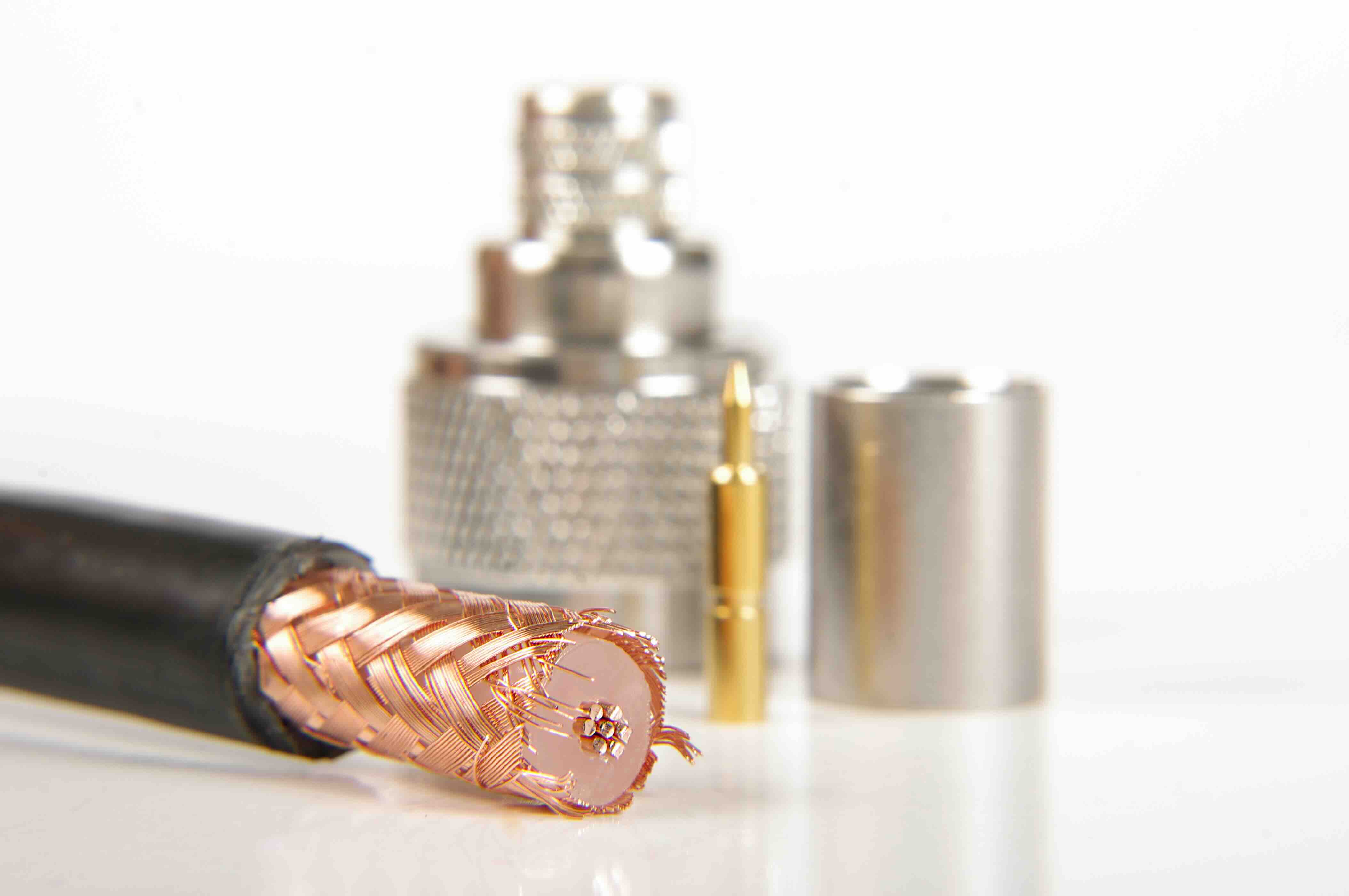
Getting into the actual specs helps frame what RG316 can and cannot do. The cable uses a 26 AWG solid silver-plated copper center conductor, which contributes to both signal integrity and flexibility. Surrounding the conductor is a solid PTFE dielectric, which is a fluoropolymer material known for low signal loss and strong performance across temperature extremes. The outer braid is silver-plated copper, and the jacket is typically made from FEP, which is another fluoropolymer that resists heat, chemicals, and mechanical abrasion. The nominal impedance is 50 ohms, which is standard for RF and microwave applications. The cable has a nominal outer diameter of roughly 2.5 mm, making it genuinely compact. Frequency handling goes up to 3 GHz in many practical applications, though some specifications list usable range pushing higher depending on the assembly quality and connectors used. Maximum operating temperature typically reaches 200 degrees Celsius, with a low end around minus 65 degrees Celsius. These are real performance numbers that reflect why RG316 is used in demanding environments.
How RG316 Coaxial Cable Works
At its core, coaxial cable works by transmitting an RF signal through the center conductor while the outer braid serves as both a ground return and a shield against electromagnetic interference. The dielectric material separating those two conductors is what controls the electrical characteristics of the cable, including impedance and signal velocity. With RG316 specifically, the PTFE dielectric provides a velocity of propagation around 69.5 percent, which matters when you are calculating cable length for phase-sensitive applications. The silver plating on the conductor and braid reduces resistive losses at high frequencies because RF signals tend to travel along the surface of a conductor rather than through its entire cross section. This is called the skin effect, and silver plating directly addresses it. The FEP outer jacket then protects the structural integrity of the whole assembly without adding much bulk. Everything about the construction is deliberate and functional for RF performance.
Key Advantages of Using RG316 in Your Application
There are some legitimate reasons engineers and installers keep coming back to RG316. It is not just habit. The cable brings a real combination of benefits that are hard to match at its size and price point.
- Compact diameter makes routing through tight enclosures and connector-dense panels straightforward
- Excellent flexibility allows repeated bending without structural failure in the dielectric or braid
- PTFE dielectric delivers low insertion loss compared to polyethylene-based alternatives at similar frequencies
- Wide temperature range suits both cryogenic lab environments and high-temperature industrial installations
- FEP jacket offers chemical resistance useful in harsh or corrosive field environments
- Silver-plated conductors extend usable frequency range and reduce resistive loss at microwave frequencies
- Widely available in pre-terminated assemblies, saving fabrication time in volume deployments
That flexibility point deserves emphasis. In RF work, cables that crack or develop intermittent faults under mechanical stress are a real problem. RG316 handles repeated flexing considerably better than many alternatives of comparable diameter, which matters in handheld equipment or any assembly that gets moved regularly.
Common Drawbacks and Limitations Worth Knowing
No cable is perfect for every situation, and RG316 has limitations that are worth being clear about. The most significant one is insertion loss over longer cable runs. Because the cable is physically small, its conductor and dielectric dimensions result in higher attenuation per unit length compared to larger-diameter coax like RG58 or RG213. At 1 GHz, you might see attenuation somewhere around 0.66 dB per foot depending on assembly quality and temperature, which adds up quickly if you need a multi-foot run. For short interconnects of a few inches to a few feet, this is rarely a concern. For long cable runs carrying weak signals, it becomes a real design constraint. Power handling is also limited. RG316 is not intended for high-power RF transmission and should not be used in applications pushing significant wattage through the cable. It was designed for signal-level work. Keep those constraints in mind when you are matching cable selection to your system requirements.
Common Applications Where RG316 Excels
RG316 earned its reputation by performing well in a specific category of applications where compactness and flexibility outweigh the need for long-distance, low-loss runs. Military and defense electronics lean on it heavily because the wide temperature range and chemical resistance align with field deployment requirements. GPS receiver assemblies use it for antenna connections where the short runs minimize attenuation concerns entirely. Test and measurement setups benefit from the precision of its electrical characteristics and its compatibility with standard SMA and MCX connectors. Wireless infrastructure equipment, particularly where internal routing between boards and antennas is required, also sees heavy use of RG316. In medical electronics and aerospace avionics, the combination of low outgassing from PTFE and FEP materials along with compact size makes it a preferred interconnect solution. If your application involves short RF signal paths in demanding environments, RG316 is genuinely well-suited for the job.
RG316 vs. Similar Coaxial Cable Types
Understanding where RG316 sits relative to similar cables helps clarify when to choose it and when to consider an alternative. RG174 is a common comparison point. It shares a similar small diameter but uses a stranded center conductor and a polyethylene dielectric, resulting in higher loss and a narrower temperature range. RG178 is even smaller than RG316 and handles higher temperatures, but at the cost of greater attenuation and reduced power handling. RG58, by contrast, is a larger 50-ohm cable that offers lower attenuation over longer runs but sacrifices the flexibility and compact footprint that define RG316. LMR-100 is another comparison that comes up in antenna work. It offers lower loss than RG316 at matched frequencies but lacks the same temperature range and chemical resistance. The decision usually comes down to run length, operating environment, and whether physical flexibility is a hard requirement in the installation.
Practical Tips for Working with RG316
A few practical considerations make a meaningful difference when you are working with RG316 in the field or at a workbench. Always verify connector compatibility before building or ordering assemblies, since the small outer diameter requires connectors specifically sized for RG316 rather than standard RG58-class fittings. When terminating by hand, the thin braid requires patience and precision to avoid fraying or shorts that introduce impedance discontinuities. Minimum bend radius matters more with miniature coax than with larger cables, so avoid sharp bends or kinks that could distort the dielectric and affect signal integrity. For phase-sensitive applications, specify cable assemblies with phase-matched or phase-stable construction rather than assuming standard RG316 will meet tight phase tolerances. If you are procuring in volume, verify that your supplier uses silver-plated conductors rather than tin-plated, since the difference affects high-frequency performance in a measurable way. Small details matter in RF work, and RG316 is a cable where construction quality directly translates into system performance.
Why Monoprice Is a Smart Source for Your RF Cable Needs
When it comes to sourcing coaxial cable and RF assemblies, the supplier matters as much as the specification. Monoprice has built a well-earned reputation for delivering high-performance connectivity products at pricing that makes sense for both individual engineers and procurement teams managing large-scale deployments. The same value-driven philosophy that applies to HDMI cables, networking infrastructure, and AV equipment carries directly into RF and coaxial products. You get consistent build quality, reliable specifications, and the confidence that comes from working with a supplier who has been a trusted name in the connectivity category for years. If you are building out a lab setup, equipping a field installation, or stocking a production environment with reliable RF interconnects, sourcing from Monoprice coaxial cable and RF connectivity solutions gives you a straightforward path to quality without the overhead of premium brand pricing. That combination of technical credibility and accessible cost is exactly what makes Monoprice worth considering for any RF project where RG316 or similar coaxial products are part of the build.
Frequently Asked Questions About RG316 Coaxial Cable
What is the impedance of RG316 coaxial cable?
RG316 coaxial cable has a nominal impedance of 50 ohms, which is the standard for RF and microwave signal transmission applications including antenna systems, test equipment, and wireless infrastructure.
What frequency range can RG316 handle?
RG316 is commonly rated for use up to 3 GHz in practical assemblies, though performance at the higher end of that range depends heavily on connector quality and termination technique. Some applications push it further with carefully controlled assemblies.
What connectors are compatible with RG316?
RG316 is commonly terminated with SMA, MCX, MMCX, and BNC connectors, all of which are available in versions specifically sized for the cable's 2.5 mm outer diameter. Using connectors designed for RG58 or larger cables will result in a poor fit and degraded performance.
What is the maximum operating temperature of RG316?
RG316 has a maximum rated operating temperature of 200 degrees Celsius, supported by its PTFE dielectric and FEP outer jacket. The lower temperature limit is typically minus 65 degrees Celsius, making it suitable for extreme environment applications.
How does RG316 compare to RG174 in terms of signal loss?
RG316 generally exhibits lower insertion loss than RG174 at comparable frequencies due to its PTFE dielectric and silver-plated conductors. RG174 uses a polyethylene dielectric and stranded conductor, which results in higher attenuation per unit length at microwave frequencies.
Is RG316 suitable for outdoor use?
The FEP jacket on RG316 provides good resistance to UV exposure, moisture, and chemicals, which makes it more suitable for outdoor or harsh environment use than cables with standard PVC jackets. However, for extended outdoor runs, additional weatherproofing at connector terminations is always recommended.
What is the velocity of propagation for RG316?
RG316 has a velocity of propagation of approximately 69.5 percent, meaning signals travel through the cable at about 69.5 percent of the speed of light in free space. This figure is important for phase-matched cable assembly calculations.
Can RG316 be used for high-power RF transmission?
No. RG316 is designed for signal-level RF applications, not high-power transmission. Its small conductor diameter limits power handling significantly. Using it in high-power applications risks dielectric damage, connector failure, or signal degradation.
What is the outer diameter of RG316 coaxial cable?
The nominal outer diameter of RG316 is approximately 2.5 mm, which is one of its primary advantages in space-constrained installations where larger coaxial cables cannot be routed effectively.
What industries use RG316 coaxial cable most frequently?
RG316 is widely used in defense electronics, aerospace avionics, GPS systems, medical instrumentation, wireless communications, and test and measurement equipment, where its combination of small size, flexibility, and thermal performance provides distinct advantages over larger or less capable coaxial cable types.


