

RG-6 Coaxial Cable: Uses, Types, and Installation Tips
RG-6 Coaxial Cable: What It Is, How It Works, and Why It Still Matters
There is something oddly satisfying about understanding a cable that has been quietly doing its job for decades without anyone really noticing. RG-6 coaxial cable is exactly that kind of product. It sits behind walls, runs through attics, connects dishes to receivers, and carries signal data without any fanfare. And yet, for anyone setting up a home theater system, satellite installation, cable TV distribution, or even a security camera network, getting familiar with RG-6 is genuinely useful. It is one of those foundational pieces of technology that professionals and homeowners alike rely on more than they probably realize.
What Exactly Is RG-6 Coaxial Cable?
RG-6 is a type of coaxial cable, which means it uses a specific layered construction to carry radio frequency signals with minimal loss and interference. The "RG" designation actually comes from a World War II-era military specification acronym -- Radio Guide -- and the "6" just refers to the gauge classification within that system. Today, RG-6 has become the standard for residential and light commercial signal distribution. It replaced the older RG-59 in most applications because of its improved shielding and lower attenuation at higher frequencies. The cable itself consists of a center copper conductor, a dielectric insulator, a metallic shielding layer, and an outer protective jacket. Each layer plays a specific role in maintaining signal integrity from source to destination.
How Does RG-6 Cable Actually Work?
The physics here are straightforward, even if the underlying engineering is nuanced. The center conductor carries the electrical signal, and the surrounding dielectric material keeps it separated from the outer shield, which serves as a return path and, critically, a barrier against electromagnetic interference. That shielding is one of the biggest differentiators between cable types. RG-6 typically uses a combination of foil shielding and a braided outer layer, with higher-quality versions offering quad-shielding for environments where interference is a real concern. The result is a cable that can carry signals in the MHz to GHz frequency range -- covering everything from basic cable TV at around 50 MHz up through satellite signals at 2.15 GHz and beyond. What makes RG-6 effective is not just one feature but the combination of its conductor size, dielectric efficiency, and shielding performance working together.
Common Applications Where RG-6 Performs Best
RG-6 is not a one-trick cable. It shows up in a surprisingly wide range of installations, and knowing where it thrives helps you plan smarter. Here are the primary use cases where RG-6 is either recommended or essentially required:
- Cable television distribution (CATV) in residential and multi-unit buildings
- Satellite TV connections from dish to receiver, including DirecTV and DISH Network
- Over-the-air (OTA) antenna connections to HDTVs and tuners
- Security and CCTV camera systems using analog or HD-over-coax formats
- DOCSIS broadband cable modem installations
- Some RF-based home automation or distribution systems
For most of these applications, RG-6 is not just adequate -- it is the right tool. The frequency handling and shielding characteristics align well with what these systems demand.
RG-6 vs. RG-59: Understanding the Key Differences
This comparison comes up often, especially for people retrofitting older homes or troubleshooting existing cable runs. RG-59 was the dominant coaxial cable standard for years, but its thinner center conductor and less robust shielding make it less suitable for modern high-frequency applications. RG-6 has a larger conductor and better dielectric design, which translates to lower signal loss over longer distances and better performance at the frequencies modern satellite and cable systems use. If someone is running new cable today, RG-6 is almost always the better choice. The only scenario where RG-59 might still show up is in very short CCTV runs where signal loss is not a concern and existing infrastructure already uses it. For everything else, the upgrade to RG-6 is straightforward and worth it.
Key Advantages of Using RG-6 Cable
The reasons RG-6 became the industry standard are not complicated. The cable delivers measurable advantages across the installations it serves:
- Lower signal attenuation over longer cable runs compared to RG-59
- Better high-frequency performance supporting satellite and broadband applications
- Improved shielding that reduces interference from nearby electrical sources
- Wider availability in a range of jacket types including indoor, outdoor, and direct burial
- Compatibility with standard F-type connectors used across most consumer AV and satellite equipment
- Solid copper or copper-clad steel conductor options depending on application requirements
That last point -- conductor options -- is worth noting separately. Solid copper center conductors are generally preferred for passive installations where signal quality is the top priority. Copper-clad steel (CCS) offers added tensile strength for long aerial runs or outdoor drops where the cable needs to handle mechanical stress. Knowing the difference helps you specify the right cable for the actual job, not just the general application.
Common Drawbacks and Limitations to Know
No cable is perfect for every situation, and RG-6 has real limitations worth understanding before you commit to a large installation. First, RG-6 is noticeably thicker and less flexible than RG-59, which can make routing through tight conduit or around sharp corners more difficult. Second, while RG-6 handles satellite frequencies well, it is not a substitute for structured cabling in data network environments -- Cat6 or fiber remains the correct choice for Ethernet-based systems. Third, connection quality matters significantly with coaxial cable. A poorly terminated F-connector can degrade signal quality more than a longer cable run, so proper installation technique and quality compression connectors are not optional. Finally, for very long runs -- think hundreds of feet -- even RG-6 experiences measurable signal loss, and amplifiers or distribution components may be needed to maintain performance at the endpoint.
Installation Tips for Getting the Most Out of RG-6
A few practical habits separate a clean, reliable coaxial installation from one that causes ongoing headaches. Bend radius matters -- RG-6 should not be bent sharply, as this can deform the dielectric and alter the cable's impedance characteristics. Use the right connector for the jacket type; weatherproof compression connectors for outdoor applications, standard compression F-connectors for interior runs. Avoid running coaxial parallel to power cables for extended distances to prevent inductive interference. When using splitters or combiners, remember that each split introduces insertion loss -- a two-way splitter typically adds around 3.5 dB of loss per output port. Using only the number of splits you actually need keeps signal levels where they belong at the endpoint. Label your runs. It sounds basic, but in multi-room installations, unlabeled coaxial drops turn routine troubleshooting into unnecessary work.
RG-6 Connector Types and Compatibility
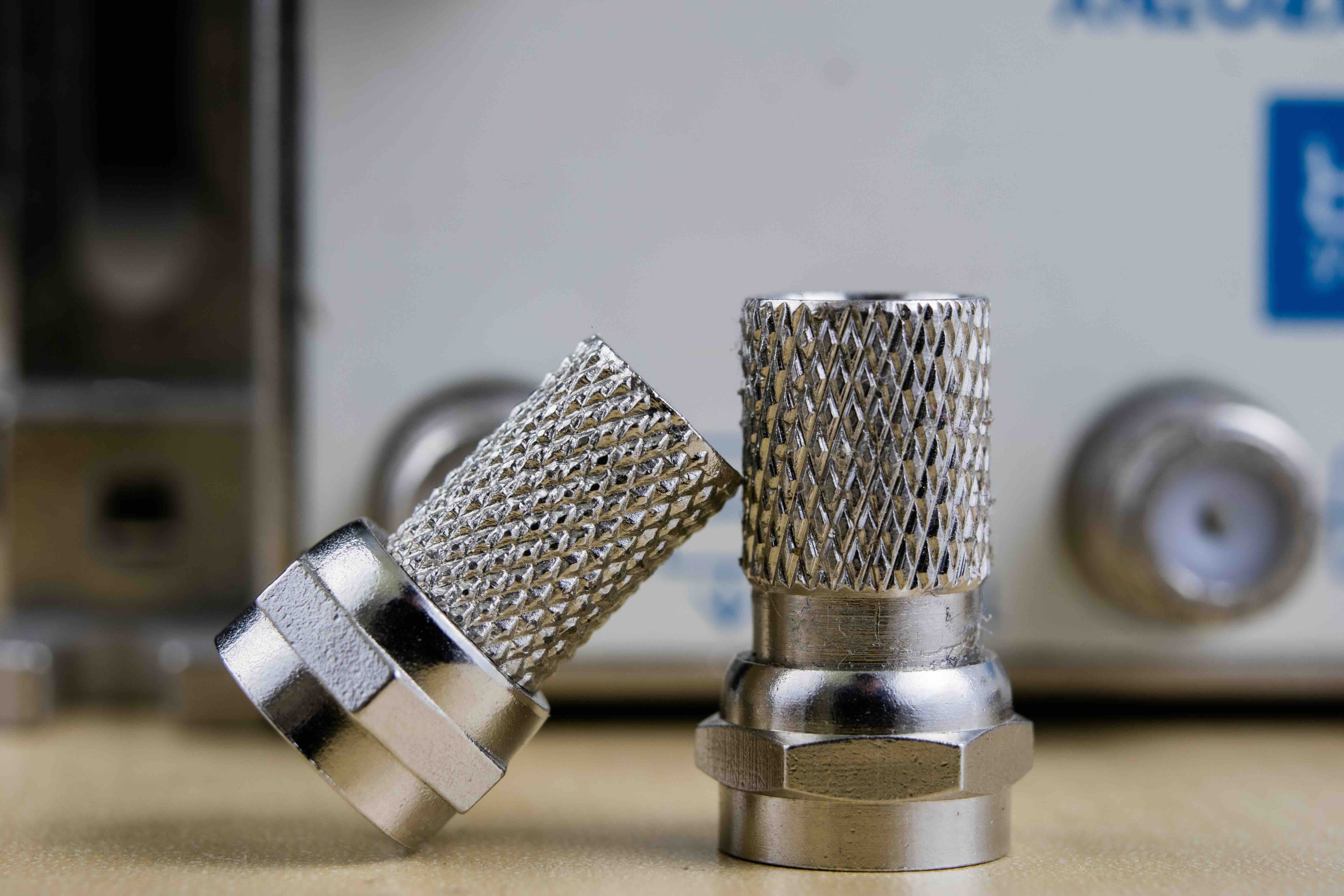
The F-type connector is the standard termination for RG-6 cable and it is used almost universally in satellite, cable TV, and OTA antenna applications. These connectors come in twist-on, crimp, and compression styles -- and compression style is considered best practice for permanent, reliable installations because it creates a true mechanical seal around the cable jacket. Threaded F-connectors on devices accept both male plug and female jack configurations depending on the equipment. One thing that catches people off guard is that F-connectors are not universal across all coaxial applications. BNC connectors, for example, are common in professional video and security camera environments. Adapters exist, but knowing what connector your equipment requires before buying cable saves time and keeps the signal path clean.
Why Monoprice Is the Right Source for Your RG-6 Coaxial Cable Needs
When you are specifying cable for a real installation -- whether it is a single-room satellite setup or a multi-drop distribution system across a commercial property -- the quality of the cable matters as much as the routing plan. Monoprice has been a trusted supplier for AV integrators, IT professionals, and value-conscious consumers for years, and RG-6 coaxial cable is exactly the kind of product where the Monoprice approach makes a genuine difference. You get well-manufactured cable that meets the performance specs the application demands, at pricing that makes sense whether you are buying one spool or outfitting an entire building. If you are ready to build a reliable, high-performance signal distribution system without overpaying for brand markup, explore the full range of RG-6 coaxial cables and professional AV cabling solutions at Monoprice and find exactly what your project requires. The combination of consistent product quality, broad selection, and practical pricing is why Monoprice has built its reputation with the people who install and configure these systems professionally.
Frequently Asked Questions About RG-6 Coaxial Cable
What is RG-6 cable used for?
RG-6 coaxial cable is primarily used for cable television, satellite TV, over-the-air antenna connections, security cameras, and cable modem installations. It is the standard residential and light commercial coaxial cable for signal distribution in these applications.
Is RG-6 better than RG-59?
Yes, for most modern applications. RG-6 has a larger center conductor, better shielding, and lower signal attenuation at high frequencies compared to RG-59. It is the preferred choice for satellite, HDTV antenna, and broadband cable modem use.
Can RG-6 be used outdoors?
Yes, but you need to use a version rated for outdoor or direct burial use. These variants have UV-resistant and moisture-resistant jacket materials designed to withstand weather exposure over time. Standard indoor RG-6 will degrade if used outdoors.
What connectors does RG-6 use?
RG-6 cable most commonly uses F-type connectors, which are the standard threaded connectors found on cable TV boxes, satellite receivers, and antenna connections. Compression-style F-connectors are recommended for permanent installations due to their superior seal and reliability.
How far can RG-6 carry a signal?
Signal loss increases with distance. As a general guideline, RG-6 can carry a usable signal for up to 150 to 200 feet in many residential applications before amplification may be needed. Exact performance depends on the frequency being carried and the quality of the cable and connectors used.
What is the difference between solid copper and copper-clad steel RG-6?
Solid copper center conductors offer better conductivity and are preferred for passive signal runs where audio and video quality is the priority. Copper-clad steel conductors add tensile strength, making them a better choice for long aerial spans or outdoor drops subject to mechanical stress.
Can RG-6 be used for security cameras?
Yes. RG-6 is commonly used for analog CCTV and HD-over-coax security camera systems. It performs well for these applications, especially over longer runs where RG-59 would introduce more signal loss. BNC connectors are typically used in these installations rather than F-type connectors.
Does the shielding type matter in RG-6 cable?
Yes, it matters in environments with significant electromagnetic interference. Standard dual-shield RG-6 works well in most residential settings. Quad-shield RG-6, which adds additional foil and braid layers, is recommended in electrically noisy environments such as near HVAC equipment or in commercial buildings.
Is RG-6 compatible with all cable TV systems?
RG-6 is the industry-standard cable for CATV distribution and is compatible with all major cable TV systems and service providers. It supports the frequency range used by modern cable systems and is fully compatible with DOCSIS cable modems and digital cable boxes.
Can I use RG-6 for internet through a cable modem?
Yes. RG-6 is the correct cable for connecting a cable modem to a cable service provider's wall outlet. It supports the DOCSIS frequency range used by cable broadband services and provides the low signal loss needed for reliable internet performance across typical home cable runs.


