

RCA Jack Wiring: Audio and Video Connector Guide
What Is an RCA Jack and Why Does It Still Matter in Modern Audio and Video Setups
There is something quietly impressive about a connector that has been around since the early 1940s and still shows up in home theaters, recording studios, DJ booths, and consumer electronics worldwide. The RCA jack, also called an RCA connector or phono connector, is one of those foundational pieces of technology that rarely gets the credit it deserves. If you have ever plugged a red and white cable into a stereo receiver, or connected a subwoofer to a home theater system, you have already used one. Understanding how RCA jacks work, what they are actually good at, and where their limitations fall helps you make smarter decisions about your audio and video wiring, whether you are setting up a casual living room system or building out a more serious installation.
The Origin and Basic Design of the RCA Jack Connector
The Radio Corporation of America, RCA, developed this connector in the 1940s primarily for internal use in phonograph and radio equipment. The original intention was to connect audio components inside a chassis, not necessarily for repeated consumer plugging and unplugging. Over time the design became a standard for external audio connections, and from there it spread into virtually every consumer electronics category imaginable. The physical design is simple and effective: a central pin carries the signal, and a surrounding cylindrical sleeve serves as the ground. That two-part construction is what makes the connector both affordable to manufacture and relatively reliable in stable environments. The plug presses into the jack with enough friction to hold a connection without needing a locking mechanism, which is convenient but also one of the reasons it can work loose over time in high-traffic or mobile setups.
How RCA Jacks Carry Audio and Video Signals
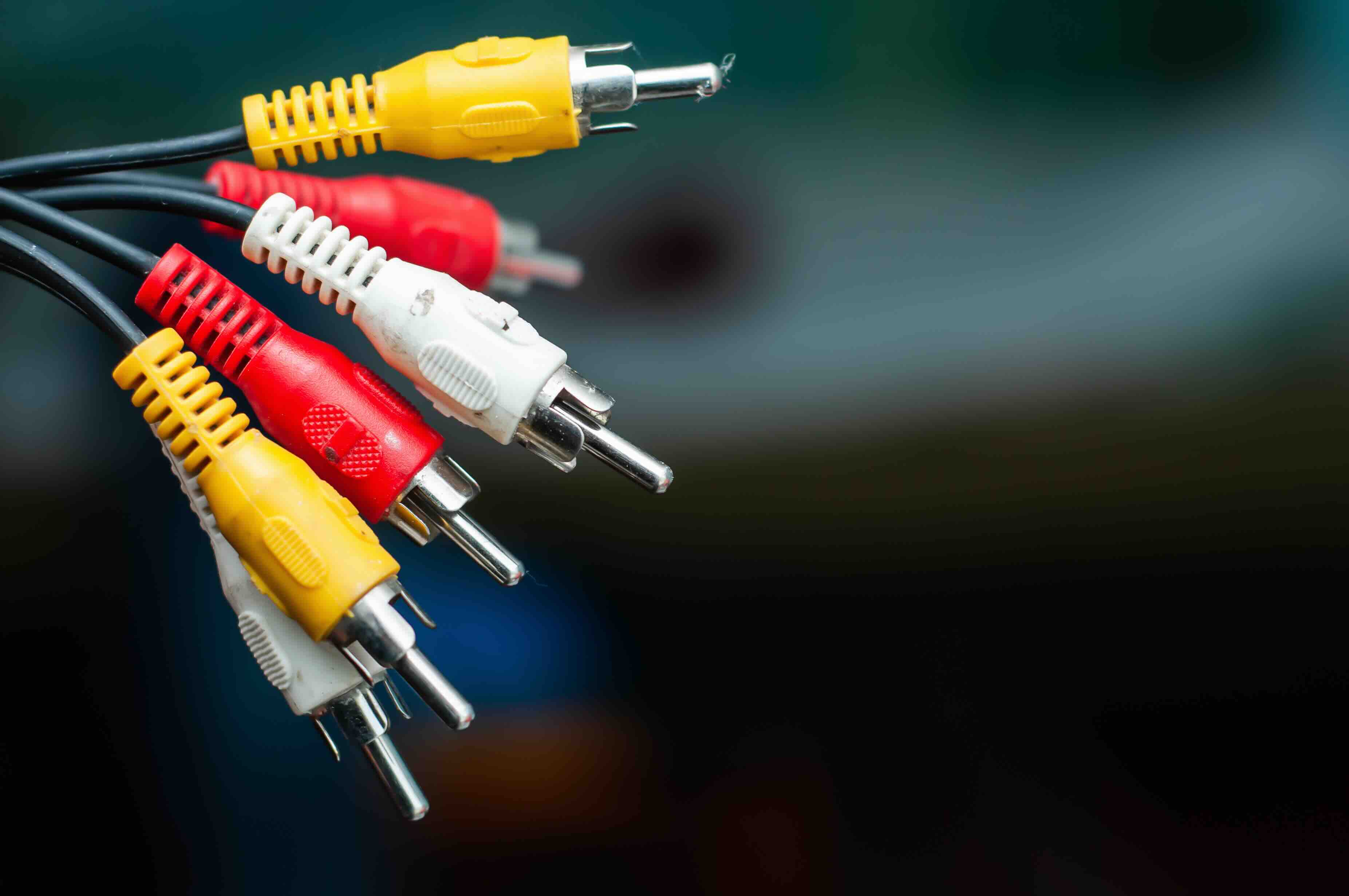
RCA connectors transmit unbalanced analog signals. The center pin is the hot or positive signal conductor, and the outer sleeve is the ground reference. For stereo audio, you need two RCA connectors: one for the left channel, typically color-coded white or black, and one for the right channel, typically color-coded red. For composite video, a single yellow RCA connector carries the entire video signal in one combined feed. Component video expands that into three separate connectors, usually colored red, green, and blue, splitting the signal into luminance and color difference channels for improved picture quality. The signal travels as an analog waveform, which means the quality of the cable, the shielding, and the quality of the connectors themselves all have a direct effect on what you actually hear or see at the other end.
Common Uses for RCA Connectors Across Audio and Video Applications
RCA connections show up across a wide range of consumer and professional applications. Knowing where they make sense helps you choose the right connection type for your specific setup.
- Connecting turntables to phono preamps and stereo receivers
- Hooking up subwoofers to AV receivers using a dedicated LFE output
- Linking CD players, cassette decks, and other legacy audio sources to amplifiers
- Running composite or component video between older source devices and displays
- Connecting DJ mixers to amplifiers or powered speaker systems
- Patching audio interfaces to studio monitors in home recording setups
- Routing signals between car audio head units and external amplifiers
That list covers a lot of ground. And honestly that breadth is part of why RCA connectors have survived as long as they have. They are versatile, familiar, and the entry cost for quality cables and adapters is low enough that they remain a practical choice even when newer connection standards are available.
Key Advantages of RCA Jack Wiring in Real-World Installations
One of the strongest arguments for RCA connections is pure accessibility. The connectors are color-coded, the plugging direction is obvious, and no tools are required. For someone who is not deeply technical, that matters. Beyond ease of use, RCA cables are widely available and manufactured at a range of quality tiers, from basic entry-level options to shielded, oxygen-free copper designs built for demanding signal environments. The connectors also work with passive splitting and switching devices without requiring powered infrastructure, which simplifies certain installation scenarios. For subwoofer connections in home theater systems, the single RCA LFE cable remains a near-universal standard that is straightforward to route and easy to replace if needed. Cost efficiency is real here: a high-quality RCA cable delivers excellent performance at a fraction of what digital or balanced cabling can cost in equivalent lengths.
Drawbacks and Limitations of RCA Connections You Should Know
RCA is an unbalanced connection, and that is its most significant technical limitation. In longer cable runs, unbalanced signals are more vulnerable to interference from nearby power cables, fluorescent lighting, and other electromagnetic sources. Professional audio environments with runs exceeding about 15 to 20 feet often benefit from switching to balanced connections like XLR or TRS instead. The friction-fit design also lacks any locking mechanism, which means cables can work loose in installations where equipment is moved frequently. From a video standpoint, composite video over a single yellow RCA cable cannot compete with the resolution and color accuracy of HDMI or even component video. And when you are talking about high-resolution audio or modern display technology, RCA simply is not built to carry those signals natively. These are not reasons to dismiss RCA entirely; they are reasons to understand where it fits and where it does not.
Practical Tips for Getting the Best Performance from RCA Cables and Connectors
Getting solid, reliable performance from RCA connections comes down to a few straightforward practices that are easy to follow regardless of your experience level.
- Use cables with adequate shielding, especially in environments with other electronics nearby
- Keep cable runs as short as practically possible to reduce interference pickup
- Avoid running RCA cables parallel to power cords or along the same path as AC wiring
- Choose gold-plated connectors for better corrosion resistance and consistent contact
- Inspect connector fit periodically and replace cables that show visible wear or cause intermittent signal issues
- Use quality RCA splitters when splitting signals rather than low-grade adapters that can degrade the signal
- Store unused RCA cables coiled loosely to avoid stressing the internal conductors
None of that is overly complicated. A little attention to cable quality and routing goes a long way toward keeping your system sounding and looking its best.
RCA vs. Other Connector Types: Knowing When to Use What
The comparison between RCA and other connector types comes up constantly, and the answer is almost always context-dependent. Against HDMI, RCA cannot carry digital audio or high-definition video without conversion, so for modern home theater systems HDMI is the clear choice for those signal types. Against XLR, RCA is more affordable and easier to terminate but loses in noise rejection over long runs, making XLR the right call for professional audio environments. Against 3.5mm stereo connectors, RCA offers a more robust physical connection and is better suited for component-level audio work. Against optical digital connections, RCA analog handles certain frequency ranges with warmth and character that some listeners prefer, particularly in high-quality analog audio chains where digital-to-analog conversion is handled at a later stage. The point is not that RCA is obsolete; it is that every connector type has a domain where it performs best, and RCA still owns a meaningful share of that landscape.
Why Monoprice Is the Smart Choice for RCA Cables and Audio Connectivity
When you are building or upgrading any audio or video system, the quality of your cabling is not a place to cut corners, and it is also not a place where you should have to overpay to get reliable performance. Monoprice has built a reputation for delivering exactly that balance, and it shows in every RCA cable, adapter, and interconnect the brand produces. Whether you are wiring up a home theater subwoofer, connecting a turntable to a receiver, or running longer signal paths in a mixed-use AV environment, Monoprice offers shielded, well-constructed options across every price tier without loading unnecessary cost into the product. For anyone serious about audio connectivity, exploring the full range of RCA audio cables and home theater wiring solutions at Monoprice is a direct path to getting professional-grade performance at a price that actually makes sense. Monoprice understands what AV professionals, integrators, and home enthusiasts need from their interconnects, and the product lineup reflects that understanding at every level.
Frequently Asked Questions About RCA Jack Wiring and Connectors
What does RCA stand for in RCA connector?
RCA stands for Radio Corporation of America, the company that originally developed the connector in the 1940s for use in audio and radio equipment.
What is the difference between a mono and stereo RCA connection?
A mono RCA connection uses a single connector to carry one audio channel. Stereo RCA uses two connectors, typically one white or black for the left channel and one red for the right channel, to carry a full two-channel stereo signal.
Can RCA cables carry digital audio signals?
Yes, but only in a specific context. Coaxial digital audio uses an RCA-style connector to carry an S/PDIF digital signal. Standard analog RCA cables cannot carry HDMI or other modern digital formats without a dedicated converter.
How long can an RCA cable run be before signal quality degrades?
For most consumer audio applications, RCA cables up to about 15 to 20 feet perform well with minimal signal loss. Beyond that length, shielded cables are strongly recommended, and in professional settings a balanced connection type is preferred for longer runs.
Are gold-plated RCA connectors actually better?
Gold plating resists oxidation and corrosion better than nickel or bare copper, which helps maintain consistent electrical contact over time. For connections that are plugged and unplugged frequently, gold-plated connectors are a practical upgrade worth considering.
What color coding is used for RCA connectors?
Standard color coding uses white or black for the left audio channel, red for the right audio channel, and yellow for composite video. Component video uses red, green, and blue. These are conventions, not electrical requirements, but following them avoids confusion during setup.
Can I use an RCA to 3.5mm adapter without losing audio quality?
A quality adapter introduces minimal signal degradation in most consumer scenarios. For critical listening or professional applications, using native connectors on both ends is preferable, but a well-made adapter works reliably for general use.
What is the difference between composite and component RCA video connections?
Composite video combines all video information into a single yellow RCA connector, resulting in lower resolution and color accuracy. Component video splits the signal across three connectors, delivering noticeably better image quality, particularly for standard definition and early high-definition content.
Why does my RCA cable produce a hum or buzz in my audio system?
A hum or buzz through RCA cables is most commonly caused by a ground loop, which occurs when two pieces of equipment connected by an RCA cable have different ground potentials. Running RCA cables near power cables can also introduce interference. A ground loop isolator can resolve the issue in many setups.
Are RCA connectors still relevant in modern audio and video systems?
Yes, RCA connectors remain widely used for subwoofer connections, turntable setups, legacy audio equipment, car audio installations, and budget-friendly analog audio chains. While HDMI and digital connections dominate high-definition video and modern home theater, RCA holds a practical and enduring place in both consumer and professional audio environments.


