

IEC Power Connectors: Types, Uses, and Buying Guide
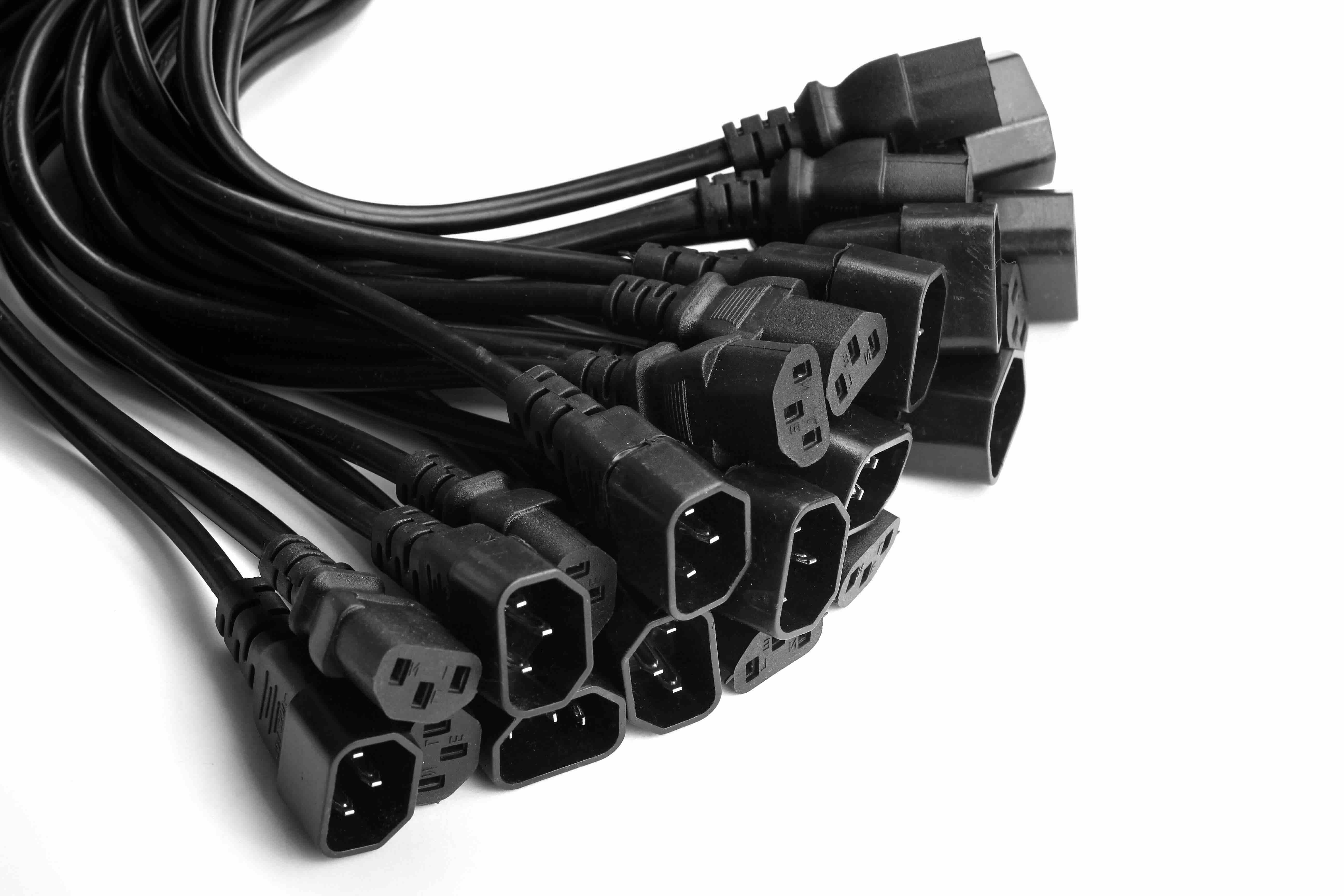
What Are IEC Power Connectors and Why Do They Matter?
If you have ever looked at the back of a computer, monitor, server rack, or pretty much any piece of professional or consumer electronics and noticed a standardized plug or socket that connects the power cable, there is a good chance you were looking at an IEC power connector. IEC stands for International Electrotechnical Commission, and the connectors they define are some of the most widely used electrical interfaces in the world. They are the reason a power cord from one country can often fit a device from another, and they are why AV professionals, IT managers, and data center operators can count on consistent, interchangeable power infrastructure. Not exactly a glamorous topic, but honestly, it is one of those things that quietly holds entire industries together.
The IEC 60320 Standard Explained
The connector family most people encounter in professional and consumer tech falls under the IEC 60320 standard. This standard defines a series of connectors and their corresponding inlets, each rated for specific voltages, currents, and temperatures. The naming convention uses a letter and number system that can look a little cryptic at first, but it becomes intuitive quickly. Connectors are typically labeled with a C followed by a number, and the inlet they mate with carries the next number in sequence. So a C13 connector plugs into a C14 inlet. A C19 plugs into a C20. That pairing logic stays consistent across the whole standard, which is genuinely helpful when you are working through a cable management project or speccing out a rack environment.
Breaking Down the Most Common IEC Connector Types
There are quite a few connector types within IEC 60320, but a handful of them show up constantly in real-world tech environments. Here is a practical breakdown of the ones worth knowing:
C13 and C14
- Used on desktop computers, monitors, network switches, and countless peripherals. The C13 is the three-pin connector on the end of the cable, and the C14 is the inlet on the device. Rated for up to 10 amps and 250 volts.
C15 and C16
- Similar in shape to the C13 and C14 but rated for higher temperatures, up to 120 degrees Celsius. Commonly used with electric kettles and in environments with elevated heat output.
C19 and C20
- Heavier duty versions used in high-powered servers, PDUs, and data center equipment. Rated for up to 16 amps and 250 volts. Physically larger and clearly distinct from C13 and C14.
C5 and C6
- The cloverleaf or Mickey Mouse connector, as it is sometimes called informally. Found on laptop power bricks and some projectors. Compact, polarized, and rated for up to 2.5 amps.
C7 and C8
- The figure-eight connector. Used on small electronics like radios, some audio equipment, and budget laptops. Not grounded. Rated at 2.5 amps.
How IEC Power Connectors Actually Work
The fundamental principle is straightforward. IEC connectors create a reliable, releasable mechanical and electrical connection between a power supply cord and a device inlet. The connector pins carry line, neutral, and in grounded types, earth connections. The physical shape of each connector type is designed to prevent mismatched connections, since a C13 simply will not fit a C20 inlet and vice versa. That mechanical keying is not an accident. It is a deliberate safety design to prevent under-rated cables from being plugged into high-draw equipment. The connectors also include retention mechanisms, either through friction fit or locking versions, to prevent accidental disconnection in environments where vibration or cable weight might otherwise pull a connection loose.
Key Advantages of IEC Power Connectors
There are real, practical reasons why IEC 60320 connectors became the global standard for equipment power connections. The most immediate benefit is interoperability. Whether you are sourcing a replacement cable domestically or internationally, the standardized form factor means you can find compatible components without custom orders or adapters. That matters a lot in enterprise environments where downtime is costly. Beyond that, the tiered amperage and voltage ratings within the connector family mean you can match cable capacity to equipment demand accurately, which is both a safety requirement and an operational best practice. The connectors are also designed for repeated connect and disconnect cycles, which is important in data centers and AV installations where gear is frequently moved, patched, or replaced. Locking variants add an extra layer of security for mission-critical setups where an accidental disconnection is simply not an option.
Common Drawbacks and Limitations to Know
No connector standard is perfect, and IEC 60320 has its share of trade-offs. One issue that comes up in dense rack environments is cable strain. C13 and C14 connections rely primarily on friction retention, and heavy cables or poor routing can put lateral stress on the inlet, eventually weakening the connection or damaging the socket. Locking connectors solve this, but they are not universally adopted. Another limitation is that the standard does not cover plugging into wall outlets. IEC 60320 is strictly for appliance-to-cord connections. The regional wall plug side of the cable, whether that is NEMA 5-15 in North America or Type G in the UK, is governed by entirely separate standards. So when you are ordering power cables for international deployments, you need to account for both ends independently. There is also the matter of counterfeit or substandard cables in the market, which is a genuine concern when buying from unknown suppliers. Cable quality, conductor gauge, and insulation rating all matter significantly for safety and reliability.
Practical Tips for Choosing the Right IEC Power Cable
Getting the right cable is not complicated if you approach it systematically. Start by identifying the inlet type on your device. Check the amperage rating of the equipment and make sure the cable you select is rated at or above that draw. Never use a C7 or C13 cable on a device that pulls 15 or 16 amps. Match the connector to the inlet, check the regional plug type for your wall outlet, and verify the overall cable length fits your rack or installation without creating excess slack that becomes a cable management problem. For data centers and AV rack builds, locking C13 to C14 cables are worth the small additional cost. And always buy from a reputable source. The quality differential between a compliant cable and a non-compliant one is not visible from the outside, but it shows up in performance, heat generation, and ultimately safety.
IEC Connectors in Professional AV and IT Environments
In professional AV and IT environments, IEC connectors are essentially the backbone of power distribution. Rack-mounted PDUs almost universally use C19 and C20 connections for input and offer banks of C13 and C14 outlets for individual equipment feeds. Understanding how to spec these correctly is fundamental to any proper rack build. In AV installations, projectors, amplifiers, signal processors, and control systems all rely on IEC power connections, and the ability to swap or replace cabling without sourcing specialty parts is a significant operational advantage. For IT managers handling server room refreshes or hybrid workspace buildouts, standardized IEC cabling means fewer SKUs to manage and simpler procurement across multiple locations. It is the kind of infrastructure detail that sounds minor until something goes wrong, and then it becomes very important very quickly.
Why Monoprice Is the Smart Choice for IEC Power Cables and Accessories
When you are speccing out power cables for a rack build, a hybrid office deployment, or a professional AV installation, cable quality and value both matter. Monoprice has built a reputation precisely on that combination: high-performance products at pricing that makes sense for both individual buyers and procurement teams managing large-scale deployments. The power cable lineup covers the full range of IEC 60320 connector types, from standard C13 to C14 desktop configurations to heavy-duty C19 to C20 options for server and PDU applications. Every cable is built with proper conductor gauges, compliant insulation ratings, and the kind of build quality that holds up in real environments under real conditions. If you are putting together a reliable, cost-effective power infrastructure, IEC power cables and professional rack accessories from Monoprice give you the performance and consistency that enterprise and AV environments demand, without the inflated pricing that other suppliers attach to the same specifications. It is simply a smarter buy, and that is the Monoprice position in a nutshell.
Frequently Asked Questions About IEC Power Connectors
What does IEC stand for in IEC power connectors?
IEC stands for International Electrotechnical Commission, the global organization that develops and publishes consensus-based international standards for electrical and electronic technologies, including the IEC 60320 standard that defines appliance power connectors.
What is the difference between a C13 and a C19 connector?
Both are common IEC 60320 connectors, but they serve different power loads. The C13 is rated for up to 10 amps and is used for standard desktop computers and peripherals, while the C19 is rated for up to 16 amps and is used for high-draw equipment like servers and PDUs. They are physically incompatible with each other by design.
Can I use a C13 cable on a device that requires a C19?
No. The C13 and C19 connectors are physically different and will not mate with each other's inlets. This is an intentional safety design to prevent under-rated cables from being used on high-amperage equipment.
Are IEC power connectors the same worldwide?
The IEC 60320 connector types are internationally standardized, so a C13 connector is the same shape and rating globally. However, the plug on the wall outlet end of the cable varies by country and is governed by separate regional standards, so you need to select the appropriate regional plug for your location.
What is a locking IEC connector and when should I use one?
A locking IEC connector includes a mechanical retention mechanism that prevents accidental disconnection. They are recommended for mission-critical environments like server rooms, data centers, and professional AV racks where an unexpected power loss would have serious consequences.
What gauge wire should an IEC power cable have?
For standard C13 applications at 10 amps, 18 AWG is common, while 14 AWG or heavier is appropriate for C19 high-amperage applications. Always verify that the cable's conductor gauge is rated to safely handle the maximum current draw of your equipment.
What is the C5 connector and where is it used?
The C5 connector, sometimes called a cloverleaf or Mickey Mouse connector, is a compact three-pin connector rated for 2.5 amps. It is most commonly found on laptop power adapters and some small projectors. Its mate is the C6 inlet on the device.
Is a C7 connector grounded?
No. The C7 is a two-pin, ungrounded figure-eight connector rated at 2.5 amps. It is used on small, low-draw electronics that do not require an earth ground connection, such as certain radios and entry-level audio equipment.
How do I know which IEC connector my device uses?
Look at the power inlet on the back or side of your device. The physical shape will correspond directly to a specific IEC 60320 inlet designation. You can cross-reference that shape against the standard's connector types to identify the correct mating connector for your replacement or extension cable.
Why is cable quality important for IEC power connectors?
Substandard cables may use undersized conductors, inadequate insulation, or non-compliant materials that cause excessive heat buildup, voltage drop, or safety hazards under load. Always source IEC power cables from reputable suppliers who build to proper electrical standards and rated specifications.


