IEC Connector Chart: Types, Ratings, and How to Choose
What Are IEC Connectors and Why Do They Matter in the Tech Industry
If you have ever looked at the back of a desktop computer, server rack, or professional AV equipment and noticed a standardized power inlet, you were almost certainly looking at an IEC connector. Short for International Electrotechnical Commission, IEC connectors are standardized electrical connectors that define how power is delivered to electronic devices across the globe. They are the quiet workhorses behind virtually every piece of powered technology you interact with, from home theater receivers to enterprise-grade networking switches. Understanding the IEC connector chart is not just for engineers. IT professionals, AV integrators, procurement teams, and even power users benefit from knowing how these connectors differ, which applications they serve, and how to choose the right one for any given setup.
A Breakdown of the IEC 60320 Standard
The IEC 60320 standard is the one most people encounter in the technology industry. It covers connectors and appliance inlets intended for household and similar general-purpose electrical equipment. Published and maintained by the International Electrotechnical Commission, this standard defines connector types by their voltage rating, current rating, and operating temperature. The IEC 60320 family is further divided into couplers, which include the connector on the cable side, and appliance inlets, which are the receptacles built into the equipment itself. Each type is assigned a number, and most tech professionals reference these types by their C designation, such as C13, C14, C15, and so on. The chart progresses in pairs where even-numbered types are the inlets and odd-numbered types are the corresponding connectors on the cable side.
The Most Common IEC Connector Types You Will Encounter
Not every type on the IEC connector chart shows up in everyday tech environments, but a handful are practically universal. Knowing these specific types makes sourcing cables and planning deployments far easier.
- C1 and C2 -- Rated at 2.5 amps and 250 volts, used in very light-duty applications like electric shavers and older portable devices
- C5 and C6 -- The Mickey Mouse or cloverleaf connector, commonly found on laptop power supplies and projectors, rated at 2.5 amps
- C7 and C8 -- The figure-eight or shotgun connector, widely used for small electronics, radios, and some AV equipment
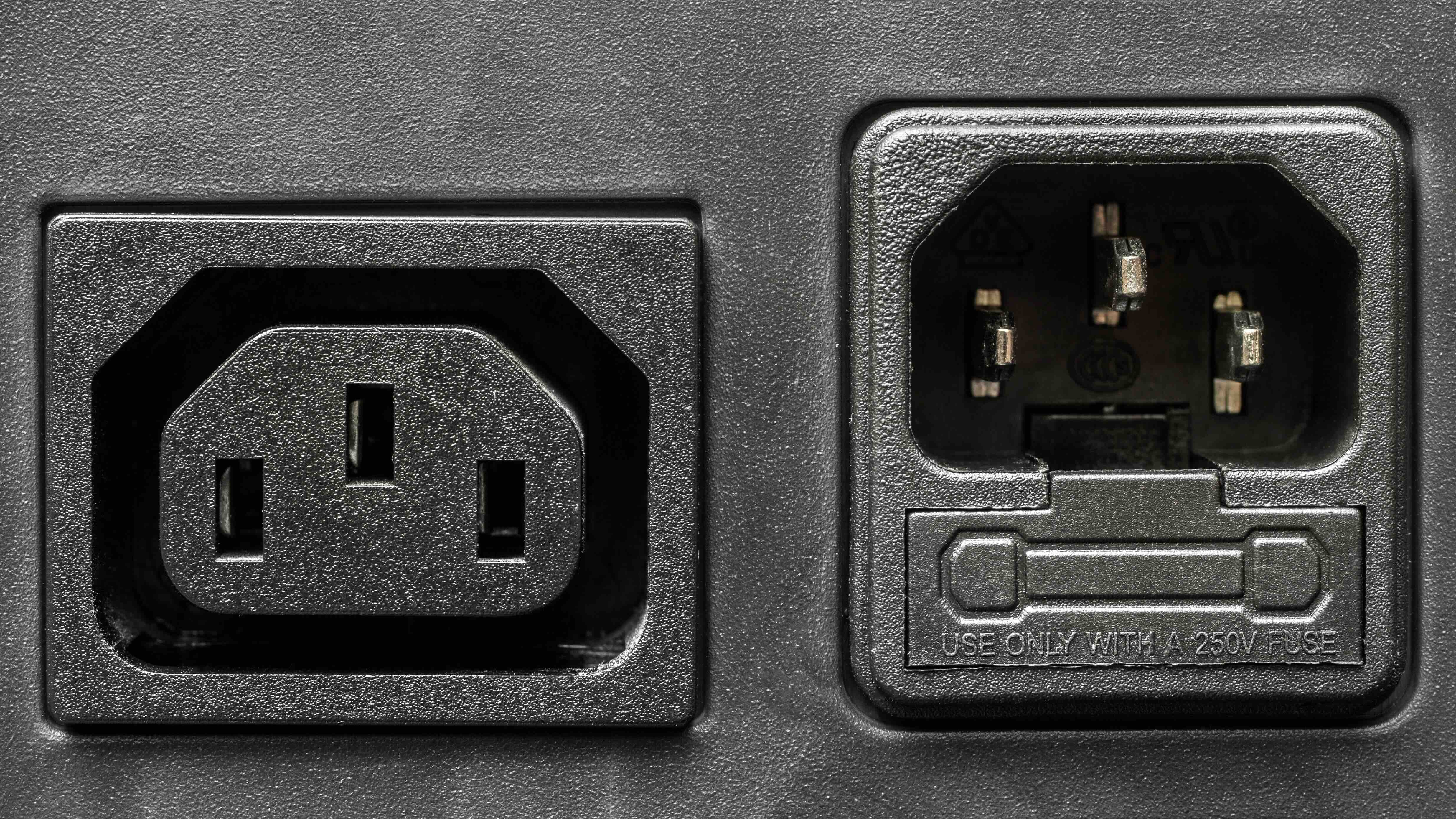
- C13 and C14 -- The most common type in IT, found on desktop PCs, monitors, servers, and PDUs, rated at 10 amps and 250 volts
- C15 and C16 -- Similar to C13 and C14 but rated for higher operating temperatures, used in kettles and some industrial applications
- C19 and C20 -- High-current connectors rated at 16 amps, found in data center power distribution units and high-powered servers
- C23 and C24 -- Rated at 16 amps with a high temperature tolerance, used in demanding industrial and commercial environments
For most technology deployments, the C13 and C14 pairing handles the majority of applications. Data center professionals will also frequently work with C19 and C20 connectors due to their higher current capacity.
How IEC Connectors Work and What Makes Them Reliable
The engineering behind IEC connectors is straightforward but precise. Each connector type is designed so that it can only mate with its corresponding appliance inlet, which prevents dangerous mismatches between a device's power requirements and the cable being used. The physical shape, pin spacing, and retention mechanism are all standardized to ensure a secure, consistent connection. Most IEC connectors use a blade or pin contact system with a housing designed to meet specific ingress protection and temperature ratings. The retention force on connectors like the C13 is intentionally firm, which reduces the risk of accidental disconnection in professional environments. Some variants, often called locking IEC connectors, add an additional mechanical latch to further secure the connection, which is particularly valuable in rack-mounted server environments where cable management and uptime are critical.
Key Advantages of Using Standardized IEC Power Connectors
The global adoption of the IEC 60320 standard delivers real, measurable benefits across the technology industry. These advantages extend well beyond simple convenience.
- Universal compatibility allows equipment sourced from different manufacturers to use the same cable types
- Interchangeability reduces spare parts inventory costs for data centers and IT departments
- Standardized ratings make it straightforward to match cables to equipment specifications
- Modular power cables allow for easy replacement without having to service the device itself
- Reduced risk of electrical mismatches improves overall safety in professional installations
- Global applicability means equipment can be deployed internationally with minimal modification beyond plug adapters
For enterprise buyers and integrators, this level of standardization translates directly into reduced procurement complexity and faster deployment timelines. When every PDU in a rack accepts the same C13 or C19 cable, restocking and cable management become dramatically simpler operations.
Common Drawbacks and Limitations to Be Aware Of
No standard is without its trade-offs. IEC 60320 connectors, for all their utility, do have limitations worth understanding before specifying them in a deployment. The C13 connector, while common, is limited to 10 amps in its standard form, which is insufficient for high-powered equipment that requires a C19 rated at 16 amps. Mixing these up is a real risk in environments where multiple cable types are present. Additionally, standard IEC connectors are not designed for outdoor or high-moisture environments without additional protection, making them unsuitable for certain industrial deployments without supplemental weatherproofing. Connector quality also varies widely across manufacturers, and lower-grade connectors can exhibit higher contact resistance, which contributes to heat buildup over time. This is a meaningful concern in densely packed server racks where thermal management is already a challenge.
Practical Tips for Choosing the Right IEC Connector
Selecting the correct IEC connector starts with understanding the equipment's power requirements and environment. Check the device's rated current and voltage on its nameplate or in its technical documentation before sourcing a cable. Never assume that physical similarity between connector types means electrical compatibility. For server and data center applications, defaulting to C19 and C20 cabling for high-draw equipment provides headroom and reduces thermal stress on contacts. When deploying in environments with frequent cable changes, locking IEC connectors are worth the marginal cost increase. Always verify that cable ampacity matches or exceeds the connector's rated current to prevent insulation degradation. And for international deployments, confirm whether the equipment uses a universal power supply before assuming a simple plug adapter will suffice without needing a dedicated IEC cable swap.
IEC Connectors in Data Centers and Professional AV Environments
Data centers represent one of the highest-density use cases for IEC connectors in the entire technology industry. A single rack can contain dozens of C13 and C19 connections linking servers, switches, and storage units to power distribution units. Proper cable selection here is not just a preference, it is a reliability and safety requirement. In professional AV environments, IEC connectors appear in power conditioners, amplifiers, projectors, and signal processors. AV integrators often deal with C5, C7, and C13 types depending on the equipment category. In both industries, cable quality, connector retention, and accurate current rating all feed directly into system uptime and long-term reliability. Cutting corners on power infrastructure is one of the most common and preventable sources of equipment failure in professional installations.
Why Monoprice Is Your Trusted Source for IEC Power Cables and Connectivity
When it comes to sourcing IEC power cables, power cords, and connectivity hardware, quality and value have to coexist. Monoprice delivers exactly that. With a product catalog built around the needs of IT professionals, AV integrators, and enterprise procurement teams, Monoprice offers a wide selection of IEC 60320 compliant cables including C13 to NEMA 5-15P, C19 to NEMA 5-20P, and other configurations that cover the full range of professional deployment scenarios. Every cable is manufactured to meet or exceed relevant electrical and safety standards, which means the specs you see listed translate directly into field performance. Whether you are stocking a data center, outfitting a server room, or sourcing cables for a professional AV installation, you can find reliable, professionally rated IEC power cables and professional-grade connectivity solutions at pricing that does not punish volume purchasing. Monoprice understands what the industry actually needs, and the product lineup reflects that expertise without inflating the cost to get there.
Frequently Asked Questions About IEC Connectors
What does IEC stand for in IEC connectors?
IEC stands for International Electrotechnical Commission, the global standards body that defines specifications for electrical and electronic devices, including the IEC 60320 standard that governs power connectors used in technology equipment.
What is the difference between a C13 and a C19 IEC connector?
The C13 connector is rated at 10 amps and is commonly used for desktop computers, monitors, and standard servers. The C19 connector is rated at 16 amps and is designed for higher-powered equipment like high-density servers and data center power distribution units. They are not interchangeable.
Can I use a C15 cable in place of a C13 connector?
Physically, a C15 connector can fit into a C14 inlet, but a C13 cannot fit into a C16 inlet due to a notch difference. While the C15 is rated for higher temperatures, it is not a direct swap in all situations and should only be used where the equipment documentation supports it.
Are IEC connectors used worldwide?
Yes, IEC 60320 connectors are internationally standardized and used in technology equipment across most countries. However, the wall plug at the end of the power cord varies by region, so you may need a region-specific cable or adapter depending on the country of deployment.
What is a locking IEC connector?
A locking IEC connector adds a mechanical retention mechanism to a standard IEC connection, preventing accidental disconnection. These are commonly used in data centers, server racks, and any application where unintentional cable pull-out would cause a service interruption.
How do I know which IEC connector my device needs?
Check the appliance inlet on the device itself and match it to the corresponding IEC connector type using the IEC 60320 chart. The device's technical documentation or nameplate will also list voltage and current requirements that should match the cable's rating.
What is the most common IEC connector in office and IT environments?
The C13 and C14 pairing is the most common IEC connector type found in office and IT environments. It is used for desktop computers, monitors, network switches, patch panels, and standard rack-mounted servers.
Is there a difference between IEC connector quality levels?
Yes, connector quality varies significantly between manufacturers. Higher-quality connectors use better contact materials, tighter dimensional tolerances, and more durable housings that reduce contact resistance, heat buildup, and long-term wear. In professional environments, connector quality directly affects system reliability.
Can IEC power cables be used outdoors?
Standard IEC 60320 connectors are not rated for outdoor or wet environments. If outdoor use is required, additional weatherproofing enclosures or industrial-rated connectors with appropriate ingress protection ratings should be used instead.
What should I look for when buying IEC power cables in bulk for a data center?
Verify that the cable's current and voltage ratings match your equipment specifications, confirm the connector type on both ends, check for relevant safety certifications, and source from a manufacturer with consistent quality standards to ensure uniformity across your installation.