

How to Run Cat 6 Cable for Faster, Reliable Networks
What Is Cat 6 Cable and Why Does It Matter for Your Network?
So, Cat 6 cable. If you have spent any time setting up a home network or working in IT, you have probably seen those letters and numbers thrown around a lot. Category 6, or Cat 6, is a standardized twisted pair cable used for Ethernet networking. It is designed to support data transmission speeds of up to 1 Gbps at distances up to 100 meters, and under the right conditions, it can even push 10 Gbps over shorter runs of around 37 to 55 meters. That is genuinely useful. Whether you are wiring up a home office, a small business, or a larger commercial space, Cat 6 is one of the most reliable and cost-effective choices on the market right now. It sits in a comfortable middle ground between the older Cat 5e standard and the more advanced Cat 6A and Cat 7 options. Not too much, not too little. Just right for most applications.
How Cat 6 Cable Is Constructed and What Makes It Different
Here is where it gets interesting. Cat 6 cable uses four pairs of copper conductors, just like its predecessors, but the construction has some important upgrades. The wires are more tightly twisted than Cat 5e, which reduces something called crosstalk, that is the interference that happens when signals from one wire bleed into another. Most Cat 6 cables also include a physical separator called a spline or cross-filler that runs lengthwise through the cable, keeping each twisted pair isolated from the others. That separation is a big part of why Cat 6 handles higher frequencies, up to 250 MHz, compared to the 100 MHz ceiling of Cat 5e. The result is cleaner, faster, and more reliable data transmission. It is a straightforward engineering improvement that delivers real-world performance gains.
Unshielded vs. Shielded Cat 6: Understanding Your Options
This is a distinction worth knowing. Cat 6 cables come in two main varieties: UTP, which stands for Unshielded Twisted Pair, and STP or FTP, which refers to Shielded or Foil Twisted Pair. UTP is the standard choice for most residential and light commercial installations. It is flexible, easy to work with, and costs less. Shielded Cat 6 adds a layer of metallic foil or braided shielding around the wire pairs, which provides additional protection against electromagnetic interference, or EMI. If you are running cables near electrical conduits, industrial equipment, or any environment with significant electrical noise, shielded Cat 6 is the smarter call. For most home setups and standard office environments, UTP handles the job without any issues. Know your environment before you buy, that is the practical takeaway here.
Key Advantages of Cat 6 Cable
There are several reasons Cat 6 has become the go-to standard for modern network installations. It delivers a clear performance edge over older cabling options while remaining accessible from a cost standpoint. Here is what actually matters:
- Supports Gigabit Ethernet and limited 10 Gigabit speeds over short distances
- Reduced crosstalk and signal interference compared to Cat 5e
- Higher bandwidth capacity at 250 MHz for more demanding network environments
- Backward compatible with Cat 5 and Cat 5e infrastructure
- Available in a wide range of configurations including solid and stranded conductors
- Suitable for PoE (Power over Ethernet) applications including IP cameras and VoIP phones
- Long-term infrastructure investment that will not need to be replaced anytime soon
That backward compatibility point is actually underrated. You can upgrade your cabling to Cat 6 without having to replace every switch, router, or patch panel in your setup. The new cables will still work with your existing hardware, and you gain performance headroom for future upgrades.
Common Drawbacks to Be Aware Of
Cat 6 is not without its trade-offs, and it is worth being straightforward about that. The most notable limitation is the 10 Gbps speed constraint over distance. Once you go beyond that 55-meter threshold, you are back down to 1 Gbps, which is the same as Cat 5e. If your installation requires sustained 10 Gbps performance across longer cable runs, Cat 6A is the more appropriate choice, though it costs more and is bulkier to work with. Cat 6 is also slightly stiffer and thicker than Cat 5e, which can make it trickier to route through tight spaces or conduits. The spline inside adds to that rigidity. These are not deal-breakers for most projects, but they are worth factoring into your planning before you start pulling cable through walls.
Solid vs. Stranded Cat 6 Conductor: Which One Do You Need?
This comes up more often than people expect. Solid conductor Cat 6 uses a single, solid copper wire for each conductor and is best suited for permanent installations, like in-wall runs, structured cabling in commercial buildings, or anything that is going to stay put for years. It transmits signal more efficiently over longer distances. Stranded conductor Cat 6, on the other hand, uses multiple smaller wires twisted together. It is more flexible and better suited for patch cables, those shorter runs from a wall jack to a device, or anywhere you need the cable to move or bend frequently. Using the wrong type for the wrong application can affect performance and longevity, so it is a detail worth getting right from the start.
Practical Tips for Installing Cat 6 Cable Correctly
Installation matters just as much as the cable itself. A high-quality Cat 6 cable that is poorly installed will underperform every time. A few things to keep in mind when running Cat 6:
- Do not exceed the 100-meter maximum run length for standard Gigabit performance
- Avoid sharp bends; Cat 6 has a minimum bend radius that should not be violated
- Keep cable runs away from fluorescent lighting, electrical panels, and motors
- Use the correct RJ45 connectors rated for Cat 6, not generic or Cat 5e ends
- Maintain the twist in each wire pair as close to the termination point as possible
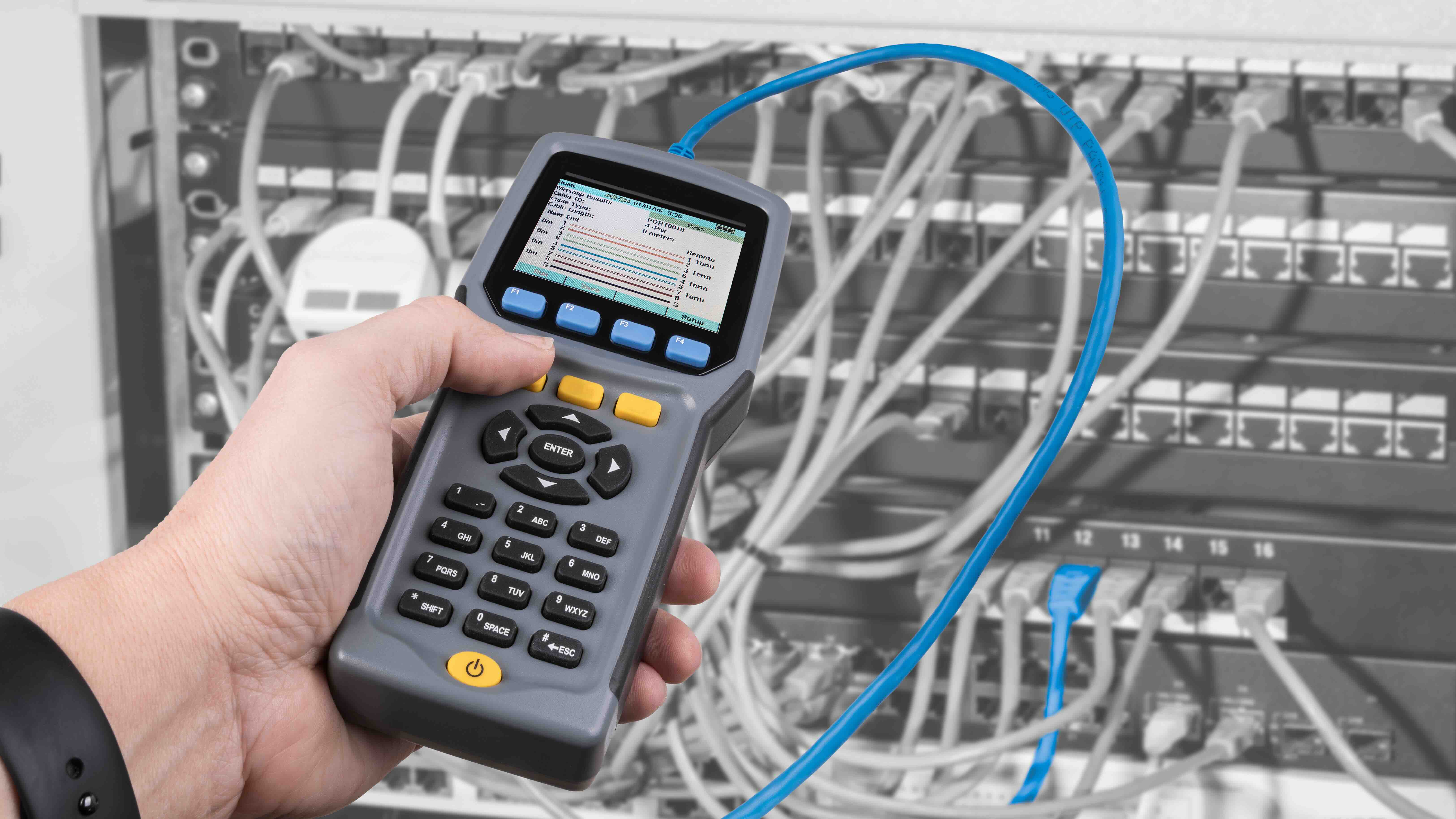
- Test your runs after installation using a cable tester to verify continuity and performance
- Label every run clearly during installation to save time during future troubleshooting
That last one, labeling your cables, is something people skip and then regret later. Do it while you are in the middle of the job, not after the walls are closed up.
Cat 6 vs. Cat 6A: Knowing When to Upgrade
Cat 6A is the augmented version of Cat 6 and it supports 10 Gbps speeds over the full 100-meter distance. If you are building out a data center, a larger enterprise network, or any environment where bandwidth-intensive applications are running simultaneously, Cat 6A is a serious consideration. It also handles Power over Ethernet Plus Plus, which supports higher wattage devices. That said, Cat 6A cable is thicker, heavier, and more expensive. Patch panels, conduit, and labor costs all go up. For most small to mid-sized installations, Cat 6 is still the practical and cost-effective choice. The question to ask yourself is whether the environment you are building for will realistically demand 10 Gbps across full-length runs within the next five to ten years. If the answer is yes, it might be worth investing in Cat 6A from the start.
Why Monoprice Is the Smart Choice for Cat 6 Cable and Networking Infrastructure
When it comes to sourcing reliable, high-performance networking cable without overpaying, Monoprice has built a well-earned reputation in both the consumer and professional markets. The Cat 6 cable lineup is comprehensive, covering everything from bulk cable reels for large installations to pre-made patch cables in a range of lengths and colors. Every option is built to meet or exceed TIA-568 performance standards, so you are not guessing about quality. Whether you are an IT professional speccing out a commercial build or a homeowner setting up a wired home network for the first time, the selection holds up. Monoprice also offers shielded and unshielded options, solid and stranded conductors, and a variety of jacket types including plenum-rated cable for air-handling spaces. If you are ready to build or upgrade your network infrastructure with confidence, explore the full range of high-performance Cat 6 Ethernet cables and networking solutions and find the right fit for your specific installation. The combination of consistent quality and straightforward pricing is exactly what professional installers and cost-conscious buyers are looking for.
Frequently Asked Questions About Cat 6 Cable
What is the maximum speed of Cat 6 cable?
Cat 6 cable supports speeds up to 1 Gbps at distances up to 100 meters. Over shorter runs of 37 to 55 meters, it can achieve 10 Gbps under the right conditions with compatible hardware.
What is the difference between Cat 6 and Cat 5e?
Cat 6 supports higher frequencies up to 250 MHz compared to Cat 5e at 100 MHz, has tighter wire twists, and typically includes an internal spline to reduce crosstalk. This results in better performance, especially in demanding network environments.
Can Cat 6 cable be used with Cat 5e equipment?
Yes. Cat 6 is fully backward compatible with Cat 5e and Cat 5 equipment and infrastructure. Your existing switches, routers, and patch panels will work with Cat 6 cable without modification.
Is shielded Cat 6 necessary for home use?
For most home installations, unshielded Cat 6 is sufficient. Shielded Cat 6 becomes valuable in environments with significant electromagnetic interference, such as near industrial equipment or dense electrical wiring.
What is the difference between solid and stranded Cat 6 cable?
Solid Cat 6 is designed for permanent in-wall or structured cabling installations and offers better performance over longer distances. Stranded Cat 6 is more flexible and ideal for patch cables and shorter, movable connections.
How far can Cat 6 cable run for Gigabit Ethernet?
Cat 6 cable supports Gigabit Ethernet at distances up to 100 meters, which is approximately 328 feet. Beyond that length, signal degradation will reduce performance and reliability.
Should I use Cat 6 or Cat 6A for a new installation?
Cat 6 is the practical choice for most residential and small business installations. Cat 6A is recommended when you need sustained 10 Gbps speeds across full-length runs or when future-proofing a larger enterprise environment.
Can Cat 6 cable support Power over Ethernet?
Yes. Cat 6 cable is compatible with PoE and PoE Plus standards, making it suitable for powering IP cameras, VoIP phones, wireless access points, and other PoE-enabled devices.
What connectors are used with Cat 6 cable?
Cat 6 cable uses standard RJ45 connectors. It is important to use connectors specifically rated for Cat 6 to maintain performance, as generic or lower-rated connectors can introduce signal loss at the termination point.
Does the color of Cat 6 cable affect performance?
No. The color of the cable jacket is purely for identification and organizational purposes and has no effect on electrical performance or data transmission speed.


