

Cat6 UTP Cable: Speed, Performance, and Reliability
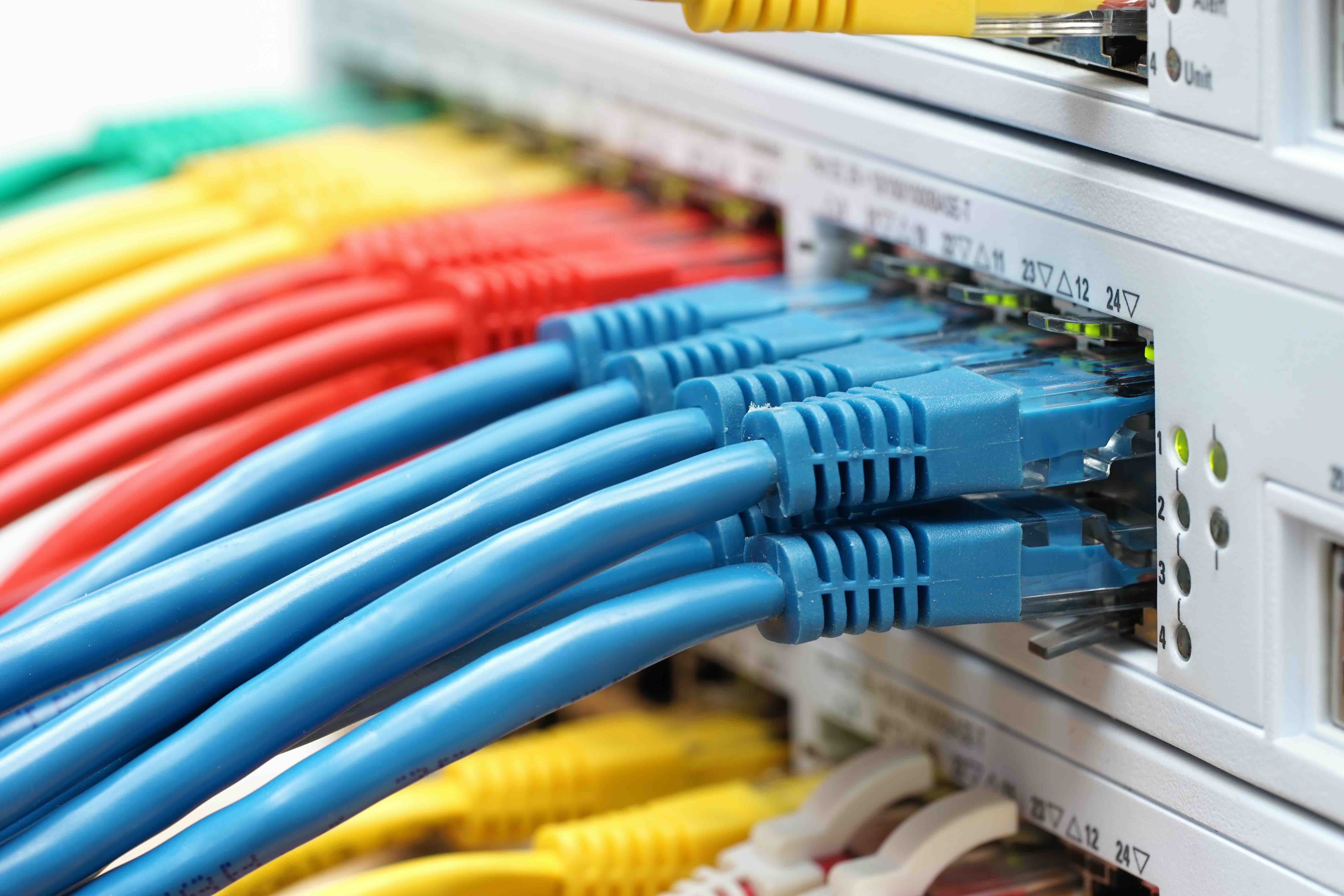
What Is Cat6 UTP Cable and Why Does It Still Matter in Modern Networks?
Cat6 UTP cable -- unshielded twisted pair, if you want the full name -- is one of those things that just quietly powers most of the world's local area networks. It's not flashy. It doesn't get announced at trade shows. But when you're running data through a building, a server room, or even a home office setup, this is often the cable doing the heavy lifting. Cat6 UTP is the sixth generation of twisted pair Ethernet cabling, designed to support Gigabit Ethernet speeds up to 1 Gbps over 100 meters and capable of 10 Gbps over shorter distances -- typically up to 55 meters. It operates at a bandwidth of 250 MHz, which is a meaningful step up from its Cat5e predecessor. For anyone building out a structured cabling system, understanding what Cat6 UTP actually is -- and whether it's right for your environment -- is worth a few minutes of your time.
How Cat6 UTP Cable Actually Works
Inside the jacket of a Cat6 UTP cable, you'll find four pairs of twisted copper conductors. The twisting isn't aesthetic -- it's functional. Each pair is twisted at a slightly different rate to reduce crosstalk, which is the interference that happens when signals from adjacent pairs bleed into each other. What makes Cat6 distinct from older categories is the tighter twist rate and, in many cases, the inclusion of a plastic spline or separator running down the center of the cable. That separator physically divides the four pairs, keeping them isolated and reducing alien crosstalk -- interference coming from neighboring cables rather than within the same cable. This internal structure is what allows Cat6 to hit that 250 MHz bandwidth threshold reliably. The "UTP" part just means there's no metallic shielding wrapped around the conductors or the cable as a whole. Signal integrity is maintained entirely through the geometry of the twists and the quality of the conductor material itself.
Cat6 UTP vs. Cat5e: Understanding the Real Difference
This comparison comes up constantly, and for good reason. Cat5e is still everywhere. It's cheaper, it's thinner, and for a lot of applications -- standard Gigabit Ethernet, basic IP camera systems, typical office workstations -- it performs just fine. So what does Cat6 UTP actually add? The short answer is headroom. Cat6 runs at 250 MHz versus Cat5e's 100 MHz. That extra bandwidth translates to better signal quality, lower error rates, and the ability to handle 10 Gbps data transmission over short runs, which Cat5e simply cannot do. For future-proofed installations, that matters. If you're pulling cable through walls or conduit today, you probably don't want to rip it all out in three years because your network demands outgrew the infrastructure. Cat6 UTP is the smarter long-term investment for most structured cabling projects, and the price difference between Cat5e and Cat6 has narrowed considerably over time.
Key Advantages of Cat6 UTP Cable
There are several practical reasons Cat6 UTP remains one of the most widely specified cables in both residential and commercial networking environments. Here is a clear breakdown of what it brings to the table:
- Supports Gigabit Ethernet at full 100-meter runs and 10 Gigabit Ethernet up to approximately 55 meters
- Operates at 250 MHz bandwidth, reducing data errors and improving signal integrity
- Backward compatible with Cat5 and Cat5e infrastructure and equipment
- No shielding required, which makes installation faster and more flexible
- Cost-effective compared to shielded alternatives like Cat6A STP or Cat7
- Widely available in various jacket types including CMR (riser), CMP (plenum), and PVC for different installation environments
- Works with standard RJ45 connectors and patch panels, simplifying deployment
That backward compatibility point is one that often gets overlooked. You can drop Cat6 UTP into an existing Cat5e network and it will work without any additional configuration. The network may not immediately run at Cat6 performance levels throughout, but you're laying the groundwork for a faster, more reliable system as other components are upgraded over time.
Common Drawbacks and Limitations to Know
No cable standard is perfect for every scenario, and Cat6 UTP is no exception. The most significant limitation is its susceptibility to electromagnetic interference. Because it has no shielding, it relies entirely on the twist geometry to reject noise. In environments with heavy electrical equipment, industrial machinery, fluorescent lighting, or dense cable runs in close proximity to power lines, that can become a problem. Signal degradation, increased error rates, and reduced effective throughput are all possible if EMI is significant enough. In those environments, shielded cable -- Cat6A STP or F/UTP -- is a better choice, though it comes with higher costs and more demanding grounding requirements. Additionally, the 10 Gbps capability of Cat6 UTP drops off sharply beyond that 55-meter mark, so for longer 10GbE runs, Cat6A is the appropriate specification. And while Cat6 UTP is thicker than Cat5e, it is still notably thinner than Cat6A, which can be relevant when working through tight conduit or high-density patch panels.
Installation Tips for Cat6 UTP Cabling
Getting Cat6 UTP installed correctly is as important as choosing the right cable in the first place. A few practical guidelines go a long way toward preserving performance. Maintain the bend radius -- avoid bending the cable sharply, as this disrupts the twist geometry and can degrade signal quality. Do not untwist pairs more than half an inch when terminating to RJ45 connectors or keystone jacks. Keep Cat6 runs away from electrical conduit when possible, and if they must run parallel, maintain at least 6 inches of separation. Use proper cable management to avoid crushing or kinking. When pulling cable through conduit, use pulling lubricant designed for data cables and avoid exceeding the cable's maximum pulling tension. And always test after installation -- a basic cable tester will catch wiring errors, while a more advanced tester can verify compliance with Cat6 performance parameters.
Where Cat6 UTP Is Commonly Used
Cat6 UTP shows up across a wide range of environments, and that versatility is one of its core strengths. In commercial office spaces, it connects workstations, VoIP phones, and wireless access points to network switches. In data centers, it handles structured cabling between patch panels and server racks for shorter backbone runs. In education and healthcare environments, where network reliability is critical but budgets are real constraints, Cat6 UTP delivers strong performance without the cost overhead of shielded or higher-category cabling. Residential installations benefit from it too -- home offices, smart home infrastructure, and whole-home Ethernet runs all benefit from Cat6's headroom over Cat5e. It's also commonly used for Power over Ethernet applications, supporting devices like IP cameras, access control readers, and ceiling-mounted wireless access points that draw power through the cable itself.
Cat6 UTP vs. Cat6A: When Do You Actually Need to Upgrade?
Cat6A is the next step up, supporting 10 Gbps at the full 100-meter distance and operating at 500 MHz bandwidth. It also typically includes shielding. For most standard office and residential applications running Gigabit Ethernet, Cat6A is more cable than you need. The added cost, thicker diameter, and more complex installation requirements do not translate into practical benefits for environments that simply need reliable 1 Gbps connectivity. Where Cat6A makes real sense is in high-density data center environments, facilities where 10GbE to the desktop is already a requirement, or locations with significant EMI exposure. For the vast majority of structured cabling installations today, Cat6 UTP delivers the right balance of performance, flexibility, and cost-efficiency. Knowing where that boundary sits is what separates a well-specced installation from an over-engineered one.
Why Monoprice Is the Smart Choice for Cat6 UTP Cable
When you are sourcing Cat6 UTP cable for a project -- whether it's a single office renovation or a multi-floor commercial build-out -- the quality of the cable and the reliability of the supplier both matter. Monoprice has built a well-earned reputation as a trusted source for networking infrastructure, delivering high-performance cabling products that meet industry standards without the inflated price tags that often accompany branded alternatives. Their Cat6 UTP cables are manufactured to meet or exceed TIA-568-C.2 performance specifications, which means you are getting cable that has been tested to deliver on its rated bandwidth and crosstalk performance. For IT professionals, network integrators, and facilities managers who need to source quality cable in volume without blowing the project budget, that combination of verified performance and straightforward pricing is genuinely valuable. If you're ready to build a reliable, future-ready network infrastructure, explore Cat6 UTP Ethernet cables and structured cabling solutions from Monoprice to find the right cable for your specific installation environment and project scale. The product lineup covers bulk cable, patch cables, plenum and riser-rated options, and everything in between -- so you're not piecing together a solution from multiple suppliers. One source, consistent quality, and pricing that makes sense for both small projects and large-scale deployments.
Frequently Asked Questions About Cat6 UTP Cable
What does UTP stand for in Cat6 UTP cable?
UTP stands for Unshielded Twisted Pair. It refers to a cable construction that relies on the geometry of twisted copper conductor pairs -- rather than any metallic shielding -- to reduce interference and maintain signal integrity.
What is the maximum speed of Cat6 UTP cable?
Cat6 UTP supports Gigabit Ethernet at up to 100 meters and 10 Gigabit Ethernet at up to approximately 55 meters. Beyond that distance threshold, performance drops to 1 Gbps.
Is Cat6 UTP backward compatible with Cat5e equipment?
Yes. Cat6 UTP is fully backward compatible with Cat5e and Cat5 infrastructure, including switches, patch panels, and RJ45 connectors. The network will operate at the performance level of the lowest-rated component in the link.
What is the bandwidth of Cat6 UTP cable?
Cat6 UTP operates at a rated bandwidth of 250 MHz, which is 2.5 times the 100 MHz bandwidth of Cat5e. This higher bandwidth supports better signal quality and lower error rates at high data transfer speeds.
When should I choose Cat6 UTP over Cat6A?
Cat6 UTP is the appropriate choice for most standard Gigabit Ethernet installations, shorter 10GbE runs under 55 meters, and environments without significant electromagnetic interference. Cat6A is warranted when you need 10 Gbps over the full 100-meter distance or require shielding in high-EMI environments.
Can Cat6 UTP cable be used for Power over Ethernet applications?
Yes. Cat6 UTP is suitable for PoE, PoE+, and in many cases PoE++ applications. Its conductor quality and construction support the current carrying requirements of powered devices like IP cameras, VoIP phones, and wireless access points.
What jacket types are available for Cat6 UTP cable?
Cat6 UTP is available with PVC jackets for general use, CMR-rated riser jackets for vertical runs between floors, and CMP-rated plenum jackets for installation in air-handling spaces where fire safety codes require low-smoke, low-flame materials.
How far can Cat6 UTP cable run for standard Gigabit Ethernet?
For standard 1 Gbps Gigabit Ethernet, Cat6 UTP supports runs up to 100 meters, which is approximately 328 feet. This is the same maximum distance specification as Cat5e for 1 Gbps connections.
Does Cat6 UTP require special connectors or patch panels?
No. Cat6 UTP uses standard RJ45 connectors and is compatible with Cat6-rated keystone jacks and patch panels. Using Cat6-rated termination components is recommended to preserve full performance specifications throughout the cabling link.
What is the main disadvantage of Cat6 UTP compared to shielded cable?
The primary drawback of Cat6 UTP is its susceptibility to electromagnetic interference in environments with heavy electrical equipment or dense cable routing near power sources. In those conditions, shielded cable such as Cat6A F/UTP or STP is a more appropriate solution.


