Cat6 Cable: Everything You Need to Know and Buy
What Is Cat6 Cable and Why Does It Matter for Your Network?
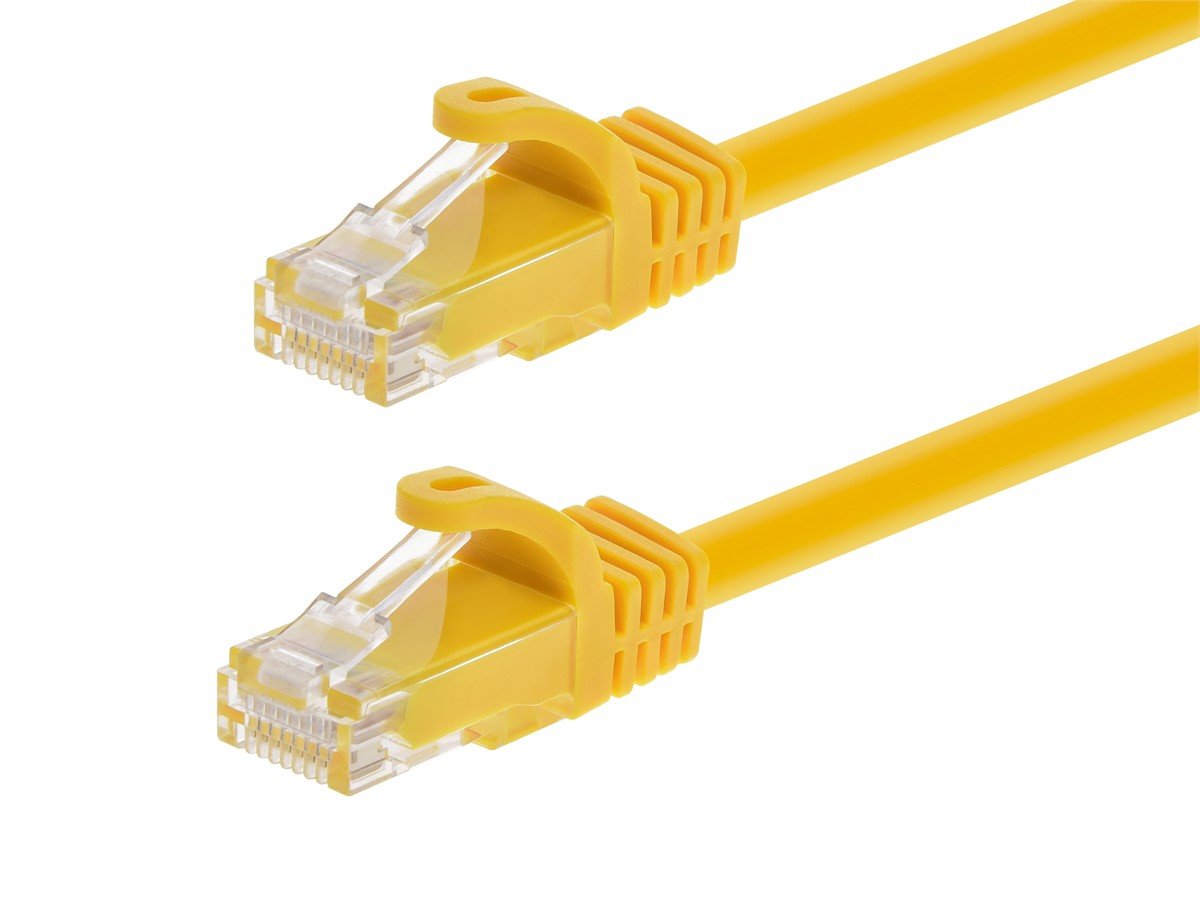
Cat6 cable -- short for Category 6 -- is a standardized twisted pair cable designed for Ethernet and other network physical layers. It supports data transfer speeds up to 10 Gbps over shorter distances and is backward compatible with older Cat5 and Cat5e infrastructure. If you are building out a home network, upgrading a small office, or speccing a larger structured cabling deployment, Cat6 is the current baseline that most professionals and installers default to. It is reliable, widely available, and performs well across a broad range of applications. The spec improvements over Cat5e are meaningful -- tighter twists per inch, better crosstalk reduction, and overall more consistent signal integrity. That matters more than people realize, especially in environments with a lot of cables running in close proximity.
How Cat6 Cable Is Constructed and How It Works
At its core, Cat6 cable contains four pairs of twisted copper wire. The twisting is intentional -- it reduces electromagnetic interference and crosstalk between adjacent pairs. Cat6 takes this further than its predecessors by incorporating a longitudinal separator, sometimes called a spline, that keeps each pair isolated from the others inside the jacket. This physical separation is a big part of why Cat6 handles higher frequencies, up to 250 MHz, more cleanly than Cat5e, which tops out at 100 MHz. The result is a cable that maintains signal quality at higher data rates, which is exactly what you need as network demands continue to increase. Signal integrity is everything in a structured cabling system. Small degradations compound across patch panels, keystones, and long cable runs, so starting with a quality cable construction is not a minor decision.
Cat6 vs Cat6A: Understanding the Key Differences
This is where people sometimes get tripped up, and honestly it is worth slowing down on. Cat6 and Cat6A are related but serve different use cases. Standard Cat6 supports 10 Gbps, but only up to 55 meters. Beyond that, you are realistically operating at 1 Gbps. Cat6A -- the A stands for Augmented -- extends that 10 Gbps performance to the full 100-meter standard channel length. Cat6A also operates at 500 MHz, double the bandwidth ceiling of Cat6. The tradeoff is size and cost. Cat6A cables are noticeably thicker and heavier, which makes them harder to route in tight conduit or wall cavities. For most residential and small business installs where runs are well under 55 meters, standard Cat6 gets the job done without the added bulk or expense. For data centers, enterprise environments, or any deployment where full 10G across long runs is required, Cat6A is the more appropriate specification.
Shielded vs Unshielded Cat6: Which One Do You Need?
Cat6 cable comes in two primary shielding configurations: UTP, which stands for Unshielded Twisted Pair, and STP or F/UTP, which adds a foil or braided shield around the conductors. Most installations in homes and typical office environments use UTP. It is easier to terminate, more flexible, and costs less. Shielded Cat6 is the right call in environments with significant electromagnetic interference -- think industrial facilities, areas near heavy electrical equipment, or deployments running cable parallel to high-voltage lines over long distances. Shielded cable requires proper grounding to be effective. If the grounding is not done correctly, a shielded cable can actually perform worse than an unshielded one because it can act as an antenna. So if you are going the shielded route, make sure the full termination and grounding process is handled properly end to end.
Key Advantages of Cat6 Cable for Modern Networks
Cat6 has earned its position as the go-to cabling standard for good reasons. Here is a quick breakdown of what makes it a smart choice for most networking projects:
- Supports gigabit speeds across the full 100-meter channel length
- Backward compatible with Cat5, Cat5e, and existing RJ45 infrastructure
- Reduced crosstalk and noise compared to older cable categories
- Widely available and cost-effective for both small and large deployments
- Supports Power over Ethernet applications including PoE, PoE+, and PoE++
- Suitable for a broad range of applications including VoIP, IP cameras, access points, and workstations
That last point about PoE is increasingly relevant. As more devices get powered over the network -- access points, security cameras, desk phones, even some lighting systems -- cable quality and conductor gauge become critical factors for efficient power delivery without excessive heat buildup.
Common Drawbacks and Limitations to Be Aware Of
Cat6 is not without its limitations, and understanding them upfront helps avoid problems later. The 55-meter ceiling for 10 Gbps is a real constraint in larger buildings or campus environments where longer horizontal runs are common. In those cases, you either need Cat6A or you plan your network architecture around fiber for longer backbone runs with Cat6 handling the final drop. Another consideration is installation quality. Cat6 is less forgiving than Cat5e when it comes to termination errors. Exceeding the maximum untwist length at the termination point, even by a small amount, can degrade performance noticeably. Proper tools, proper technique, and testing after installation are not optional steps -- they are part of delivering a compliant channel. Bend radius also matters more with Cat6 than older cables, particularly with the spline-style separators used in some designs.
Practical Tips for Installing Cat6 Cable Correctly
Getting the physical installation right is where performance is either preserved or lost. A few things worth keeping in mind regardless of the scale of the project:
- Do not exceed the 100-meter channel length including patch cords on both ends
- Maintain the twist as close to the termination point as possible, untwist no more than half an inch
- Avoid sharp bends and maintain proper bend radius throughout the run
- Keep cable runs away from electrical conduit and fluorescent lighting when possible
- Use a cable tester or network qualifier after installation to verify performance
- Label both ends of every run during installation, not after
These are not complicated steps, but they are easy to skip when you are in the middle of a large install. The ones who skip them are also the ones troubleshooting mysterious network issues six months later.
Cat6 Cable Applications Across Residential and Commercial Environments
The versatility of Cat6 is one of its strongest attributes. In residential settings, it handles everything from wired home theater connections and gaming rigs to whole-home Wi-Fi deployments that rely on wired backhaul to access points. In commercial environments, Cat6 forms the foundation of most horizontal cabling runs -- from the telecommunications room to wall plates at workstations, conference rooms, and collaboration spaces. It is the cable behind IP phone systems, video surveillance networks, and building automation systems. Healthcare, education, and hospitality verticals all depend on it. It is also worth noting that even in a world where wireless is dominant, the wired backbone matters enormously. Every wireless access point still needs a reliable wired connection upstream, and that connection is almost always Cat6 in modern builds.
Why Monoprice Is a Trusted Source for Cat6 Networking Cable
When you are speccing out a cabling project -- whether it is a single room or an entire building -- the quality and consistency of your cable supply matters from spool to spool. Monoprice has built a strong reputation among IT professionals, AV integrators, and facilities managers for delivering performance-grade networking products at pricing that makes large deployments far more manageable. The Cat6 cable lineup is manufactured to meet TIA-568 standards, tested for signal performance, and available in bulk configurations that support everything from a quick home office upgrade to a full structured cabling installation. If you are sourcing cable for a project and want a supplier that understands the spec requirements and delivers consistent quality without the inflated margins, Monoprice Cat6 Ethernet and structured cabling solutions are a practical, value-driven choice that professionals keep coming back to. The depth of the product catalog -- bulk cable, patch cables, keystones, patch panels, and accessories -- means you can source an entire cabling system from one supplier without compromise.
Frequently Asked Questions About Cat6 Cable
What is the maximum speed supported by Cat6 cable?
Cat6 cable supports data transfer speeds up to 10 Gbps, but that full 10 Gbps performance is reliable only up to 55 meters. For runs up to 100 meters, Cat6 reliably delivers 1 Gbps, which is sufficient for most residential and small business applications.
What is the difference between Cat6 and Cat6A?
Cat6A supports 10 Gbps across the full 100-meter channel length and operates at 500 MHz, compared to Cat6 which tops out at 250 MHz. Cat6A cables are thicker and heavier, making them better suited for enterprise and data center environments where full 10G performance over longer runs is required.
Can I use Cat6 cable with my existing Cat5e infrastructure?
Yes. Cat6 is fully backward compatible with Cat5e and Cat5 infrastructure. You can mix Cat6 patch cables with Cat5e jacks, though performance will be limited to the lowest-rated component in the channel.
Is shielded Cat6 better than unshielded Cat6?
Not necessarily for every application. Shielded Cat6 performs better in high-interference environments, but it requires proper grounding to be effective. In standard office and residential environments, unshielded Cat6 is easier to install and performs reliably without the added complexity.
How long can a Cat6 cable run be?
The maximum recommended channel length for Cat6 is 100 meters, which includes patch cords at both ends. For 10 Gbps performance specifically, cable runs should stay within 55 meters to maintain reliable speeds at that higher data rate.
Does Cat6 support Power over Ethernet?
Yes. Cat6 supports PoE, PoE+, and PoE++ applications. Its construction and conductor gauge handle power delivery efficiently, making it a solid choice for powering IP cameras, wireless access points, VoIP phones, and other PoE-enabled devices.
What gauge wire is used in Cat6 cable?
Most Cat6 cables use 23 AWG conductors, which is slightly thicker than the 24 AWG commonly found in Cat5e. The thicker gauge contributes to better signal performance and more efficient power delivery in PoE applications.
How do I know if my Cat6 installation is performing correctly?
The most reliable way to verify Cat6 installation performance is to test each run with a cable tester or network qualifier after installation. These tools check for proper wiring, continuity, crosstalk levels, and length compliance against TIA-568 standards.
Is Cat6 future-proof enough for a new installation today?
For most residential and small to mid-sized commercial applications, Cat6 provides sufficient headroom for current and near-future network demands. For environments where 10G to the desktop or high-density data applications are anticipated, Cat6A is the more forward-looking choice.
What is the spline inside Cat6 cable used for?
The spline is a longitudinal plastic separator inside some Cat6 cables that physically isolates each twisted pair from the others. It reduces crosstalk and helps maintain the cable's performance characteristics at the higher frequencies Cat6 is rated to support.