

Cat 6 Cable: Speed, Performance, and Smart Buying
What Is a Cat 6 Cable and Why Does It Matter for Your Network?
If you have ever tried to figure out what kind of ethernet cable to buy and ended up more confused than when you started, you are not alone. Cat 6, Cat 5e, Cat 6a, shielded, unshielded... it is a lot. So let's just start at the beginning. A Cat 6 cable, short for Category 6, is a standardized twisted pair cable used for Ethernet networking. It is one of the most widely used cable types in both home and commercial installations right now, and honestly for good reason. It hits a solid middle ground between performance, cost, and availability. Cat 6 is designed to support data transfer speeds up to 10 Gbps at distances up to 55 meters, and up to 1 Gbps reliably at the more common 100-meter runs. For most people setting up a home network, a small office, or even a mid-sized business infrastructure, that is more than adequate. The cable itself uses four pairs of twisted copper wire, with tighter twisting than its predecessor Cat 5e, which helps reduce crosstalk and signal interference. There is also often an internal plastic separator called a spline that keeps the wire pairs physically separated and reduces that same crosstalk issue even further.
How Cat 6 Cable Works: The Basics Behind the Technology
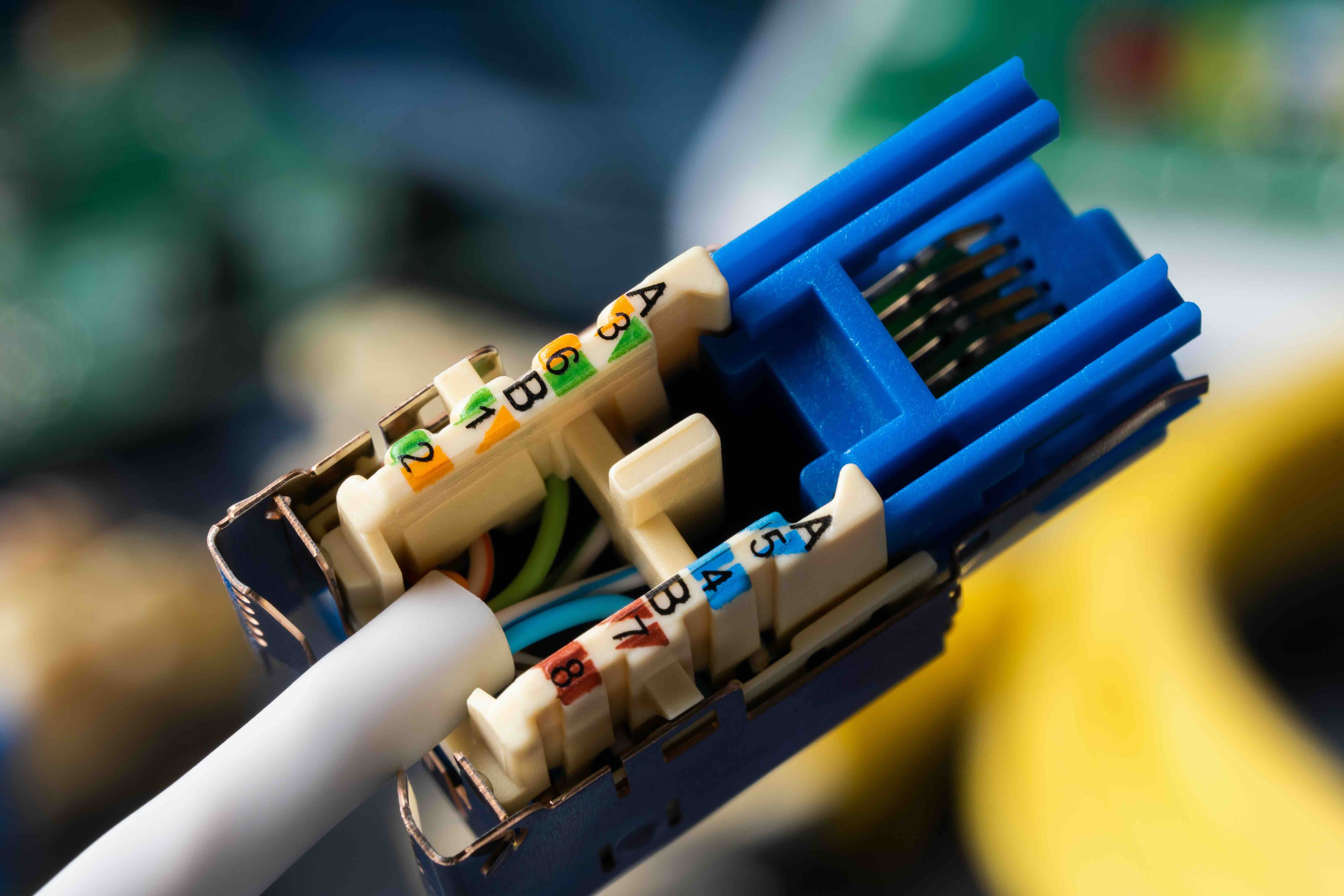
Understanding how Cat 6 cable actually works helps you make smarter decisions when you are speccing out a network, whether for a single room or a full building. The signal travels through the twisted copper pairs, and that twisting is not just for aesthetics. Each pair is twisted at a different rate to minimize electromagnetic interference between them, which is called crosstalk. Cat 6 is rated to handle frequencies up to 250 MHz, which is double what Cat 5e supports. That higher frequency headroom is what allows it to push more data through at faster speeds. The cable connects to standard RJ-45 connectors on both ends, which is the same connector type used across all common ethernet cables, so compatibility is rarely an issue. It is backward compatible with Cat 5 and Cat 5e ports and equipment, which matters if you are upgrading an older network in stages. One thing worth knowing is that Cat 6 performance is sensitive to how well it is terminated. A sloppy crimp job or improper installation can degrade performance significantly, so either use pre-terminated patch cables or make sure whoever is doing the installation knows what they are doing.
Cat 6 vs Cat 5e vs Cat 6a: Understanding the Key Differences
This is where most people get stuck. The cable category landscape is not always clearly explained, and manufacturers do not always make it easier. Here is the practical breakdown. Cat 5e is still perfectly functional for most home internet connections, supporting up to 1 Gbps at 100 meters. If your internet service is under 500 Mbps and you are not planning major upgrades soon, Cat 5e works. But Cat 6 gives you more headroom, better noise rejection, and faster speeds for internal network transfers and future-proofing. Then there is Cat 6a, the augmented version. Cat 6a supports 10 Gbps at a full 100 meters compared to Cat 6's 55 meters at that speed, and it handles frequencies up to 500 MHz. The tradeoff is that Cat 6a cables are thicker, heavier, and more expensive. They are great for data centers and high-density commercial environments, but overkill for most residential or small office setups. Cat 6 lands right in the middle, delivering real-world performance gains over Cat 5e without the added bulk and cost of Cat 6a. For the majority of installations, it is the practical choice.
Shielded vs Unshielded Cat 6: Which Type Do You Actually Need?
This question comes up constantly and the answer depends almost entirely on your environment. Unshielded twisted pair, or UTP, is the standard version of Cat 6 most people encounter. It works well in typical indoor environments without significant sources of electromagnetic interference. It is easier to work with, lighter, more flexible, and less expensive. Shielded twisted pair, or STP, adds a foil or braided shield around the cable or individual pairs to block external interference. This matters in environments with lots of electrical equipment, industrial machinery, fluorescent lighting, or runs near power lines. If you are wiring a warehouse, a manufacturing floor, or a building with heavy HVAC infrastructure, shielded Cat 6 is worth considering. For home use, most apartments, and standard office environments, unshielded Cat 6 is completely sufficient. One additional note: if you go with shielded cable, your connectors and equipment also need to be properly grounded for the shielding to actually work. An improperly grounded shielded cable can actually make interference worse in some cases.
Key Advantages of Cat 6 Cable for Home and Business Networks
Let's talk about what Cat 6 actually delivers where it counts. These are the reasons it has become the default recommendation for most new installations.
- Supports up to 10 Gbps speeds for shorter internal network runs
- Higher bandwidth capacity at 250 MHz reduces congestion on busy networks
- Tighter twisted pairs and internal spline reduce crosstalk and signal degradation
- Backward compatible with all Cat 5 and Cat 5e infrastructure and hardware
- Available in both shielded and unshielded configurations for different environments
- Cost-effective upgrade path compared to Cat 6a or fiber for most use cases
- Widely available in bulk and pre-terminated patch cable formats
- Ideal for PoE applications including IP cameras, VoIP phones, and access points
Common Drawbacks and Limitations to Be Aware Of
No cable standard is perfect for every situation, and Cat 6 has its limits. The 10 Gbps speed drops off significantly past 55 meters, which means for longer runs in larger buildings, you will either need to stay under that distance or consider Cat 6a. The thicker diameter compared to Cat 5e can also make routing through walls and conduit slightly more challenging, though it is nowhere near as difficult as Cat 6a. If your internet service provider only offers speeds below 1 Gbps to your location, you will not see a real-world difference versus Cat 5e on your internet traffic specifically, though internal network transfers will still benefit. Also, Cat 6 bulk cable requires proper termination tools and knowledge to install correctly. Cutting corners on termination quality is one of the most common reasons a Cat 6 installation underperforms.
Practical Tips for Buying and Installing Cat 6 Cable
Before you order, it helps to think through a few things that will save you time and money later. These are the decisions that actually matter when you are planning a Cat 6 installation.
- Measure your runs carefully and add at least 10 to 15 percent extra length for routing and termination
- Choose bulk cable for permanent in-wall or plenum installations and pre-made patch cables for equipment connections
- Verify whether you need plenum-rated cable for runs inside air handling spaces, as local codes often require it
- Match your keystone jacks and patch panels to Cat 6 rated components for consistent performance
- Use a cable tester after installation to confirm each run is properly terminated and performing correctly
- Consider cable management from the start, conduit or raceways make future upgrades much easier
Cat 6 Cable for PoE and Smart Building Applications
One area where Cat 6 really earns its place is in Power over Ethernet deployments. PoE and PoE+ allow network cables to carry electrical power alongside data, which means you can run IP cameras, wireless access points, VoIP phones, and smart building sensors without separate power supplies. Cat 6 handles PoE loads more efficiently than Cat 5e because its tighter construction reduces resistance and heat buildup under continuous power delivery. This matters a lot in commercial installations where you might have dozens or hundreds of PoE devices running simultaneously. For anyone building out a modern office, a retail location, or a campus network, Cat 6 is the minimum recommendation for PoE infrastructure. The slightly higher upfront cable cost is easily justified by the reduction in electrical work and the cleaner overall installation.
Why Monoprice Is the Right Source for Your Cat 6 Cable Needs
When you are ordering cable, whether it is a single patch cord or a full spool of bulk Cat 6 for a commercial build-out, the source matters more than people often realize. Quality varies significantly between manufacturers, and not all cables labeled Cat 6 perform equally. Monoprice has built a trusted reputation in the networking and AV space by delivering high-performance cables and infrastructure products at prices that make both residential and commercial projects viable without cutting corners on quality. If you are looking for reliable, performance-verified Cat 6 ethernet cables and networking infrastructure solutions, Monoprice offers a comprehensive selection that covers patch cables, bulk cable runs, keystone jacks, and everything in between. The products are built to meet industry standards, and the pricing is structured so you are not paying a premium just for a brand name. For integrators managing multiple project sites or IT managers standardizing infrastructure across locations, that combination of quality and cost efficiency is genuinely difficult to find elsewhere in the market.
Frequently Asked Questions About Cat 6 Cable
What is the maximum speed of Cat 6 cable?
Cat 6 cable supports up to 10 Gbps at distances up to 55 meters and up to 1 Gbps at the full standard distance of 100 meters.
Is Cat 6 better than Cat 5e for home use?
Yes, Cat 6 offers higher bandwidth, better noise rejection, and more headroom for future network upgrades compared to Cat 5e, making it the smarter long-term choice for new home installations.
Can I use Cat 6 cable with my existing Cat 5e equipment?
Yes. Cat 6 is fully backward compatible with Cat 5e and Cat 5 hardware, including switches, routers, and wall plates using standard RJ-45 connectors.
Do I need shielded Cat 6 cable for my home network?
In most residential environments, unshielded Cat 6 is sufficient. Shielded cable is recommended for areas with significant electrical interference, such as near industrial equipment or heavy electrical infrastructure.
What is the difference between Cat 6 and Cat 6a?
Cat 6a supports 10 Gbps at the full 100-meter distance and handles frequencies up to 500 MHz, compared to Cat 6's 55-meter limit at 10 Gbps and 250 MHz rating. Cat 6a is thicker and more expensive, making it better suited for data centers and enterprise environments.
Is Cat 6 cable good for Power over Ethernet applications?
Yes. Cat 6 is well-suited for PoE and PoE+ applications. Its tighter construction reduces resistance and heat buildup under continuous power delivery, making it a reliable choice for IP cameras, access points, and VoIP phones.
What does plenum-rated Cat 6 cable mean?
Plenum-rated Cat 6 cable is manufactured with a fire-resistant jacket material approved for installation in air handling spaces, such as above drop ceilings or under raised floors. Many local building codes require plenum-rated cable in these areas.
How do I know if my Cat 6 cable is properly installed?
Use a dedicated cable tester after installation to verify each run is correctly terminated and passing signal across all wire pairs. A tester will flag any wiring errors, shorts, or performance issues before you close up the walls.
Can Cat 6 cable support a gigabit internet connection?
Absolutely. Cat 6 handles gigabit speeds easily and with room to spare, making it more than capable for current residential and small business internet service tiers.
How much Cat 6 bulk cable should I order for a home installation?
Measure each planned cable run, add 10 to 15 percent extra per run for routing adjustments and termination, and then total all runs together. Ordering a standard 1,000-foot spool is cost-effective for whole-home wiring projects.


