Monoprice 5 Pair Right Angle 24k Gold Plated Banana Speaker Wire Cable Screw Plug Connectors
Product # 21914
UPC # 889028052105
$12.99
In Stock
Save for Later
*Affirm is not available for business or international orders
- Eligible for Coupon(s) DAD50
Qty: 1
$12.99
Qty: 2-9
$12.59
Qty: 10-19
$12.19
Qty: 20-49
$11.69
Qty: 50+
$11.09
Product Advisor
Customers Also Shopped For
Questions and Answers
Do not include HTML, links, references to other stores, pricing or contact info.
My question is about:

If your question is about more than one item, click + to add them.

Browse 12 questions
Browse 12 questions
and 38 answers
will these work well with 12 gauge speaker wire?
James F
on May 29, 2018
BEST ANSWER: Yes, it should work just fine. You might want to bend the 12 gauge wire over after stripped back in order to get a good secure contact from the set screws. Will work for a range of gauged wires.
- Reply
- Inaccurate
- HAUL-MASTER Universal Trailer on May 30, 2018
- Purchased on Nov 10, 2017
BEST ANSWER: Yes, it should work just fine. You might want to bend the 12 gauge wire over after stripped back in order to get a good secure contact from the set screws. Will work for a range of gauged wires.
- Reply
- Inaccurate
- HAUL-MASTER Universal Trailer on May 30, 2018
- Purchased on Nov 10, 2017
Yes, that's the gauge I use. For Dolby Atmos speakers up against the wall front and rear, these are perfect. Nice having the wire go straight down, instead of out and down. Hope that helps...…..
- Reply
- Inaccurate
- DTS on May 29, 2018
- Purchased on Aug 27, 2017
Sure, these will work well. This is what I have been using on my surround and back surround speakers.
They are well built and reliable.
They are well built and reliable.
- Reply
- Inaccurate
- P I on May 29, 2018
- Purchased on Oct 28, 2017
Absolutely. Just be careful to strip without cutting wires and gently twist them to fit plug opening
- Reply
- Inaccurate
- Terry W on Jan 11, 2019
- Purchased on Dec 5, 2018
Yes, it should work. Using 12 awg, wire I don't think you have enough room to double up the wire.
- Reply
- Inaccurate
- George H on Jul 2, 2021
- Purchased on May 21, 2021
Yes, they should be fine. The holding screws make it adjustable.
- Reply
- Inaccurate
- Steven F on May 29, 2018
- Purchased on Sep 18, 2017
I do not know about 12 gauge. They do work on 14 gauge wire.
- Reply
- Inaccurate
- Jose F on May 29, 2018
- Purchased on Nov 1, 2017
Yes, I used these with 12 ga wire and they worked fine.
- Reply
- Inaccurate
- David B on Jun 1, 2018
- Purchased on Nov 16, 2017
I am using them with 12 gauge wire and had no problems.
- Reply
- Inaccurate
- Steven S on May 29, 2018
- Purchased on Sep 12, 2017
Yes, In fact better with #12 than #16.
- Reply
- Inaccurate
- C H on May 29, 2018
- Purchased on Nov 8, 2017
Vote for the best answer above!
Will these accept both bare wire and spades at the same time?
Brian G
on Jul 9, 2021
BEST ANSWER: There are 2 set screws for securing bare wire only,.
- Reply
- Inaccurate
- Jeffrey H on Jul 12, 2021
- Purchased on Oct 24, 2020
BEST ANSWER: There are 2 set screws for securing bare wire only,.
- Reply
- Inaccurate
- Jeffrey H on Jul 12, 2021
- Purchased on Oct 24, 2020
Vote for the best answer above!

Questions For Similar Products
Reviews
4.9 / 5.0
89 Reviews
5 Stars
4 Stars
3 Stars
2 Stars
1 Star
80
8
0
0
1
Rated 5 out of 5
Ideal for low profile situations.
The right angle banana plug connectors worked great in a low profile application on my boat's 12v lithium batteries. The connectors allow for a quick disconnect for battery charging.
- Was this review helpful? Yes (0) No (0)
- Flag as Inappropriate
- Was this review helpful? Yes (0) No (0)
- Flag as Inappropriate
Rated 5 out of 5
Easy and well made
Easy to install excellent materials
- Was this review helpful? Yes (0) No (0)
- Flag as Inappropriate
- Was this review helpful? Yes (0) No (0)
- Flag as Inappropriate
Rated 5 out of 5
Absolutely the best banana plugs.
Price has doubled since I bought a 10 pack 3 years ago. Still worth it. These are better than the nicer looking PID #2801 which I have purchased previously as well. I would not use those anymore as the banana plug part of it is not well made and you have to mess with the blades to get them to fit into jacks snugly.
Pros:
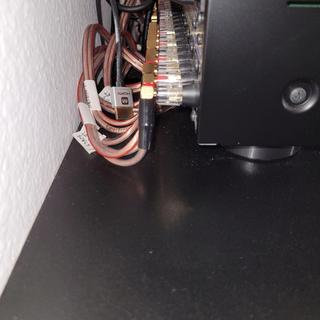
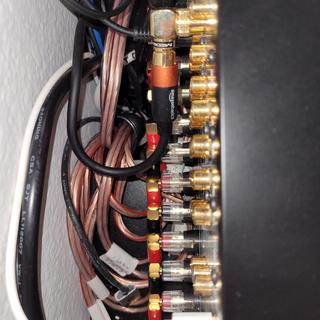
1. Space saving when you are needing to back something up against or very close to something (say receiver up to cabinet or house wall),
2. Insulating. Unlike the PID#2801 plugs which seem to fit loose in the jack and like to touch each other. These have the nice rubber/plastic insulating covers. You will not be shorting these together with other connectors.
3. Easy to connect wires. These are not as picky on getting the wire stripped to some exact length like PID#2801. These have some room for error as long as the bare wire covers the distance from the first screw to the second screw, you are good.
4. Solid wire connection. Once you have torqued down the screws, that wire is not coming out. Plus the red/black cover keeps the set screws from backing out. PID#2801 has too many pieces that you tend to only get finger tight. The banana plug part unscrews itself and it is not easy to tighten down the wire side with just fingers.
Cons:
These are the best I've used but there are some cons.
1. You have to have a small flat blade screwdriver to tighten the set screws. Not a problem for most people buying these but keep that in mind if you are not properly equipped with tools.
2. Puncture wounds. I've wired up at least a couple dozen of these. You are using a small flat blade screwdriver and torqueing down pretty good. Blade slips out of slot and often proceeds to puncture your finger. No matter, these are still my favorite of all I've tried.
3. You do have to remember to put the red or black sleeve on the wire before connecting the wire. And get them properly color coded with your wire polarity. For some of us, that is a lot to remember.
4. Depending on the connector density of your wall jack/plate (I am using the 5 speaker PID#3539), these can take a bit of work to get them to fit around other connections. But I did get them to work with two of those plates in a somewhat restricted space (PID#34376).
These are the only plugs I will use anymore. Don't even bother with most others.
Pros:
1. Space saving when you are needing to back something up against or very close to something (say receiver up to cabinet or house wall),
2. Insulating. Unlike the PID#2801 plugs which seem to fit loose in the jack and like to touch each other. These have the nice rubber/plastic insulating covers. You will not be shorting these together with other connectors.
3. Easy to connect wires. These are not as picky on getting the wire stripped to some exact length like PID#2801. These have some room for error as long as the bare wire covers the distance from the first screw to the second screw, you are good.
4. Solid wire connection. Once you have torqued down the screws, that wire is not coming out. Plus the red/black cover keeps the set screws from backing out. PID#2801 has too many pieces that you tend to only get finger tight. The banana plug part unscrews itself and it is not easy to tighten down the wire side with just fingers.
Cons:
These are the best I've used but there are some cons.
1. You have to have a small flat blade screwdriver to tighten the set screws. Not a problem for most people buying these but keep that in mind if you are not properly equipped with tools.
2. Puncture wounds. I've wired up at least a couple dozen of these. You are using a small flat blade screwdriver and torqueing down pretty good. Blade slips out of slot and often proceeds to puncture your finger. No matter, these are still my favorite of all I've tried.
3. You do have to remember to put the red or black sleeve on the wire before connecting the wire. And get them properly color coded with your wire polarity. For some of us, that is a lot to remember.
4. Depending on the connector density of your wall jack/plate (I am using the 5 speaker PID#3539), these can take a bit of work to get them to fit around other connections. But I did get them to work with two of those plates in a somewhat restricted space (PID#34376).
These are the only plugs I will use anymore. Don't even bother with most others.
- Was this review helpful? Yes (1) No (0)
- Flag as Inappropriate
March 22, 2021
- Was this review helpful? Yes (1) No (0)
- Flag as Inappropriate
Rated 5 out of 5
Exactly What I Needed!
Great product, great price.
So pleased, I've just ordered more.
So pleased, I've just ordered more.
- Was this review helpful? Yes (0) No (0)
- Flag as Inappropriate
- Was this review helpful? Yes (0) No (0)
- Flag as Inappropriate
Rated 5 out of 5
Great product
Works well, as advertised. Perfect
- Was this review helpful? Yes (0) No (0)
- Flag as Inappropriate
- Was this review helpful? Yes (0) No (0)
- Flag as Inappropriate
Rated 5 out of 5
Excellent Product
I love these. Makes speaker connection to the back of my AVR much easier and neater Also allows my entertainment cabinet to be closer to the wall.
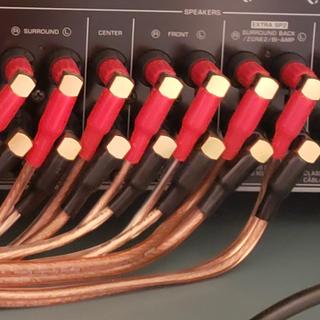
AVR Speaker Connection
- Was this review helpful? Yes (4) No (0)
- Flag as Inappropriate
March 13, 2020
- Was this review helpful? Yes (4) No (0)
- Flag as Inappropriate
Rated 5 out of 5
These are the best banana plugs. Saves space.
These are the only banana plugs I'll buy. The right angle design is superior for space saving compared to any other design.
These are very easy to use. Pull the sleeve off. Undo the tiny screws. Put your stripped speaker wire into the sleeve and then into the plug. Finally, tighten down the the tiny screw and pull the sleeve back up. Done.
These are very easy to use. Pull the sleeve off. Undo the tiny screws. Put your stripped speaker wire into the sleeve and then into the plug. Finally, tighten down the the tiny screw and pull the sleeve back up. Done.
- Was this review helpful? Yes (0) No (0)
- Flag as Inappropriate
- Was this review helpful? Yes (0) No (0)
- Flag as Inappropriate
Rated 5 out of 5
Good quality plugs
Good quality plugs. Very easy to install.
- Was this review helpful? Yes (0) No (0)
- Flag as Inappropriate
- Was this review helpful? Yes (0) No (0)
- Flag as Inappropriate
Rated 5 out of 5
Very good quality, sturdy, professional looking and reliable snug fit
- Was this review helpful? Yes (0) No (0)
- Flag as Inappropriate
- Was this review helpful? Yes (0) No (0)
- Flag as Inappropriate
Rated 5 out of 5
Monoprice 5 Pair Right Angle 24k Gold Plated Banana Speaker Wire Cable Screw Plug Connectors
A bit on the pricey side but if you need it like I did they were great. I used them as cross connects behind the 4 speaker plate. To make the series connection without all the extra ( single cables).
- Was this review helpful? Yes (0) No (0)
- Flag as Inappropriate
- Was this review helpful? Yes (0) No (0)
- Flag as Inappropriate
Reviews for Similar Products