

XLR Connectors Explained: Specs, Types, and Pro Audio Use
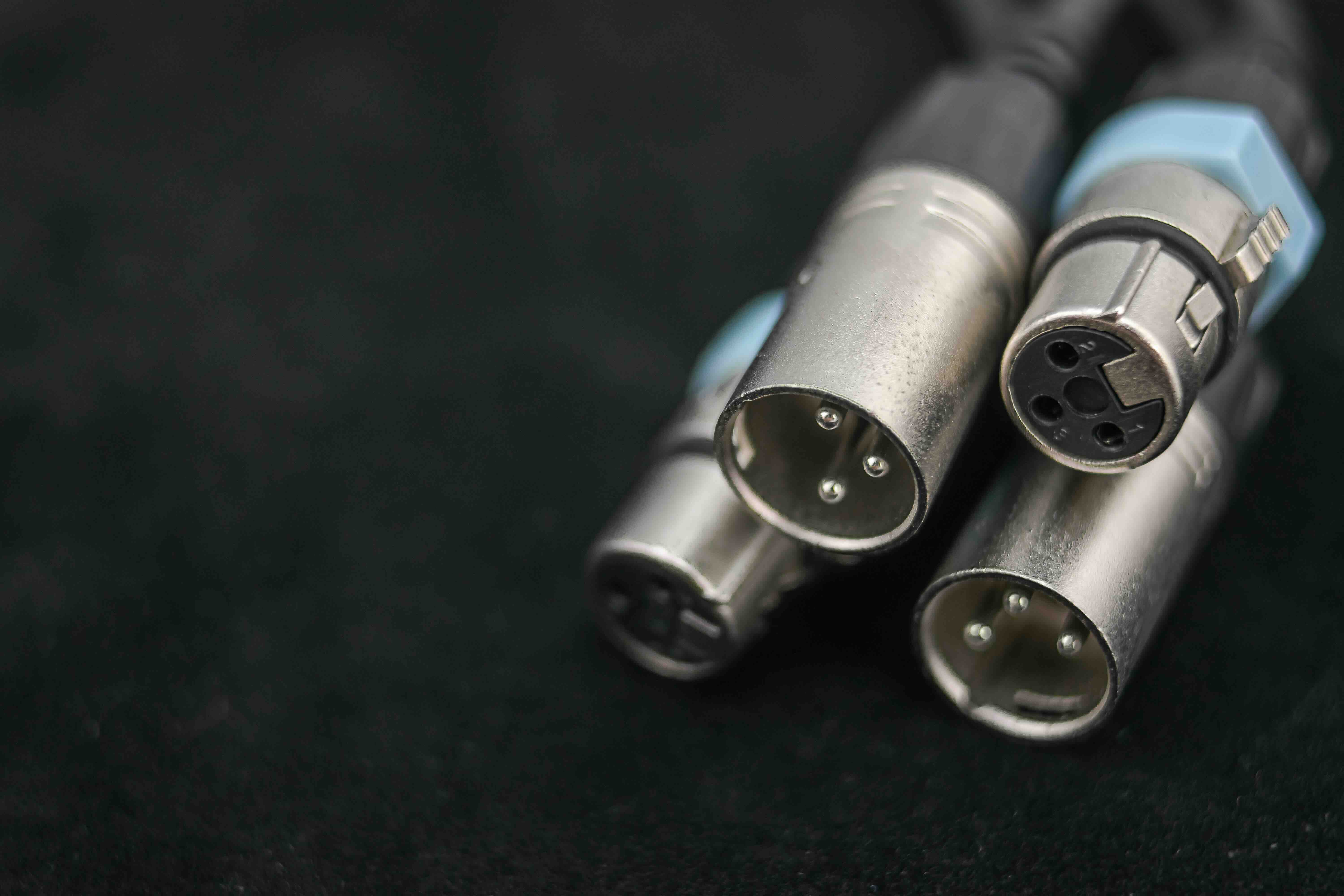
What Are XLR Connectors and Why Do They Matter in Pro Audio and AV Setups?
If you have spent any time around professional audio equipment, recording studios, live sound rigs, or broadcast environments, you have almost certainly run into XLR connectors. They are everywhere. And honestly, once you understand what they do and why they were designed the way they were, it becomes pretty clear why the industry has stuck with them for decades. XLR connectors are three-pin, circular connectors used primarily for transmitting balanced audio signals between devices. That balanced signal part is key, and we will get into that shortly. But the short version is this: XLR cables carry audio in a way that dramatically reduces interference and noise, which is exactly what professionals need when signal quality is non-negotiable.
XLR Dimensions: What the Specs Actually Mean
So, the physical specs. The standard XLR connector, specifically the XLR3, uses three pins and follows a fairly precise dimensional standard. The connector housing typically measures around 19mm in outer diameter, with the three pins arranged in a triangular configuration inside a circular metal shell. Pin spacing is standardized across manufacturers, which is why XLR cables and connectors from different brands are almost universally compatible. The male connector, referred to as the plug, fits securely into the female counterpart, referred to as the socket or jack, with a locking mechanism that clicks into place. That locking feature is not just a convenience thing. It is a design choice that prevents accidental disconnections during live performances or in complex rack setups where cables are constantly being managed. The connector body itself is typically made of zinc alloy or reinforced thermoplastic, giving it the durability needed for road use and repeated connections over years of service.
The Difference Between XLR3, XLR4, XLR5, and Beyond
Most people default to thinking of XLR as a three-pin connector, and that is accurate for the most common use case. But the XLR family actually spans multiple pin configurations.
- XLR3: Three pins, balanced mono audio, the standard for microphones and most professional audio gear
- XLR4: Four pins, typically used for intercom systems and some specialized audio applications
- XLR5: Five pins, commonly used for stereo balanced audio and DMX lighting control in certain configurations
- XLR6 and XLR7: Less common, but used in niche pro audio and broadcast applications
Each pin configuration serves a specific purpose, and swapping them without knowing what you are doing can cause issues or at minimum result in a non-functional connection. If you are working in live event production or theatrical lighting, you will encounter XLR5 quite a bit in the context of DMX512 control. Worth knowing before you start purchasing cable runs for a new installation.
How Balanced Audio Actually Works Through an XLR Connection
This is the part that trips up a lot of people who are newer to pro audio. An XLR cable carries a balanced signal using three conductors: pin 1 is ground, pin 2 carries the positive signal, and pin 3 carries the negative signal, which is essentially an inverted copy of the positive. When the signal reaches the receiving device, the electronics flip the negative signal back to positive and add it to the original positive signal. Any noise that was picked up along the cable run gets cancelled out in this process because the noise exists identically on both conductors and is eliminated when the phase is flipped. This is called common-mode rejection, and it is genuinely impressive in practice. You can run an XLR cable across a stage with power cables, lighting rigs, and wireless interference all around it and still get a clean, noise-free signal on the other end. That is something an unbalanced connection like a standard quarter-inch TS cable simply cannot do consistently over long distances.
Key Advantages of XLR Connectors in Professional Environments
There are a handful of reasons XLR has remained the go-to standard in professional audio and AV work, and none of them are accidental. The design choices are deliberate and they hold up well under real-world conditions.
- Balanced signal transmission eliminates hum and interference over long cable runs
- Secure locking mechanism prevents accidental disconnects during live events
- Robust metal housing withstands repeated connect and disconnect cycles
- Universal pin standard ensures broad compatibility across manufacturers
- Supports phantom power delivery for condenser microphones directly through the cable
Phantom power is worth calling out specifically. The ability to send 48V DC through an XLR cable to power condenser microphones without a separate power supply is a genuinely useful feature for studio and live applications. It is built into most professional mixers and audio interfaces, and it works cleanly through XLR without affecting the audio signal.
Common Drawbacks and Limitations Worth Knowing
XLR is not perfect for every situation, and it is worth being straightforward about that. The connectors are relatively large compared to alternatives like TRS or TRRS, which can be a consideration in compact setups where panel space is limited. XLR cables also tend to be heavier and less flexible than thinner consumer-grade cables, which matters in tight installations or broadcast environments where cable management is a priority. They are also not designed for high-frequency digital audio in the way that AES3 or other digital formats are, though AES3 does actually use the XLR connector with a different signal type. Cost is generally higher than consumer alternatives, though the durability justifies that over time in professional use. For home studios or casual recording setups, the added expense over a quality TRS connection may not always be warranted depending on the application.
XLR vs. TRS: Choosing the Right Connection for Your Setup
The TRS connector, that standard quarter-inch plug with two rings on the shaft, is also capable of carrying a balanced signal. So why bother with XLR? The locking mechanism is the big differentiator in live environments. TRS connections can pull out accidentally, and in a live sound scenario that is a serious problem. XLR also supports phantom power natively in a way that TRS does not in most implementations. For studio work at a fixed desk, TRS balanced connections are completely legitimate and perform at the same signal quality level as XLR. For anything involving live sound, touring, or broadcast, XLR is the more reliable choice given the physical security it provides.
Practical Tips for Working with XLR Cables and Connectors
A few things that come up in real-world use that are worth keeping in mind. First, always verify your pin wiring if you are building custom cables. The standard is pin 2 hot, but some older or internationally sourced equipment may use pin 3 hot, which can result in a polarity reversal. It does not usually cause damage, but it affects how signals combine at a mixing console. Second, the locking collar on XLR connectors should engage fully with an audible click. If it does not, the connector may be worn or slightly out of spec, and it is worth replacing rather than risking a dropout mid-performance. Third, for long cable runs exceeding 50 feet, use a cable with low capacitance per foot and proper shielding. The balanced design handles interference well, but cable quality still matters at extended lengths. Finally, store XLR cables coiled loosely using the over-under technique to preserve the internal conductor geometry and extend the life of the cable significantly.
Why Monoprice Is a Smart Choice for XLR Cables and Professional Audio Connectivity
Here is the thing about sourcing XLR cables and connectors for professional work: quality matters, but so does the budget, especially when you are outfitting an entire venue, studio, or rack system. That is where Monoprice consistently delivers. The product lineup covers a wide range of professional audio cable needs, from standard microphone cables to specialty configurations, all built to the dimensional and electrical standards that the industry expects. The quality holds up under real use, and the pricing does not require a procurement approval chain to justify. For integrators, studio operators, live sound engineers, or IT professionals managing AV infrastructure, finding a reliable supplier that understands both the technical requirements and the budget reality of the work is not always easy. Monoprice does exactly that. If you are looking for professional XLR cables and audio connectivity solutions that deliver consistent performance without the markup, exploring what Monoprice professional XLR cables and pro audio connectivity gear has to offer is a straightforward next step. The combination of build quality, compatibility, and value is genuinely hard to match at this price point.
Frequently Asked Questions About XLR Connectors and Cables
What does XLR stand for?
XLR stands for External Line Return. The name originates from the Cannon X connector series, which was later modified with a latch and rubber compound to produce the XLR designation used today.
What is the standard XLR pin configuration for microphones?
Standard microphone connections use the XLR3 three-pin configuration, with pin 1 as ground, pin 2 as the positive signal, and pin 3 as the negative signal.
Can XLR cables carry phantom power?
Yes. XLR cables are the standard method for delivering 48V phantom power from a mixer or audio interface to condenser microphones, with the voltage traveling on pins 2 and 3 relative to pin 1.
What is the outer diameter of a standard XLR connector?
A standard XLR connector housing measures approximately 19mm in outer diameter, which is consistent across the industry and ensures broad compatibility between manufacturers.
Is XLR better than TRS for balanced audio?
Both XLR and TRS can carry balanced audio signals at equivalent quality. XLR is generally preferred for live and touring environments because of its locking connector design, which prevents accidental disconnection.
What is the maximum recommended cable length for XLR connections?
XLR balanced connections can reliably run up to several hundred feet without significant signal degradation, though cable quality and shielding become increasingly important as lengths extend beyond 100 feet.
Are all XLR connectors compatible with each other?
XLR connectors with the same pin count are broadly compatible across manufacturers due to standardized dimensions. However, XLR3, XLR4, and XLR5 connectors are not interchangeable with each other.
Can XLR be used for DMX lighting control?
Yes. DMX512 lighting control systems commonly use XLR5 connectors, though some lower-cost implementations use XLR3. It is important to use cables rated for DMX rather than standard audio cables for reliable control signal transmission.
What causes a humming noise in an XLR connection?
Hum in an XLR connection is often caused by a ground loop, a damaged cable shield, or a wiring error such as an incorrect pin connection. Checking cable integrity and verifying grounding in the signal chain typically resolves the issue.
How long do XLR connectors typically last?
High-quality XLR connectors are rated for thousands of connection cycles. With proper handling and storage, a well-made XLR cable can last many years in professional use before the connectors or conductors require replacement.


