

Speaker Wire Connection: Enhance Audio Performance Today
Why Proper Speaker Wire Connection Actually Matters More Than You Think
There is something genuinely satisfying about setting up a speaker system and hearing it perform the way it was designed to. But here is the part most people skip over or rush through -- the connection itself. How you connect speaker wire determines a surprising amount of your final audio quality. A loose connection, reversed polarity, or the wrong gauge wire can quietly degrade everything you paid good money to achieve. This guide breaks down exactly how to connect speaker wire the right way, what methods are available, and how to choose the best approach for your specific setup. Whether you are building a home theater from scratch or reworking an older system, this is worth reading carefully.
Understanding Speaker Wire Basics Before You Connect Anything
Speaker wire is a two-conductor cable -- one positive, one negative -- designed to carry an amplified audio signal from a receiver or amplifier to a speaker. The wire gauge, measured in AWG (American Wire Gauge), affects how much resistance the wire introduces over distance. Lower AWG numbers mean thicker wire with less resistance. For most home audio runs under 50 feet, 16 AWG is a solid starting point. Longer runs or lower impedance speakers benefit from 14 AWG or even 12 AWG. Thicker wire reduces signal loss and maintains audio clarity across the full frequency range. Get this part wrong and the rest of your effort doesn't matter nearly as much as you'd hope.
The Most Common Methods for Connecting Speaker Wire
There are several practical approaches depending on your equipment and environment. Each has a legitimate use case, and understanding the differences helps you make the right call for your situation.
- Bare wire termination -- stripping the insulation and inserting wire directly into a binding post or spring clip terminal. This is cost-free and works reliably when done correctly.
- Banana plugs -- terminated connectors that insert cleanly into binding posts, offering a secure and repeatable connection ideal for frequent swaps or audiophile setups.
- Spade connectors -- fork-shaped terminals that fasten under the screw cap of binding posts. Excellent contact surface area, very stable connection.
- Pin connectors -- thin metal pins crimped or soldered to wire ends, used primarily with spring clip or small terminal receivers.
- Twist-and-tape or wire nuts -- typically used in-wall or in-ceiling permanent runs to join wire segments together. Less ideal for speaker-level connections, but functional in specific installation contexts.
How to Connect Speaker Wire Step by Step
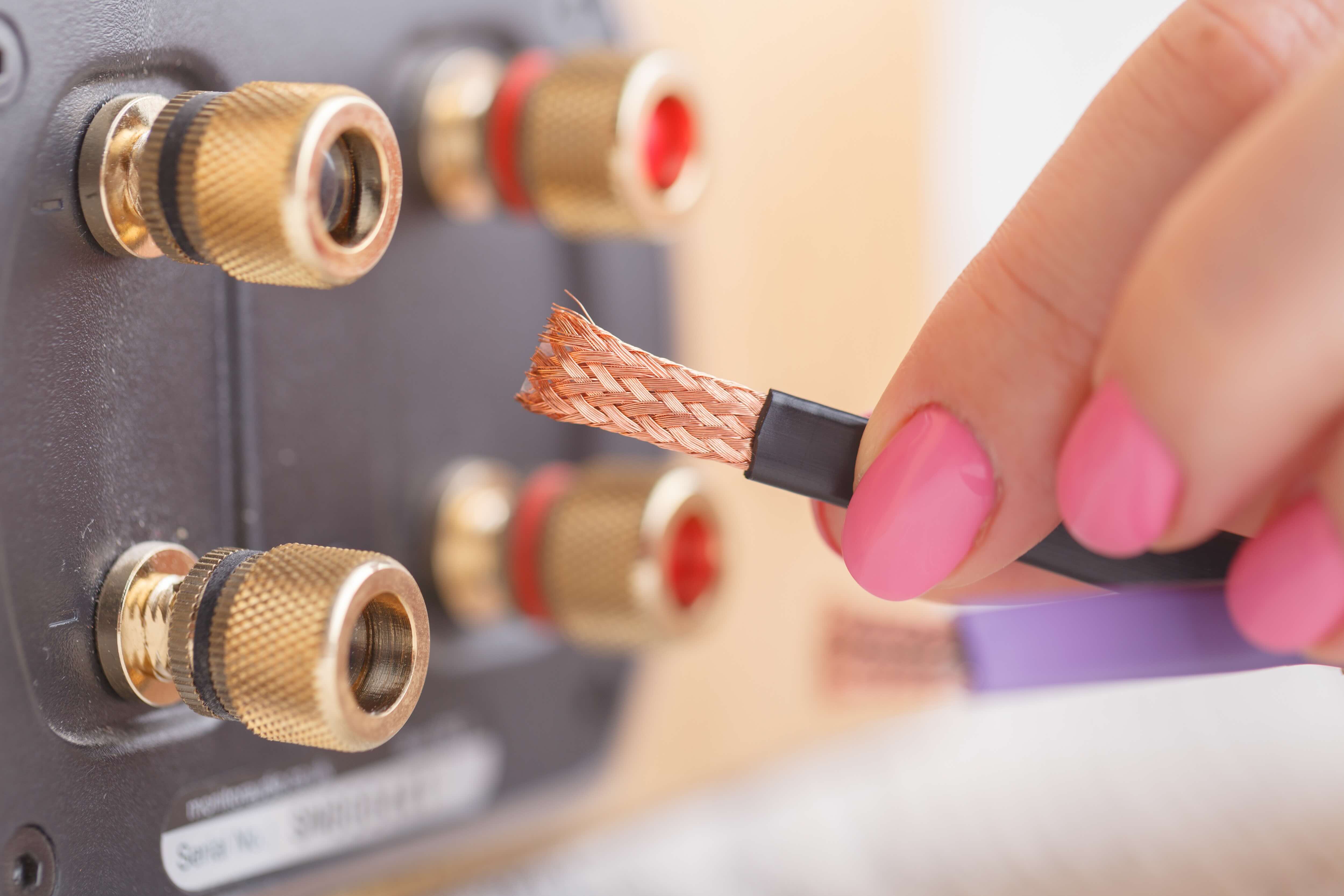
Start by turning off your amplifier or receiver. Always. There is no scenario where working with live audio equipment during a wiring job is a good idea. Strip about three quarters of an inch of insulation from each conductor using a wire stripper. Twist the exposed copper strands tightly so they stay together and don't fray. Identify the positive and negative conductors -- typically, speaker wire has one conductor with a stripe, ridge, or marking to indicate polarity. Match positive to positive and negative to negative at both the amplifier and speaker ends. Polarity reversal causes the speakers to work against each other, collapsing the stereo image and reducing bass output significantly. Once conductors are prepped, insert them into the appropriate terminals, tighten any binding posts firmly, and verify there are no stray wire strands bridging across terminals. Those stray strands can cause a short circuit that damages amplifier output stages.
Banana Plugs and Spade Connectors: When to Upgrade Your Termination
Bare wire works. But it degrades over time as copper oxidizes at the exposed ends, and repeated connects and disconnects loosen the strand bundle. Banana plugs and spade connectors eliminate this issue entirely. A quality banana plug provides consistent contact pressure, a polished metal contact surface, and makes it easy to swap speakers or amplifiers without re-stripping wire every time. Spade connectors are preferred in permanent or high-end setups where binding post connections are periodically tightened during maintenance. Both options are available at affordable prices and take only minutes to install using a basic crimping tool or solder setup. The performance difference is real and measurable in demanding listening environments.
Polarity and Phase: The Detail That Makes or Breaks Your Sound
Getting polarity right is non-negotiable. When all speakers in a system share the same polarity alignment -- meaning each driver moves in and out at the same time in response to an identical signal -- the acoustic result is coherent, accurate sound with proper soundstage and bass reproduction. When one speaker is wired out of phase, it creates cancellation effects. Bass frequencies disappear. Vocals sound thin or hollow. The spatial image collapses toward the center. Checking polarity at every connection point, from amplifier to terminal block to speaker driver, is one of the most reliable ways to immediately improve your system's performance without spending a dollar on new equipment.
In-Wall and In-Ceiling Installations: Different Rules Apply
Running speaker wire inside walls or ceilings requires CL2 or CL3 rated cable -- those ratings indicate the wire is designed and approved for in-wall use under National Electrical Code guidelines. Standard lamp cord or non-rated speaker wire should never be used in-wall because of fire risk. Plan your wire runs before cutting any holes, accounting for studs, fire blocks, and HVAC pathways. Fish tape and wall plates with keystone or binding post inserts help create a clean, professional-looking installation. Label both ends of every run during installation, not after -- you will thank yourself during the setup phase. In-wall installations are permanent, so taking extra time to get connections right at both ends pays dividends for years.
Common Mistakes When Connecting Speaker Wire and How to Avoid Them
A few specific errors show up repeatedly in DIY audio setups and cause real performance problems.
- Reversing polarity on one or more speakers -- always double-check positive to positive, negative to negative at both ends.
- Using wire gauge that is too thin for long runs -- increases resistance, reduces power delivery, rolls off bass.
- Leaving stray wire strands that bridge terminals -- causes short circuits that can damage amplifier output stages.
- Over-tightening binding posts with spade connectors -- can crack the binding post housing on budget receivers.
- Under-tightening bare wire connections -- allows oxidation to build at the contact point, degrading signal quality over time.
- Using non-rated wire in-wall -- a fire code violation and a genuine safety risk.
- Skipping labeling on long runs -- creates confusion and errors during troubleshooting.
Wire Management and Long-Term Maintenance Tips
Once everything is connected and performing well, a little ongoing attention keeps the system operating at its best. Periodically check binding post connections and re-tighten if needed, as thermal cycling causes slight loosening over time. If using bare wire, inspect the exposed copper every year or two for oxidation and re-strip to fresh copper if needed. Cable management -- routing speaker wire neatly along baseboards, through raceways, or inside walls -- reduces the risk of physical damage and keeps connections from being accidentally pulled loose. Proper management also reduces the chance of speaker wire running parallel to power cables, which can introduce interference in sensitive setups.
Why Monoprice Is the Right Source for Your Speaker Wire Needs
Honestly, this is where the practical side of all this advice comes into focus. Having the right wire, the right connectors, and the right tools matters as much as knowing the technique. Monoprice has built a well-earned reputation among AV integrators, enthusiasts, and first-time builders alike for delivering high-quality speaker wire and audio accessories at prices that don't require a second thought. Whether you need 16 AWG bulk speaker wire for a living room setup, 12 AWG for a high-demand custom install, or a full set of banana plugs and spade connectors to finish things properly, the selection is there and the quality holds up in real-world use. For anyone looking to build or improve a speaker system with reliable materials and expert-level specifications, Monoprice speaker wire and audio connection solutions offer exactly the performance and value that serious audio work demands. The gap between a mediocre listening experience and a great one is often just a few well-made connections away.
Frequently Asked Questions About Connecting Speaker Wire
What gauge speaker wire should I use for home audio?
For most home audio applications with runs under 50 feet, 16 AWG speaker wire is appropriate. Longer runs or speakers with impedances of 4 ohms or lower benefit from 14 AWG or 12 AWG to minimize resistance and maintain power delivery.
Does it matter which speaker wire terminal is positive and which is negative?
Yes, polarity matters significantly. Connecting positive to positive and negative to negative at both the amplifier and speaker ends ensures proper phase alignment, which directly affects soundstage accuracy and bass performance.
How do I identify the positive and negative conductors in speaker wire?
Most speaker wire includes a visual marker on one conductor -- a stripe, ridge, or printed text. The marked conductor is typically the positive. When in doubt, check the packaging or use a multimeter to confirm continuity against a known reference.
Are banana plugs better than bare wire connections?
Banana plugs provide a more consistent and durable connection over time compared to bare wire. They resist oxidation, maintain reliable contact pressure, and make it easy to disconnect and reconnect equipment without degrading the wire end.
Can I use regular speaker wire inside walls?
No. In-wall speaker wire installations require CL2 or CL3 rated cable, as specified by the National Electrical Code. Standard speaker wire is not approved for in-wall use and presents a fire hazard in enclosed spaces.
What happens if speaker wires are wired out of phase?
Out-of-phase wiring causes acoustic cancellation between speakers. The result is reduced bass output, a thin or hollow midrange, and a collapsed stereo image. Correcting phase alignment immediately improves system performance without any equipment changes.
How do I connect speaker wire without a soldering iron?
Crimp-style banana plugs, spade connectors, and pin connectors can all be installed using a basic crimping tool without soldering. Spring clip terminals on many receivers accept bare or pin-terminated wire without any tools at all.
How far can speaker wire run without losing audio quality?
Run length depends on wire gauge and speaker impedance. A 16 AWG wire can typically run 48 feet at 8 ohms before resistance becomes audible. Moving to 14 AWG extends that range to around 80 feet, and 12 AWG handles runs up to approximately 120 feet.
Is there a difference in sound quality between speaker wire brands?
At equivalent gauge and conductor purity, the differences between reputable speaker wire brands are minimal. What matters most is appropriate gauge for your run length, solid terminations, and consistent polarity -- not brand premium pricing.
How do I know if my speaker wire connection is causing a short circuit?
Signs of a short circuit include a receiver or amplifier shutting down immediately, a protection mode indicator activating, or blown fuses in the amplifier. Inspect all terminal connections for stray wire strands bridging positive and negative contacts, and correct any contact before powering the system back on.


