

Single Mode Fiber Diameter: Core Specs and Why They Matter
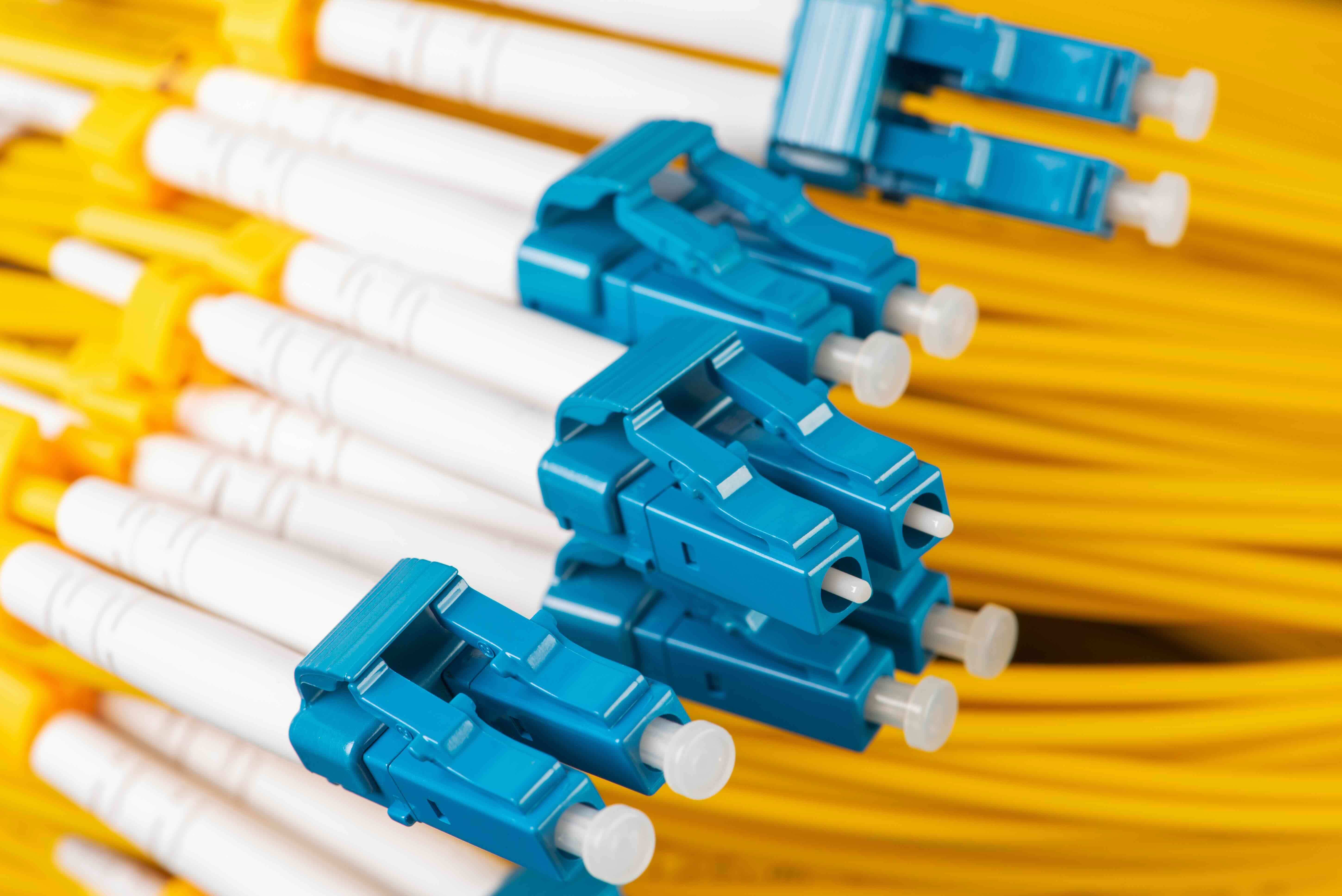
Understanding Single Mode Fiber Diameter: What It Is and Why It Matters
If you've spent any time researching fiber optic cabling, you've probably run into the term "single mode fiber" and started wondering about the actual physical dimensions involved. It seems like a small detail -- and honestly, in some ways it is -- but the diameter of single mode fiber plays a surprisingly significant role in how it performs, how it's installed, and whether it's the right choice for your specific application. So let's break it down in a way that actually makes sense, whether you're an IT professional building out a data center or someone just trying to understand what's going into your network infrastructure.
What Is Single Mode Fiber and How Does It Work
Single mode fiber (SMF) is a type of optical fiber designed to carry light directly down the fiber with minimal reflection. Unlike multimode fiber, which allows multiple light paths or "modes" to travel simultaneously, single mode fiber uses a much smaller core that essentially forces light to travel in a single straight path. This design drastically reduces signal dispersion -- meaning the light pulse stays tight and clean over very long distances. The result is a fiber type that's purpose-built for high-bandwidth, long-distance data transmission. Telecommunications companies, enterprise networks, and internet backbone infrastructure all rely heavily on it.
The Exact Diameter of Single Mode Fiber Explained
Here's where it gets specific and worth paying attention to. A standard single mode fiber has a core diameter of 8 to 10 microns -- most commonly cited as 9 microns. The cladding that surrounds that core is standardized at 125 microns. So when you see single mode fiber referenced as "9/125," that's what it means: a 9-micron core with a 125-micron cladding. To put that into perspective, a human hair is roughly 70 microns in diameter -- so you're working with something incredibly fine. The tiny core is precisely what enables single mode fiber to achieve the low signal loss and high bandwidth it's known for across long distances.
Why Core Diameter Has Such a Big Impact on Performance
The relationship between core size and performance is not incidental -- it's fundamental. A smaller core means fewer light modes can propagate through the fiber, which directly reduces modal dispersion. Less dispersion translates to a cleaner signal over greater distances. Single mode fiber can reliably transmit data across distances exceeding 100 kilometers without significant signal degradation when paired with appropriate transceivers. That's a meaningful advantage in scenarios like long-haul telecommunications, campus backbone installations, or any environment where runs exceed what multimode fiber can efficiently handle. The 9-micron core is not arbitrary -- it's an engineered threshold that defines the entire performance profile of the cable.
Key Advantages of Single Mode Fiber
There are several compelling reasons why single mode fiber continues to dominate long-distance and high-performance networking applications. Understanding these benefits helps clarify where this cable type truly earns its place.
- Extremely low signal attenuation over long distances
- Supports higher bandwidth than multimode fiber
- Future-proof for evolving transmission speeds and wavelengths
- Compatible with DWDM technology for increased capacity
- Lower long-term cost per bit transmitted at scale
- Standardized 9/125 micron dimensions ensure broad compatibility
Common Drawbacks Worth Knowing Before You Buy
Single mode fiber is not without its challenges, and being honest about those drawbacks helps you make better purchasing decisions. The small 9-micron core, while responsible for its superior performance, also makes the fiber more difficult to terminate and splice. Precise alignment is critical, and even minor misalignment can cause significant signal loss. This typically means higher installation labor costs compared to multimode fiber. Additionally, single mode transceivers and light sources -- which use lasers rather than LEDs -- tend to cost more upfront. For short-distance runs within a building or rack room, single mode fiber may represent unnecessary cost and complexity when multimode would serve perfectly well.
Single Mode vs. Multimode Fiber: Choosing the Right One
The decision between single mode and multimode fiber ultimately comes down to distance and budget. Multimode fiber, with its larger core diameter of 50 or 62.5 microns, is easier to work with and more affordable per foot in shorter runs -- think within a data center, between floors in a building, or connecting equipment in the same room. Single mode is the clear winner for anything spanning more than a few hundred meters, and especially for outdoor runs, campus connections, or service provider infrastructure. If you're planning a network that needs room to grow and spans significant physical distance, investing in single mode fiber from the start is the smarter long-term play.
Practical Installation Tips for Single Mode Fiber
Working with 9-micron single mode fiber requires more care than multimode, but the process is manageable with the right preparation. A few things consistently make a difference in the field.
- Always use precision-grade connectors and ferrules rated for single mode use
- Clean fiber end-faces before every connection -- contamination is a leading cause of signal loss
- Use a fusion splicer rather than mechanical splicing whenever possible for lower insertion loss
- Verify bend radius limits during installation to avoid microbend-induced attenuation
- Test every link with an OTDR after installation to confirm acceptable loss levels
- Label both ends clearly with fiber type, wavelength rating, and run length
Understanding Fiber Optic Cable Jacket and Overall Cable Diameter
It's worth distinguishing between the optical fiber diameter itself and the overall diameter of the finished cable product. The 9/125 micron measurement refers only to the glass fiber. Once that fiber is coated with a protective acrylate layer, typically bringing it to 250 microns, and then jacketed and bundled for practical deployment, the finished cable diameter varies depending on strand count and construction type. A simplex single mode patch cable might measure around 2mm in outer diameter, while a tight-buffered distribution cable with multiple fibers could be considerably thicker. Knowing both the fiber spec and the cable construction spec matters for conduit planning, bend radius calculations, and connector compatibility.
Why Monoprice Is a Smart Choice for Single Mode Fiber Cabling
When you're sourcing single mode fiber patch cables, trunk cables, or any related connectivity hardware, the quality and consistency of what you buy directly affects network reliability. That's not a place to cut corners or guess. Monoprice has built a well-earned reputation as a trusted supplier for IT professionals and AV integrators looking for performance-grade solutions at honest price points. The product lineup covers a wide range of single mode fiber configurations -- from standard simplex and duplex patch cables to more specialized assemblies -- all built to meet industry standards for insertion loss and return loss. If you're ready to spec out your fiber infrastructure with confidence, explore the full selection of single mode fiber optic cables and networking solutions at Monoprice and see how far your budget actually goes when you're not overpaying for a brand name.
Frequently Asked Questions About Single Mode Fiber Diameter
What is the standard core diameter of single mode fiber?
The standard core diameter of single mode fiber is 9 microns, paired with a 125-micron cladding. This is why it is commonly referred to as 9/125 fiber.
How does the small core diameter of single mode fiber affect performance?
The small 9-micron core restricts light to a single propagation path, reducing modal dispersion and enabling high-bandwidth transmission over distances exceeding 100 kilometers with minimal signal loss.
What is the difference between the fiber diameter and the cable diameter?
The fiber diameter refers to the glass core and cladding, measured at 9/125 microns. The cable diameter refers to the finished product including protective coatings, buffering, and jacket materials, which vary by cable construction.
Can single mode fiber be used for short distance runs?
It can, but it is generally not cost-effective for short runs. Multimode fiber is easier to terminate, less expensive per foot, and performs well within distances of a few hundred meters, making it the practical choice for intra-building applications.
Why is single mode fiber harder to splice than multimode fiber?
The 9-micron core requires extremely precise alignment during splicing and termination. Even small deviations in alignment cause measurable signal loss, which is why fusion splicing is strongly preferred over mechanical methods.
What wavelengths does single mode fiber support?
Single mode fiber is optimized for transmission at 1310nm and 1550nm wavelengths. It also supports DWDM applications that use multiple wavelengths simultaneously to multiply transmission capacity over a single fiber strand.
Is single mode fiber compatible with multimode transceivers?
No. Single mode fiber requires laser-based transceivers designed specifically for single mode use. Using multimode transceivers with single mode fiber results in significant signal loss and unreliable performance.
What does the 125-micron cladding do in single mode fiber?
The cladding surrounds the core and has a lower refractive index, which causes light to reflect back into the core rather than escaping. This total internal reflection is the fundamental mechanism that keeps light traveling through the fiber.
How far can single mode fiber transmit data without a repeater?
Depending on the transceiver and wavelength used, single mode fiber can transmit data over distances of 40 kilometers to well over 100 kilometers before requiring signal amplification or regeneration.
Is single mode fiber future-proof for higher network speeds?
Yes. Single mode fiber's low attenuation and wide bandwidth capacity make it highly compatible with next-generation transmission technologies. Networks built on single mode infrastructure today can be upgraded to higher speeds by changing transceivers rather than replacing the fiber itself.


