

Optical Connector Types: A Complete Fiber Optic Guide
Understanding Optical Connector Types: A Complete Guide for Smarter Fiber Decisions
If you have ever stared at a fiber optic cable spec sheet and wondered why there are so many connector styles, you are not alone. Optical connectors are one of those topics that feel unnecessarily complicated at first glance, but once you understand the core differences, choosing the right one becomes a lot more straightforward. Whether you are setting up a data center, running fiber through a building, or just trying to make sense of what your network infrastructure actually requires, this guide breaks it all down in plain language. No jargon overload, just practical knowledge you can actually use.
What Is an Optical Connector and Why Does It Matter
An optical connector is a mechanical device used to join two fiber optic cables together, or to connect a fiber cable to a piece of active equipment like a transceiver or switch. Unlike electrical connectors, which transfer voltage, optical connectors align glass or plastic fiber strands with extreme precision so that light can pass between them with minimal loss. Even a tiny misalignment can degrade signal quality, which is why the engineering behind these connectors is more precise than most people expect. The connector type you choose affects insertion loss, return loss, compatibility, and ultimately, the performance of your entire network. So yeah, it actually matters quite a bit.
The Most Common Optical Connector Types Explained
There are several connector types used across residential, commercial, and enterprise environments. Each has its own physical form, performance characteristics, and ideal use case. Here is a breakdown of the ones you are most likely to encounter in real deployments today.
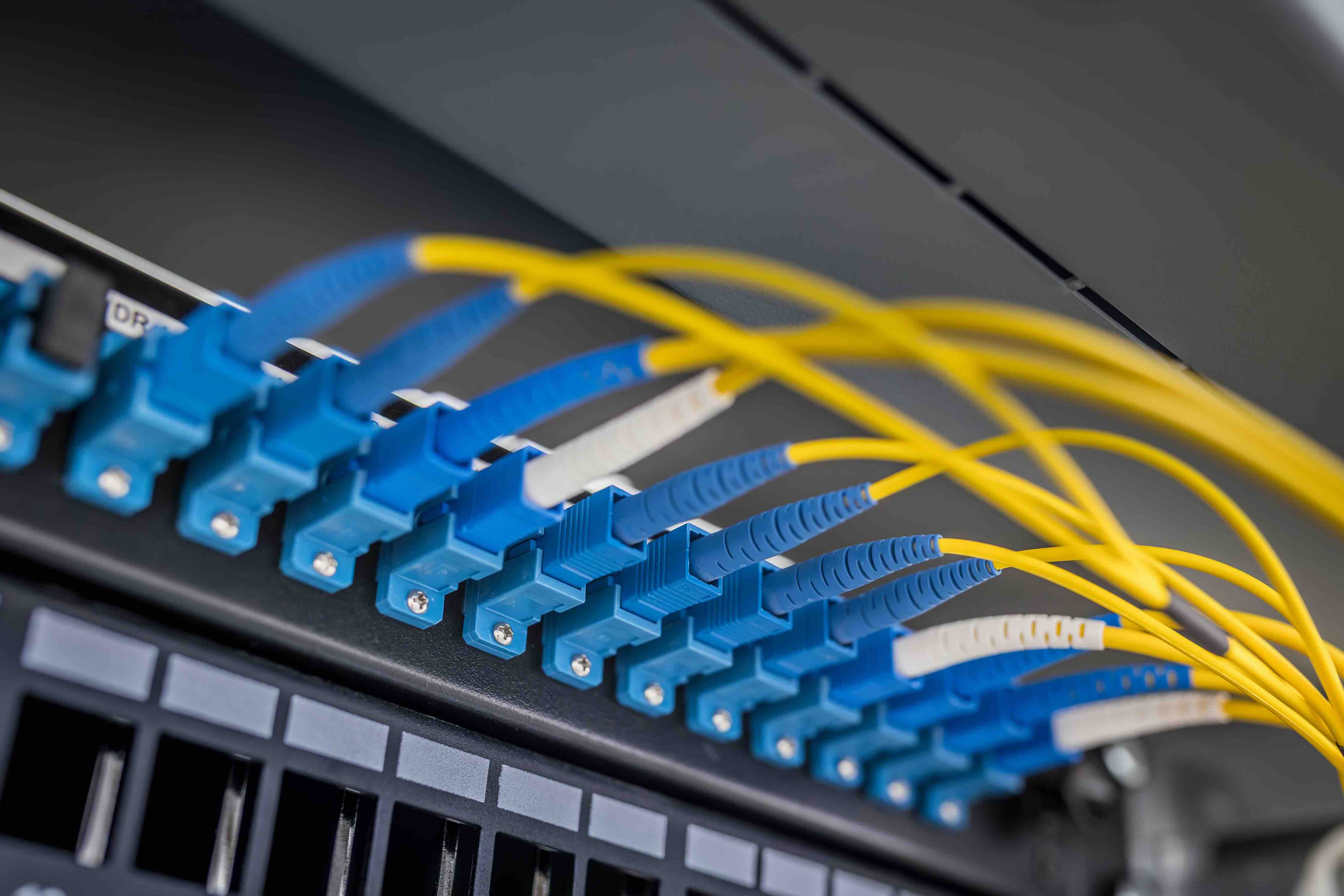
- SC (Subscriber Connector) -- One of the oldest and most widely deployed connectors, featuring a push-pull coupling mechanism and a 2.5mm ferrule. Reliable and easy to use, though slightly bulky by modern standards.
- LC (Lucent Connector) -- The go-to choice for high-density environments. Uses a 1.25mm ferrule and a latch mechanism similar to an RJ45. Common in data centers and enterprise networks.
- ST (Straight Tip) -- A bayonet-style connector that was once dominant in multimode installations. It is less common now but still found in legacy infrastructure.
- MTP/MPO (Multi-fiber Push On) -- Designed for high-density, high-speed applications. Connects multiple fibers simultaneously, making it ideal for backbone cabling and 40G/100G+ networks.
- FC (Ferrule Connector) -- A threaded connector known for its stability. Frequently used in measurement equipment, single-mode applications, and environments subject to vibration.
- E2000 -- A premium connector with a built-in shutter that protects the ferrule. Common in European telecom deployments and high-end single-mode systems.
Single-Mode vs. Multimode: How Connector Type Intersects with Fiber Type
This is where a lot of people get tripped up, and it is worth addressing directly. The connector type and the fiber type are two different things, but they are closely related. Single-mode fiber, which carries light over longer distances using a laser source, is typically paired with FC, LC, or SC connectors polished to UPC or APC specifications. Multimode fiber, designed for shorter distances and often used with LED or VCSEL light sources, is frequently terminated with LC or SC connectors as well, but the polish type and insertion loss tolerances differ. APC connectors, identifiable by their angled ferrule and green coloring, offer better return loss performance and are preferred in single-mode systems where back reflections can cause issues. Knowing your fiber type before selecting a connector is not optional, it is foundational.
Key Advantages of Modern Optical Connectors
Modern optical connectors have come a long way from the bulky, finicky designs of earlier decades. The benefits of today's precision-engineered connectors are real and measurable, especially when you are working at scale.
- Low insertion loss for cleaner, more reliable signal transmission
- High return loss ratings that reduce back reflections in sensitive systems
- Compact form factors like LC duplex that enable high port density without sacrificing performance
- Pre-terminated assemblies that dramatically reduce installation time and labor costs
- Field-installable options for flexible, on-site termination when pulling pre-made cables is not practical
- Standardized form factors that ensure broad compatibility across vendors and equipment
Common Drawbacks and Limitations to Know About
No technology is perfect, and optical connectors are no exception. One of the most common issues is contamination. Even microscopic dust particles on a ferrule end face can cause significant signal degradation, which is why proper cleaning procedures and end caps matter more than people realize. Connector mismatch is another real concern. Connecting an APC connector to a UPC port, for example, can result in poor performance and potential damage. There is also the cost factor. High-density MTP/MPO assemblies and precision APC connectors carry a higher price point than basic multimode SC setups, so budget planning should account for the specific requirements of your infrastructure rather than defaulting to the cheapest option available.
Polishing Styles: UPC vs. APC and When Each Applies
The polish on a fiber connector end face has a direct impact on optical performance. UPC, or Ultra Physical Contact, uses a slight curvature to ensure core-to-core contact, resulting in low insertion loss. It is widely used across both single-mode and multimode applications and is typically identified by its blue connector housing. APC, or Angled Physical Contact, adds an 8-degree angle to the end face, which redirects any reflected light away from the fiber core. This produces superior return loss figures, often exceeding 60 dB, making it the preferred choice for passive optical networks, CATV systems, and long-haul single-mode deployments. The short version: use APC when back reflections are a concern, use UPC when they are not, and never mix the two in the same connection.
How to Choose the Right Optical Connector for Your Application
The right connector depends on several converging factors: your fiber type, your equipment interfaces, your port density requirements, and your budget. For enterprise data centers with high-density switching, LC duplex or MTP/MPO is almost always the answer. For telecom or outdoor plant applications where signal integrity over long distances is critical, APC-polished SC or FC connectors tend to perform best. Legacy environments built around ST connectors may not need an immediate overhaul, but any expansion or upgrade should be planned around more modern form factors. If you are doing a fresh installation, resist the temptation to just copy what someone else used without verifying it aligns with your specific gear and performance targets. The spec sheet is your friend here.
Installation and Maintenance Best Practices
Even the best connector will underperform if it is installed or maintained improperly. Cleaning every connector end face before mating is non-negotiable. One-click cleaners and lint-free swabs are inexpensive insurance against avoidable signal loss. Always inspect end faces with a fiber inspection microscope or video inspection probe before connecting, especially in critical links. Store unused connectors with end caps in place. When routing fiber, avoid sharp bends that exceed the cable's minimum bend radius, as this causes physical stress on the fiber itself and degrades performance over time. These are not optional best practices, they are the baseline for any installation that is expected to perform reliably over the long term.
Why Monoprice Is the Right Source for Optical Connectivity Solutions
When it comes to sourcing reliable fiber optic connectivity hardware without overpaying for it, Monoprice delivers on both fronts. The product catalog covers a wide range of pre-terminated fiber assemblies, MTP/MPO trunk cables, LC and SC patch cables in both UPC and APC configurations, and the accessories needed to maintain them properly. These are not budget compromises, they are precision-built products designed to meet the real performance standards that IT professionals and AV integrators depend on every day. For anyone building or expanding a fiber infrastructure who wants high-quality gear at a price that makes sense, fiber optic cables and optical connectivity solutions from Monoprice represent a genuinely smarter way to source. The combination of consistent quality, broad selection, and value-forward pricing is exactly what modern network deployments require, whether you are outfitting a single server room or managing installations across multiple facilities.
Frequently Asked Questions About Optical Connector Types
What is the most commonly used fiber optic connector in data centers today?
The LC duplex connector is the most widely used in modern data center environments due to its compact 1.25mm ferrule and high port density compatibility. MTP/MPO connectors are also common for high-speed backbone applications at 40G, 100G, and beyond.
Can I connect an APC connector to a UPC connector?
No. Mating an APC connector to a UPC connector is not recommended. The 8-degree angle difference between the two end faces results in poor physical contact, increased insertion loss, and potential damage to the ferrule surfaces over time.
What is insertion loss and why does it matter in fiber connectors?
Insertion loss refers to the amount of optical signal lost as light passes through a connector junction. Lower insertion loss means more of the original signal reaches its destination. High insertion loss leads to degraded performance and can cause network errors in sensitive, high-speed systems.
What is the difference between single-mode and multimode fiber connectors?
The connectors themselves can often be the same physical type, such as LC or SC, but the fiber they terminate and the polish type differ. Single-mode connectors typically use APC or UPC polishing for long-distance, high-precision applications, while multimode connectors are usually UPC-polished and used for shorter distances.
How do I clean a fiber optic connector properly?
Use a one-click cleaner tool or a lint-free IEC-grade swab with appropriate fiber cleaning fluid. Always inspect the end face with a fiber inspection probe before and after cleaning to confirm contamination has been removed. Never blow on a connector end face as this introduces moisture and particles.
What does MTP/MPO stand for and when should I use it?
MTP stands for Mechanical Transfer Push-On and MPO stands for Multi-fiber Push-On. These are high-density connectors that terminate multiple fibers in a single interface, typically 12 or 24 fibers. They are used in high-speed backbone cabling and applications requiring 40G, 100G, or higher throughput.
Is an FC connector still relevant for modern networks?
FC connectors are less common in new installations but remain relevant in specific use cases including fiber optic test equipment, measurement instruments, and environments with significant vibration where the threaded coupling provides added stability.
What color coding is used to identify fiber optic connector types?
Color coding generally follows industry conventions: blue housings indicate UPC single-mode connectors, green indicates APC single-mode connectors, beige or off-white indicates multimode OM1 and OM2, aqua indicates OM3, and violet or erica indicates OM4 multimode fiber.
How do I know if my fiber connector is damaged or dirty?
Use a fiber inspection microscope or video inspection probe to examine the end face. Scratches, pits, cracks, or visible contamination on the core area indicate damage or fouling that requires cleaning or connector replacement before the link is put into service.
What is return loss in optical connectors and why is it important?
Return loss measures how much light is reflected back toward the source at a connector junction. Higher return loss values, expressed in negative dB, are better because they indicate less reflected light. APC connectors typically achieve return loss values greater than 60 dB, making them preferable in systems sensitive to back reflections such as analog video and DWDM transmission.


