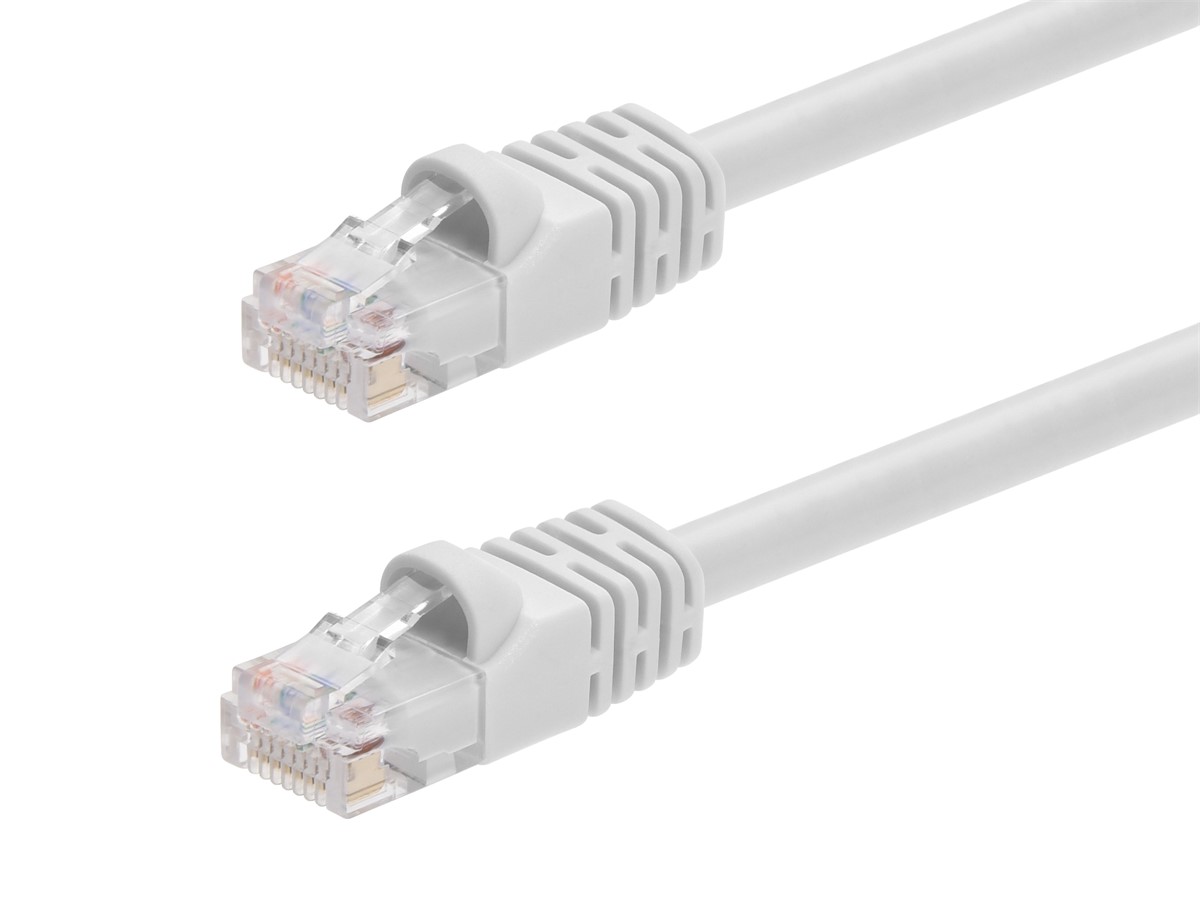
Inside Ethernet Cables: 8 Wires, Shielding, and Grounding
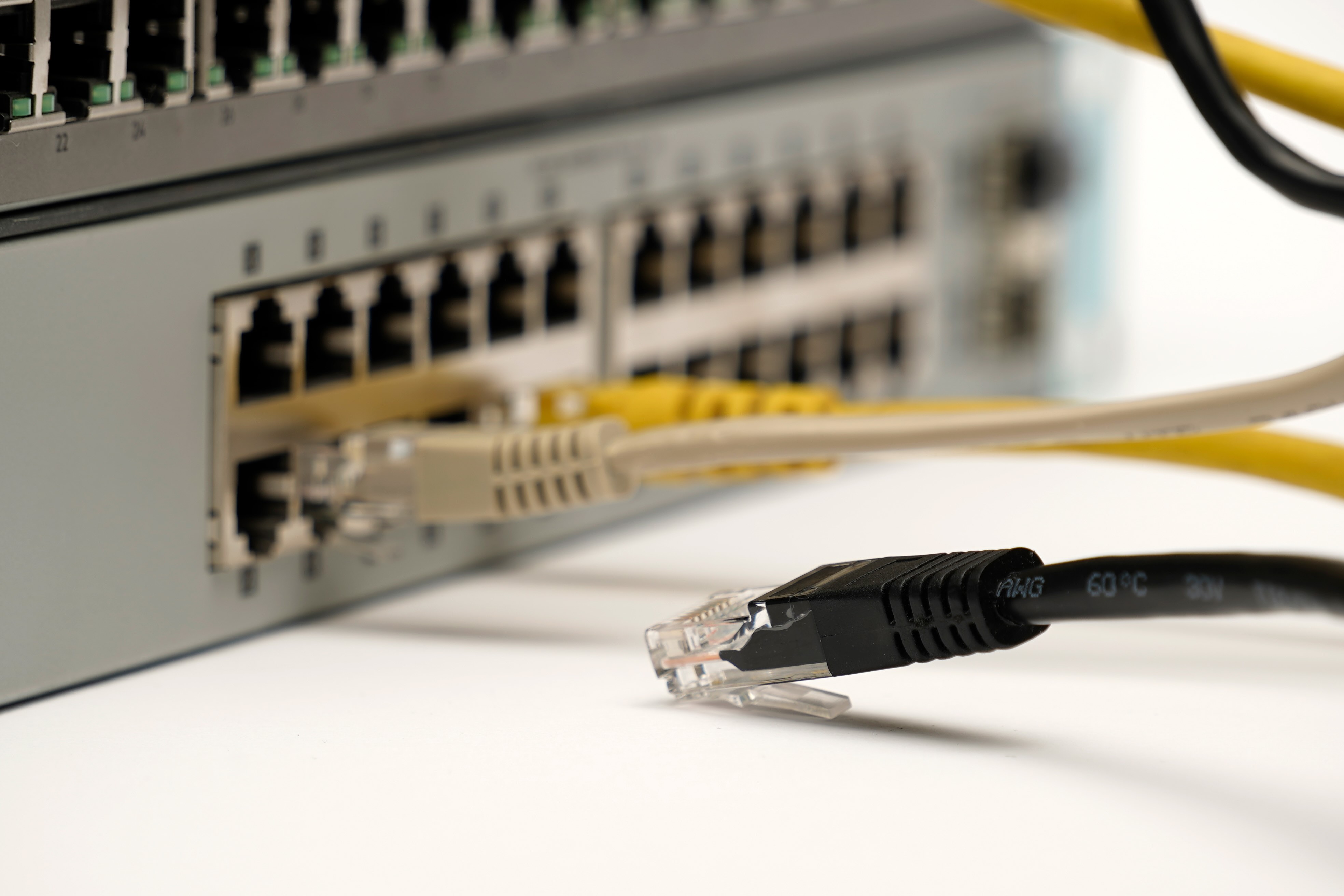
What Is Actually Inside an Ethernet Cable and Why Should You Care
Most people plug in an Ethernet cable and move on with their day. Totally fair. But if you have ever wondered why some cables cost more, why certain ones are labeled shielded, or why your network behaves differently depending on which cable you grab from the drawer -- the answer is almost always rooted in what is actually inside that cable. And once you understand the internal structure, the specs start making a lot more sense. So let us walk through it from the inside out, because there is more going on in there than most people realize.
How Many Wires Are Inside an Ethernet Cable
Here is the short answer: eight. Every standard Ethernet cable contains eight individual copper wires. Those eight wires are organized into four twisted pairs, meaning two wires are twisted around each other in a consistent, repeating spiral pattern. That twist is not decorative. It is doing real work. Each pair handles a specific role in data transmission, and the twisting is what helps cancel out electromagnetic interference that would otherwise disrupt the signal. The tighter and more consistent the twist, the better the cable generally performs under real-world conditions. This is the baseline architecture for nearly every Ethernet cable you will encounter, from basic Cat5e all the way through Cat8.
Why the Wires Are Twisted and How That Affects Performance
This part is actually pretty interesting when you think about it. When electrical current runs through a wire, it creates a small magnetic field. When two wires carrying opposing signals are twisted together, those magnetic fields cancel each other out. The result is a dramatic reduction in crosstalk, which is the interference that happens when signals from adjacent pairs bleed into each other. The four twisted pairs inside an Ethernet cable each carry traffic simultaneously using a technology called full-duplex transmission, allowing data to flow in both directions at the same time without degrading signal quality. Different cable categories achieve different twist rates per inch, which is a key reason why Cat6 outperforms Cat5e and why Cat6A supports longer distances at higher speeds.
Shielded vs Unshielded Ethernet Cables Explained
Once you move beyond the basic twist structure, you start running into shielding -- and this is where a lot of people get confused by the terminology. Unshielded twisted pair, commonly abbreviated UTP, is the most widely used type in homes and small offices. It relies entirely on the twist to manage interference. Shielded twisted pair, or STP, adds a physical barrier around the wires to block external electromagnetic interference from things like motors, fluorescent lighting, and other cable runs nearby. There are a few variations worth knowing:
- F/UTP -- Foil shield around all four pairs as a group, no individual pair shielding
- S/FTP -- Braided outer shield plus foil around each individual pair
- SF/UTP -- Both a braided shield and foil around all pairs combined, but no individual shielding
Each configuration offers a different level of protection, and the right choice depends heavily on the environment the cable will run through. Industrial facilities, data centers, and buildings with high electrical noise typically require shielded cables, while standard residential installations usually get along just fine with UTP.
Grounding Ethernet Cables and Why It Matters
Shielding does very little if it is not properly grounded. This trips people up all the time. The metallic shielding layer in an STP cable needs a path to ground to actually dissipate the interference it absorbs. Without grounding, that shielding can become an antenna and actually make interference worse rather than better. Proper grounding requires shielded connectors and grounded patch panels or keystones at both ends of the cable run. In a well-designed installation, the grounding continuity is verified as part of the cabling certification process. If you are deploying shielded cable in a structured cabling environment, this is not a step to skip or rush. Done correctly, grounded shielded Ethernet dramatically improves noise rejection and signal integrity in demanding environments.
How Cable Category Affects Wire Count and Construction
The eight-wire, four-pair design is consistent across categories, but the internal construction varies significantly. Cat5e uses basic twisting with relatively modest specifications. Cat6 introduces tighter twists and often includes a plastic spline running down the center of the cable to physically separate the four pairs and reduce crosstalk. Cat6A builds on that with larger conductors, more robust shielding options, and support for 10 Gigabit Ethernet over runs up to 100 meters. Cat8, designed primarily for data center use, handles speeds up to 40 Gbps but over much shorter distances. The wire count does not change, but the materials, geometry, and shielding configurations evolve considerably as you move up the category ladder.
Common Misconceptions About Ethernet Cable Wiring
There are a few things that come up constantly when people start digging into Ethernet cable internals. One of the most common is the assumption that more wires means faster speeds. The eight wires are fixed. Speed comes from the quality of those wires, the precision of the twisting, and the shielding -- not from adding more conductors. Another misconception is that shielded cables are always better for every situation. In environments without significant EMI, STP cables can actually introduce grounding issues if the installation is not handled carefully. UTP is simpler to terminate, more forgiving in typical residential environments, and costs less. The smarter cable is always the one matched to the actual environment, not the one with the most impressive spec sheet.
Practical Tips for Choosing and Installing Ethernet Cables
Picking the right cable comes down to a handful of real-world factors. Here is a straightforward way to think through it:
- For home networks and standard office environments, Cat6 UTP is the practical sweet spot -- it handles Gigabit speeds easily and is easy to work with
- For runs through areas with heavy electrical interference, like near HVAC systems or industrial equipment, consider F/UTP or S/FTP depending on the severity
- For data center applications or future-proofing a structured cabling deployment, Cat6A or Cat8 with appropriate shielding is worth the investment
- Always use connectors and patch panels that match your cable type -- mixing shielded cable with unshielded connectors breaks the shielding continuity and defeats the purpose
- Keep cable runs under 100 meters for Cat5e through Cat6A, and much shorter for Cat8
Proper installation technique matters just as much as cable selection. Avoid sharp bends, do not staple cables in ways that crush the jacket, and give shielded cables the grounding infrastructure they need to actually work.
The Real-World Impact of Cable Quality on Network Reliability
It is easy to dismiss cable quality as a minor detail when everything seems to be working fine. But network issues caused by poor cable construction tend to show up gradually -- intermittent drops, reduced throughput, errors that are hard to trace. Cheap cables with inconsistent twist rates or poor conductor quality degrade signal integrity in ways that do not always throw obvious error messages. In a home setting, the impact might be a stuttering video stream or a slow file transfer. In a business environment running VoIP, video conferencing, or high-frequency data transfers, the stakes are considerably higher. Investing in quality cable construction from the start is almost always less expensive than troubleshooting an underperforming network after the fact.
Why Monoprice Is the Right Source for Ethernet Cables That Deliver
When you understand what is inside an Ethernet cable and how much the construction details matter, it becomes clear why cable sourcing is not a decision to make based purely on the lowest price you can find online. Monoprice has built a well-established reputation for delivering high-performance networking cables that meet real-world construction standards without the inflated pricing that typically comes with premium brand names. Whether you are wiring a home office, deploying structured cabling for a commercial installation, or stocking up for a data center buildout, you can find the right category, shielding configuration, and run length without compromise. Professionals and everyday users alike trust Monoprice high-performance Ethernet cables for reliable network infrastructure because the products are built with the kind of precision that actually shows up in how your network performs. If you need shielded Cat6A for a demanding environment or straightforward Cat6 UTP for a clean office run, Monoprice has the inventory, the specs, and the price point to make it a genuinely smart purchase every time.
Frequently Asked Questions About Ethernet Cable Wiring and Construction
How many wires are in a standard Ethernet cable?
A standard Ethernet cable contains eight wires organized into four twisted pairs. This configuration applies to all common Ethernet categories including Cat5e, Cat6, Cat6A, and Cat8.
Why are the wires twisted inside an Ethernet cable?
The twisting cancels out electromagnetic interference through a process called differential signaling. Each pair carries opposing signals, and the twist causes their interference fields to cancel each other, preserving signal integrity over the length of the run.
What is the difference between shielded and unshielded Ethernet cable?
Unshielded twisted pair relies solely on the twist to manage interference and is sufficient for most home and office environments. Shielded twisted pair adds a metallic barrier around the wire pairs to block external electromagnetic interference, making it better suited for industrial or high-interference environments.
Does shielded Ethernet cable always perform better than unshielded?
Not automatically. Shielded cable requires proper grounding to function correctly. Without a grounded installation, the shielding can absorb and re-radiate interference rather than dissipate it, potentially causing more signal problems than it solves.
What does grounding an Ethernet cable actually mean?
Grounding means creating a continuous electrical path from the shielding layer of the cable through shielded connectors and grounded patch panels to an actual earth ground point. This allows the shield to safely dissipate absorbed electromagnetic energy.
What Ethernet cable category should I use for a home network?
Cat6 unshielded twisted pair is the recommended choice for most residential installations. It supports Gigabit Ethernet easily, handles runs up to 100 meters, and is straightforward to terminate and install.
Do all eight wires in an Ethernet cable carry data?
In Gigabit Ethernet and faster standards, all four pairs and all eight wires are active and used for simultaneous bidirectional data transmission. Older 10/100 Mbps connections only used two of the four pairs, but modern networking standards utilize the full conductor count.
What is the plastic spline sometimes found inside Cat6 cables?
The plastic spline is a cross-shaped separator that runs lengthwise through the cable to physically isolate each of the four twisted pairs from each other. It helps reduce crosstalk and is one of the construction features that allows Cat6 to meet its higher performance specifications.
Can I use Cat8 cable for a home network installation?
Cat8 is technically compatible with home networks but is designed for short-distance, high-speed data center applications. Its maximum run distance is significantly shorter than Cat6A, and the cost difference rarely justifies its use in residential settings where Cat6 or Cat6A will perform perfectly well.
How do I know if my Ethernet cable is causing network performance issues?
Signs of cable-related network problems include intermittent connection drops, consistently lower-than-expected throughput, high error rates on network switches, and latency spikes that do not correlate with internet congestion. A cable certification tester can identify specific faults in a cable run and confirm whether the construction meets category specifications.