

Fiber Optic Bundles: Fast, Reliable Network Cabling
What Are Fiber Optic Bundles and Why Do They Matter in Modern Networking?
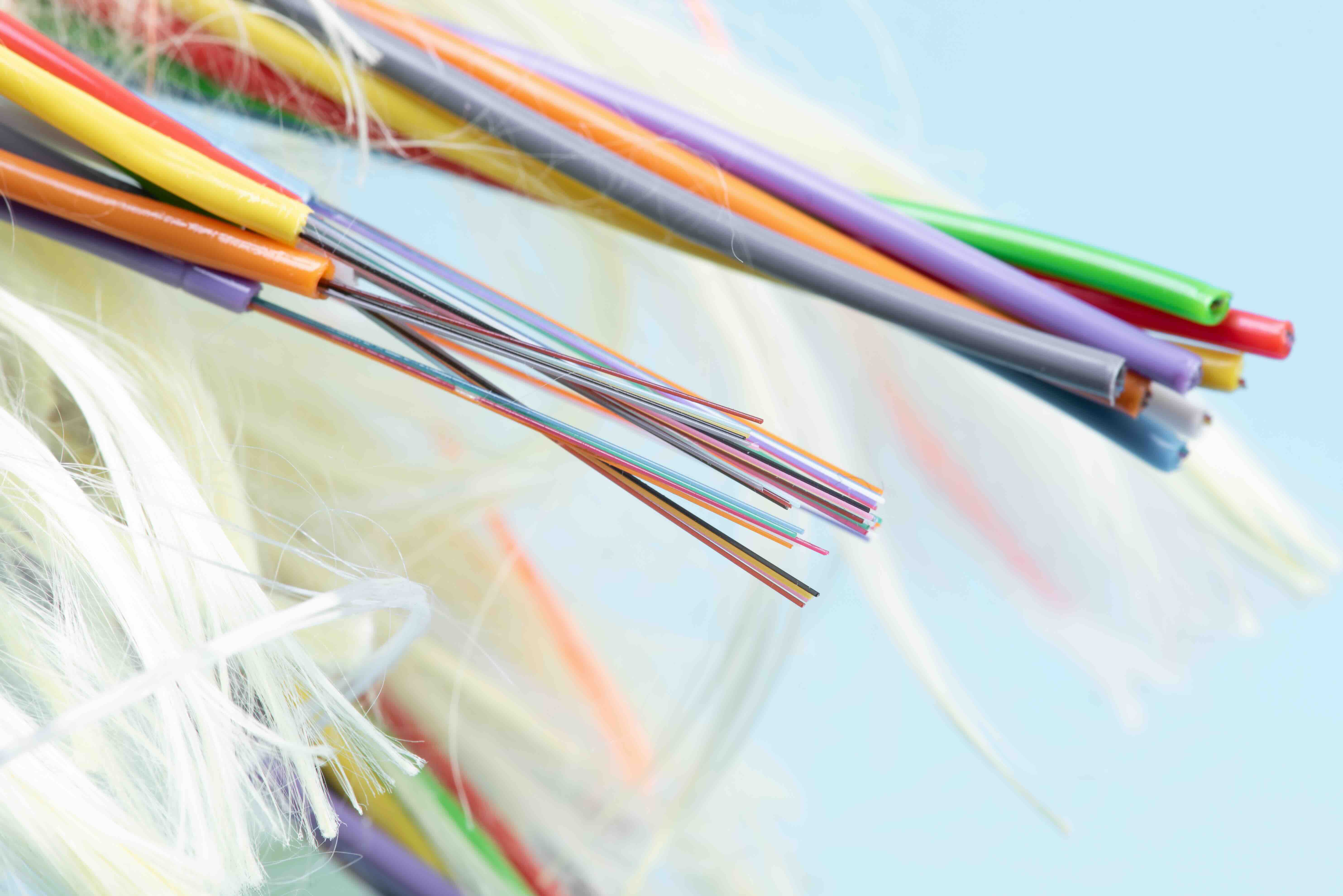
Fiber optic bundles are, at their core, collections of individual optical fibers grouped together into a single cable assembly. Each fiber within that bundle carries light signals -- encoded data traveling at extraordinary speeds across distances that would overwhelm traditional copper cabling. Whether you are setting up a data center, upgrading enterprise infrastructure, or just trying to understand why your IT team keeps requesting fiber over Cat6, this is a good place to start. The concept sounds technical, sure, but it is actually pretty straightforward once you break it down into its parts. Fiber optic bundles represent one of the most reliable, high-throughput data transmission solutions available today, and understanding them is increasingly important for anyone involved in networking, AV integration, or structured cabling.
How Fiber Optic Bundles Actually Work
Light does not travel in a straight line through solid glass by accident -- it follows a principle called total internal reflection. Each optical fiber in a bundle consists of a core, usually made of glass or plastic, surrounded by a cladding layer with a lower refractive index. When a light signal enters the core at the correct angle, it bounces repeatedly off the cladding walls and travels the full length of the fiber with minimal loss. Multiply that by dozens, hundreds, or even thousands of individual fibers bundled together, and you have a cable capable of transmitting massive amounts of data simultaneously across multiple channels. The bundle itself is then protected by a buffer coating, strength members like Kevlar yarn, and an outer jacket rated for the installation environment -- whether that is a conduit, aerial deployment, or a direct burial scenario. The engineering behind this is genuinely impressive, though the practical outcome is what most people actually care about: fast, stable, long-distance data transmission.
Types of Fiber Optic Bundles: Single-Mode vs. Multimode
Not all fiber optic bundles are created equal, and the distinction between single-mode and multimode fiber is the one that comes up most often when specifying cable for a project. Single-mode fiber uses an extremely narrow core, typically around 9 microns, which allows only one pathway of light to travel through at a time. This design supports transmission distances that can exceed 40 kilometers without significant signal degradation, making it ideal for telecom backbones, campus-wide networks, and long-haul infrastructure. Multimode fiber, on the other hand, uses a larger core -- usually 50 or 62.5 microns -- and allows multiple light modes to travel simultaneously. This makes it well-suited for shorter distances, generally under 550 meters, and it pairs effectively with lower-cost LED-based transceivers. For data centers and intra-building runs, multimode is frequently the more cost-effective choice. Knowing which type belongs in your installation is the first real decision point when evaluating fiber optic bundles.
Common Bundle Configurations and Fiber Counts
Fiber optic bundles come in a wide range of configurations depending on application requirements. A small two-fiber duplex cable might handle a basic point-to-point connection between a switch and a server, while high-density installations in data centers may call for ribbon cables or trunk cables containing 12, 24, 48, 96, or even 144 fibers. Here are some of the most common configurations you will encounter:
- Simplex: A single fiber in one jacket, used for one-directional data transmission.
- Duplex: Two fibers side by side, the standard for most bidirectional connections.
- Distribution: Multiple fibers in a single jacket, each with individual tight buffers.
- Breakout: Each fiber has its own sub-jacket, making terminations easier in patch panel environments.
- Ribbon: Fibers arranged in flat, parallel rows, optimized for mass fusion splicing in high-density applications.
- Armored: Includes a metal layer for added mechanical protection in harsh or industrial environments.
Choosing the right configuration is not just a technical decision -- it directly affects installation labor costs, future scalability, and how easily the infrastructure can be maintained or upgraded over time.
Key Advantages of Fiber Optic Bundles Over Copper Cabling
There are real, measurable reasons why fiber optic bundles have displaced copper in so many high-performance applications, and it goes beyond just bandwidth. Fiber is immune to electromagnetic interference, which is a significant advantage in industrial environments, server rooms packed with electrical equipment, or any installation where copper would require additional shielding. Signal attenuation over distance is dramatically lower with fiber, meaning you can run longer cable lengths without needing repeaters or signal boosters. Security is another factor worth noting -- fiber does not radiate electromagnetic signals the way copper does, making it considerably harder to tap without physical access to the cable. On top of that, the bandwidth capacity of fiber optic bundles continues to scale with advances in transceiver technology, which means the physical infrastructure you install today can often support higher data rates in the future simply by upgrading the endpoints. For anyone building infrastructure meant to last, fiber is a forward-compatible investment.
Drawbacks and Limitations to Consider Before You Deploy
No technology is without its trade-offs, and fiber optic bundles are no exception. The upfront cost of fiber cable, transceivers, and fiber-compatible networking equipment is generally higher than equivalent copper solutions. Termination and splicing require precision tools -- fusion splicers, cleavers, polishing equipment -- and technicians who know how to use them properly. A poorly terminated fiber connector can introduce significant insertion loss and degrade performance across the entire link. Fiber is also more physically fragile than copper in certain respects; bending a fiber optic cable beyond its minimum bend radius can cause signal loss or even crack the glass core. For short-distance, lower-bandwidth applications -- say, connecting a desktop to a nearby switch -- copper Ethernet still makes practical and economic sense. The key is matching the transmission medium to the actual requirements of the application rather than defaulting to fiber simply because it sounds more advanced.
Practical Tips for Selecting and Installing Fiber Optic Bundles
Getting the most out of a fiber optic bundle installation starts well before the first cable is pulled. A few things that tend to make a real difference in outcome:
- Calculate your distance requirements accurately, then choose single-mode or multimode based on those numbers with some headroom built in.
- Match your fiber type to your transceiver -- SFP modules are wavelength and fiber-type specific, and mismatches cause link failures.
- Plan for future fiber count growth; installing a higher fiber count bundle now is far cheaper than trenching or re-pulling cable later.
- Use pre-terminated assemblies wherever possible to reduce on-site labor and minimize termination errors.
- Always document your fiber plant with OTDR traces and test results -- this is essential for troubleshooting and warranty purposes.
- Specify the correct jacket type for the environment: plenum-rated for air-handling spaces, riser-rated for vertical runs, outdoor-rated for external conduit or aerial use.
These are not edge cases -- they are the kinds of decisions that separate a clean, scalable installation from one that creates problems three years down the road.
Fiber Optic Bundles in Real-World Applications
The applications driving demand for fiber optic bundles are as varied as the industries deploying them. Data centers rely on high-density fiber trunk cables to interconnect top-of-rack switches, core routers, and storage systems with the low latency and high bandwidth that modern workloads demand. Healthcare facilities use fiber to connect imaging systems, electronic health record platforms, and IP camera networks across large campuses where copper runs would fall short. Broadcast and AV professionals deploy fiber for long-distance HDMI and SDI signal transmission, eliminating the signal degradation and interference issues that plague copper over distances greater than a few dozen feet. In education, municipal government, and manufacturing, fiber optic bundles form the backbone of building and campus networks that need to remain reliable for a decade or more. The use cases are broad, but the underlying requirement is consistent -- performance, reliability, and infrastructure that can grow with organizational needs.
Why Monoprice Should Be Your Source for Fiber Optic Bundles and Connectivity Solutions
When it comes to sourcing fiber optic bundles and the full range of connectivity products that surround them, the combination of quality and price matters enormously -- especially for integrators, IT managers, and procurement teams working against real budgets. Monoprice has built a well-earned reputation as a trusted supplier across both consumer and B2B markets, offering professional-grade fiber optic cables, patch panels, enclosures, and accessories at pricing that makes large-scale deployments genuinely feasible. The product catalog covers everything from simplex and duplex patch cables to high-density fiber trunk assemblies, with options across single-mode and multimode specifications. If you are speccing out structured cabling for a new facility or looking to upgrade an existing fiber plant without overspending, exploring high-performance fiber optic cables and network infrastructure solutions from Monoprice is a practical next step. The value proposition is straightforward -- premium materials, rigorous quality standards, and pricing that reflects a direct-to-buyer model that cuts out unnecessary margin at every layer of the supply chain.
Frequently Asked Questions About Fiber Optic Bundles
What is the difference between a fiber optic bundle and a single fiber optic cable?
A single fiber optic cable contains one or two optical fibers, while a fiber optic bundle groups multiple fibers together within a single outer jacket. Bundles are used when higher fiber counts are needed to support multiple channels, future capacity, or high-density connectivity in data centers and enterprise environments.
Can fiber optic bundles be used outdoors?
Yes, but the cable must be rated for outdoor use. Outdoor-rated fiber optic bundles include UV-resistant jackets, moisture barriers, and sometimes armored layers to protect against environmental exposure, rodents, and physical damage during direct burial or aerial installation.
What fiber count do I need for my installation?
Fiber count depends on the number of active connections required today plus a realistic growth buffer. A common rule of thumb is to install at least twice the fiber count currently needed. For data centers, 12-fiber and 24-fiber increments align well with standard MPO connector configurations.
Is single-mode or multimode fiber better for a data center?
Both are used in data centers. Multimode fiber, particularly OM3 and OM4 grades, is widely deployed for short intra-rack and inter-rack connections due to its lower transceiver cost. Single-mode fiber is preferred for longer inter-building or campus connections where distance exceeds multimode limits.
How fragile are fiber optic bundles compared to copper cables?
Fiber optic cables are more sensitive to sharp bends and crush forces than copper, but modern cable designs with proper jacketing and strength members are quite durable under normal installation conditions. The key is respecting the minimum bend radius and avoiding point stress during pulls.
What connectors are commonly used with fiber optic bundles?
The most common connector types are LC, SC, ST, and MPO or MTP for high-density applications. LC connectors dominate enterprise and data center environments due to their small form factor. MPO connectors support 12 or 24 fibers in a single interface and are standard in trunk cable systems.
Do fiber optic bundles require special installation tools?
Yes. Proper installation requires a fusion splicer or mechanical splice kit for field terminations, a fiber cleaver, an OTDR for testing, and connector polishing equipment if field-terminating with connectors. Pre-terminated assemblies eliminate most of this complexity for straightforward installations.
How do I test a fiber optic bundle after installation?
The standard method is OTDR testing, which sends a light pulse through the fiber and measures reflections to identify splice losses, connector losses, and breaks along the entire length. Insertion loss testing with a light source and power meter is also essential to verify the end-to-end performance of each fiber.
What causes signal loss in a fiber optic bundle?
Signal loss, or attenuation, results from several factors including connector end-face contamination, improper terminations, excessive bending, poor splices, and fiber damage. Keeping connectors clean and using proper installation techniques significantly reduces attenuation in a completed fiber plant.
Are fiber optic bundles compatible with existing copper network equipment?
Fiber optic cables require fiber-compatible network switches and transceivers. However, media converters can bridge fiber and copper segments, allowing fiber runs to connect into environments that still rely on copper Ethernet infrastructure at the endpoint level.


