

Ethernet Wire Gauge Explained: AWG, Performance & More
Ethernet Wire Gauge Explained: What AWG Means for Your Network
So you are shopping for ethernet cable and suddenly the spec sheet starts throwing numbers at you -- AWG this, gauge that -- and it gets confusing fast. Totally fair. Wire gauge is one of those things that feels overly technical on the surface but actually makes a real practical difference in how your network performs. Whether you are wiring a home office, a server room, or a full commercial build-out, understanding ethernet wire gauge helps you make smarter decisions before you pull cable through walls or commit to a bulk spool. Let's walk through what it actually means, why it matters, and what to look for.
What Is Wire Gauge and Why Does It Apply to Ethernet Cable
AWG stands for American Wire Gauge, and it is the standardized system used in North America to measure the diameter of electrical conductors. Here is the part that trips people up: the higher the AWG number, the thinner the wire. So 28 AWG is noticeably thinner than 23 AWG. In ethernet cable specifically, the conductors inside each twisted pair are measured this way, and that diameter has a direct relationship to how well electrical signals travel down the line, how much resistance builds up over distance, and ultimately how reliable your connection is going to be under real-world load. It is one of those specs that does not always get highlighted on the front of the box but absolutely influences day-to-day performance.
The Most Common Ethernet Cable AWG Ratings You Will Encounter
Most ethernet cables -- Cat5e, Cat6, Cat6A -- fall within a specific AWG range. Here is a quick breakdown of what shows up most often in the field:
- 22 AWG -- thicker conductor, lower resistance, used in longer runs and high-demand installations
- 23 AWG -- a solid standard for Cat6 and Cat6A, good balance of performance and manageability
- 24 AWG -- very common in Cat5e and Cat6, widely used in general commercial and residential cabling
- 26 AWG -- thinner, more flexible, typically used in patch cables where bend radius matters
- 28 AWG -- slim and lightweight, popular for high-density patch panels and short-run applications
Each of those has a place. The key is matching the gauge to the job rather than just grabbing whatever is cheapest or most available. A 28 AWG cable is great for a short patch run on a rack but would be a poor choice for a 250-foot horizontal run in an office ceiling.
How Wire Gauge Affects Ethernet Performance
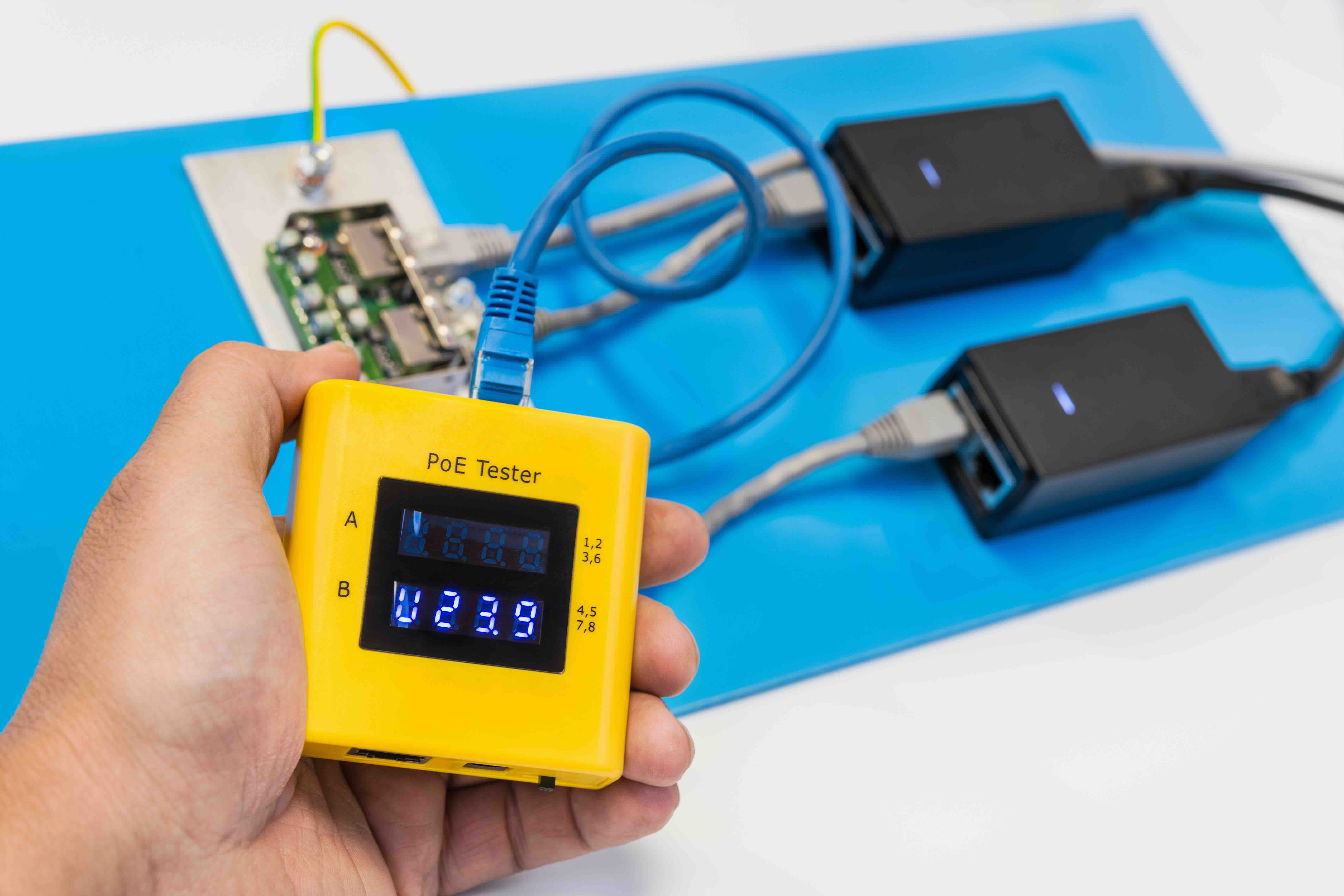
Thicker wire means lower electrical resistance per unit length, which translates to cleaner signal transmission over longer distances. This matters a lot in structured cabling environments where runs regularly push toward the 100-meter limit defined by standards like TIA-568. A 23 AWG Cat6A cable will maintain signal integrity closer to that limit compared to a 26 AWG version of the same cable category. Beyond just resistance, thicker conductors also tend to handle Power over Ethernet better. PoE and especially PoE+ and PoE++ push meaningful current through the cable to power devices like IP cameras, wireless access points, and VoIP phones. Thin conductors generate more heat under that load, which reduces performance and can shorten cable life over time. If your network infrastructure relies heavily on PoE devices, gauge is not a minor footnote -- it is a core spec to evaluate.
Solid vs Stranded Conductors and How Gauge Interacts With Both
Ethernet cable conductors come in two forms: solid and stranded. Solid conductors are exactly what they sound like -- one continuous wire per conductor. Stranded conductors are made of multiple thin wires twisted together. Solid cable tends to perform better over longer horizontal runs and is the standard choice for in-wall and in-ceiling permanent installations. Stranded cable is more flexible, making it ideal for patch cables and areas where the cable gets moved or bent regularly. Gauge applies to both, but the dynamics shift slightly. A solid 24 AWG conductor and a stranded 24 AWG conductor are not electrically identical even though the AWG label matches. The stranded version has slightly higher resistance because the effective cross-section is not quite the same. This is a subtlety worth knowing if you are specifying cable for a precise installation.
Key Advantages of Choosing the Right Ethernet Wire Gauge
Getting the gauge right for the application delivers some real and measurable benefits:
- Better signal integrity over longer runs, especially approaching the 100-meter horizontal cable limit
- Reduced heat buildup during PoE operation, which protects connected devices and the cable itself
- Improved compliance with TIA and ISO cabling standards for commercial installations
- Greater reliability in high-throughput environments running Gigabit or 10-Gigabit ethernet
- Longer service life in permanent installations due to lower thermal and electrical stress
None of that is theoretical. These are outcomes that network administrators and installers see in practice when they spec cable thoughtfully rather than just matching the category designation without looking at conductor details.
Common Drawbacks to Be Aware Of
Thicker gauge cable is not without trade-offs. A 22 AWG or 23 AWG cable is stiffer and harder to route through tight conduit, around corners, or in dense patch environments. If you are managing a high-density server rack where cable management is already a puzzle, bulkier cable adds real friction to the job. There is also a cost factor. Heavier gauge cable costs more per foot, and that difference adds up across a large installation. For short patch runs, spending more on thicker gauge is often unnecessary. And for some slim-profile applications, 28 AWG or even thinner options are the only realistic fit. The point is that no single gauge is universally the best choice -- it is about application, run length, PoE requirements, and budget working together.
Practical Tips for Selecting Ethernet Cable Gauge
A few guidelines that actually help in the decision process: For permanent horizontal runs in walls or ceilings, 23 AWG solid conductor cable is a reliable standard choice that meets most Cat6 and Cat6A performance requirements. For patch cables connecting equipment at short distances, 26 AWG or 28 AWG stranded cable offers the flexibility and bend radius you need without sacrificing performance at those lengths. If your installation involves PoE++ or IEEE 802.3bt devices, look specifically for 23 AWG or thicker to keep heat and resistance in check. Always verify that the cable spec sheet lists the AWG rating explicitly -- reputable manufacturers will include it. If the spec sheet does not mention it, that is worth questioning before you commit to a large purchase.
How Wire Gauge Fits Into Broader Cable Category Standards
It is worth noting that wire gauge and cable category are related but not the same thing. Cat6A, for example, does not mandate a specific AWG -- it specifies performance benchmarks. But meeting those benchmarks reliably almost always requires a conductor in the 23 AWG range. Cheaper Cat6A cables might technically carry the label but use thinner conductors that make it harder to hit the 500 MHz bandwidth spec consistently, especially at longer distances. This is where reading the full spec sheet matters. Pairing the right cable category with the appropriate gauge for the deployment is how you get infrastructure that performs as expected over the long term rather than delivering edge-case failures that are hard to diagnose.
Why Monoprice Is a Smart Choice for Ethernet Cable by Wire Gauge
When it comes to structured cabling, having a supplier that is transparent about specs is not optional -- it is the baseline expectation. Monoprice publishes detailed product specifications, including conductor AWG, so you are never guessing what is inside the jacket. Whether you need bulk Cat6 cable at 24 AWG for a standard office deployment or Cat6A at 23 AWG for a high-density PoE environment, the information is right there in the product listing. That kind of transparency matters at scale. If you are sourcing cable for a commercial buildout or stocking inventory for ongoing installs, those details drive real decisions. For professionals and budget-conscious buyers who want performance without overpaying, high-performance ethernet cables by wire gauge and category are available with the spec clarity and value pricing that the industry expects from a trusted name. Monoprice brings the same approach to every product category -- confident specs, fair pricing, and the product depth to handle jobs of any size.
Frequently Asked Questions About Ethernet Wire Gauge
What does AWG mean on an ethernet cable?
AWG stands for American Wire Gauge. It is the standardized system used to measure conductor diameter inside ethernet cable. A lower AWG number means a thicker conductor, which typically results in lower resistance and better performance over longer distances.
Is 23 AWG or 24 AWG better for ethernet cable?
23 AWG is thicker and offers lower resistance, making it a better choice for longer runs and PoE applications. 24 AWG works well for standard installations where runs are shorter and high PoE loads are not a concern. Both are widely used in Cat6 cabling.
Does wire gauge affect ethernet speed?
Wire gauge affects signal integrity and resistance rather than speed directly. However, insufficient gauge can cause signal degradation over long runs, which may result in dropped speeds or connection instability, particularly at Gigabit or 10-Gigabit throughput levels.
What AWG is best for Power over Ethernet?
For PoE, PoE+, and PoE++ applications, 23 AWG or thicker is recommended. Thinner conductors generate more heat when carrying the electrical current that powers remote devices, which can reduce performance and shorten cable lifespan.
Can I use 28 AWG ethernet cable for long runs?
28 AWG is not recommended for long horizontal runs. It is designed for short patch cable applications, typically under 15 meters. For runs approaching the 100-meter limit, 23 AWG or 24 AWG solid conductor cable is the appropriate choice.
What is the difference between solid and stranded ethernet cable conductors?
Solid conductors use a single wire per conductor and are best for permanent in-wall or in-ceiling runs. Stranded conductors use multiple thin wires twisted together and are more flexible, making them ideal for patch cables that get moved or bent regularly.
Does wire gauge change between Cat5e, Cat6, and Cat6A cable?
Not by standard requirement, but in practice Cat5e typically uses 24 AWG, Cat6 commonly uses 23 or 24 AWG, and Cat6A most often uses 23 AWG to reliably meet its higher bandwidth and performance specifications over full-length runs.
How do I find the AWG rating on an ethernet cable?
Check the product spec sheet or the cable jacket itself, which often has the AWG printed along with the category rating and other certifications. Reputable manufacturers include this information clearly. If it is not listed, contact the supplier before purchasing.
Is thicker AWG ethernet cable always better?
Not always. Thicker cable offers lower resistance and better PoE handling, but it is also stiffer, harder to manage in tight spaces, and more expensive. The right gauge depends on run length, PoE requirements, and installation environment.
What AWG should I use for a home network installation?
For in-wall home network runs, 23 AWG or 24 AWG solid conductor Cat6 cable is a practical and reliable standard. For short patch connections between equipment, a 26 AWG stranded patch cable offers the flexibility needed without sacrificing performance at those distances.


