

Cat6A Bandwidth: Speed, Range, and Why It Matters
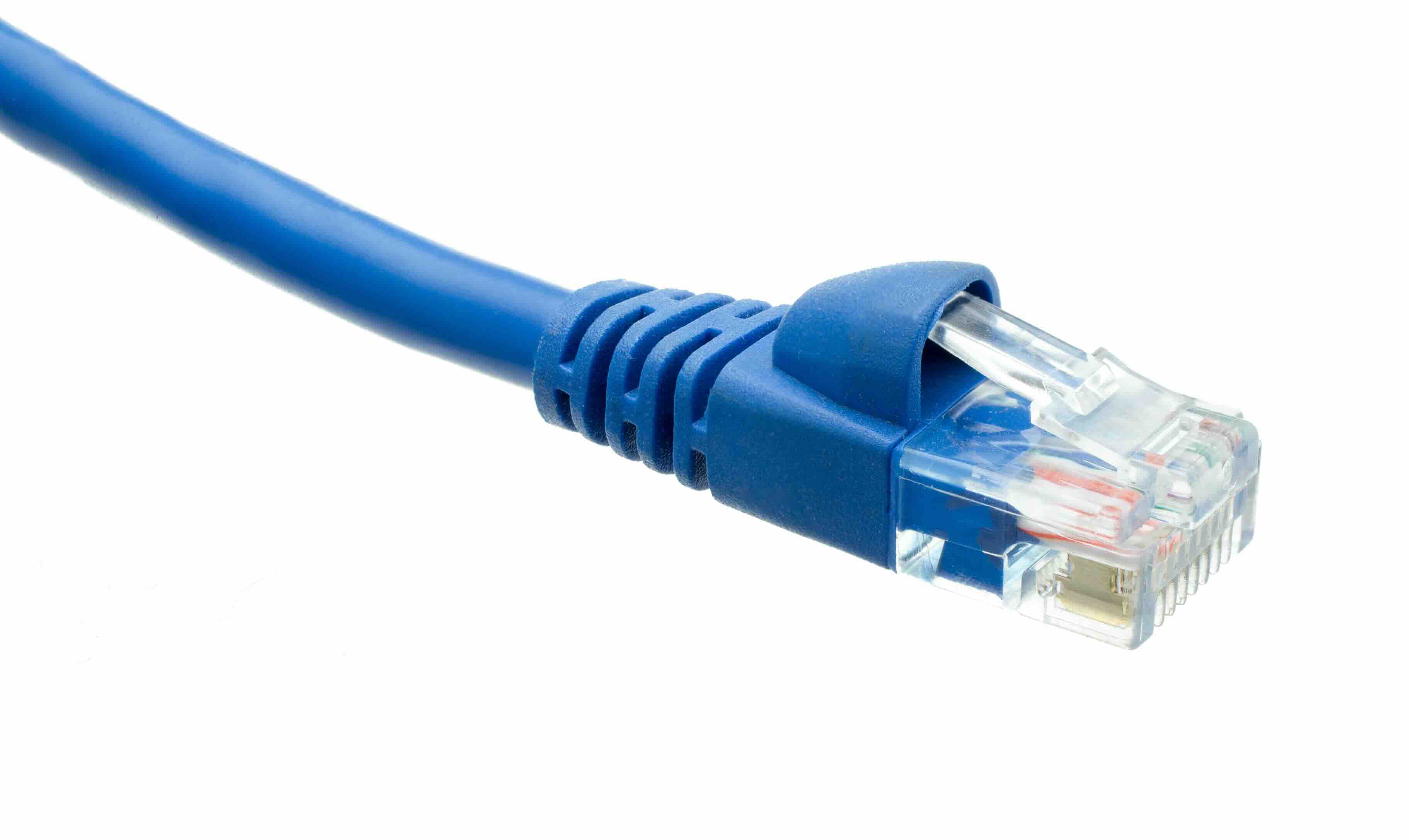
What Is Cat6A Bandwidth and Why Does It Matter for Your Network?
So you are looking into network cabling and suddenly the term Cat6A keeps coming up. It is worth understanding properly because this is not just a marketing label -- it represents a meaningful step forward in what a copper cable can actually do. Cat6A, where the "A" stands for Augmented, is a specification that supports data transmission up to 10 Gigabits per second over distances of up to 100 meters. That is the full 100-meter channel length, not a reduced run. The bandwidth ceiling sits at 500 MHz, which is exactly double what standard Cat6 delivers. This matters more than most people initially realize, especially when you are planning infrastructure meant to last the next decade or longer.
How Cat6A Cable Works and What Sets It Apart from Cat6
Here is where things get interesting. Cat6A achieves its expanded bandwidth through tighter wire twisting, a larger overall cable diameter, and in many designs, internal separators that reduce crosstalk between pairs. Crosstalk is one of the primary enemies of high-speed data transmission -- it is essentially interference caused when signal from one wire pair bleeds into an adjacent pair. Cat6A addresses this problem aggressively. Standard Cat6 starts to lose its 10Gbps capability around the 55-meter mark in certain crosstalk-heavy environments. Cat6A does not have that problem. It holds the full performance specification across the entire 100-meter channel, which matters enormously in real-world enterprise and commercial deployments where cable runs are long and environmental interference is real.
Shielded vs. Unshielded Cat6A: Understanding Your Options
This is a question that comes up constantly, and for good reason. Cat6A is available in two primary forms: UTP, which stands for unshielded twisted pair, and STP or F/UTP, which includes foil shielding around the internal pairs or the entire cable bundle. Shielded Cat6A provides superior protection against electromagnetic interference, which is critical in environments with heavy electrical equipment, industrial machinery, or dense wireless infrastructure. Unshielded Cat6A is lighter, easier to terminate, and more affordable, making it a solid choice for standard commercial office environments. The tradeoff is real but manageable depending on your specific installation context. If you are pulling cable through a facility with significant EMI sources, shielded is worth the additional investment and labor.
Key Advantages of Cat6A for Business and Enterprise Environments
There are several reasons network engineers and IT decision-makers consistently specify Cat6A for new builds and infrastructure upgrades. The performance case is straightforward, but the practical benefits go further than raw speed.
- 10 Gigabit Ethernet support across the full 100-meter channel length
- 500 MHz bandwidth capacity for future-proofing against emerging network demands
- Reduced alien crosstalk compared to Cat6 in high-density cable environments
- Support for Power over Ethernet applications including PoE++ at higher wattage
- Compatibility with current and anticipated IEEE networking standards
- Lower latency under heavy load compared to older cable categories
- Long-term infrastructure investment that supports evolving switch and device capabilities
The PoE point deserves a moment of attention. As more devices become PoE-powered -- cameras, wireless access points, VoIP phones, LED lighting systems -- the cable itself becomes responsible for carrying meaningful electrical loads. Cat6A handles heat dissipation better in bundled installations than Cat6, which is a real operational advantage in dense cable trays and conduit runs.
Common Drawbacks and Honest Limitations of Cat6A
Cat6A is not a perfect solution for every situation, and being upfront about that is more useful than overselling it. The cable is physically larger and heavier than Cat6, which adds complexity to installation in tight conduit runs or older buildings with limited pathway space. Termination requires more care and precision, especially with shielded variants where proper grounding is essential to performance. The material and labor costs are higher than Cat6, which can be a real budget consideration for smaller projects. If your environment only requires Gigabit Ethernet today and there is no credible roadmap toward 10Gbps deployment, the premium may be harder to justify in the short term. That said, most network professionals will still lean toward Cat6A for new construction because the cost delta over a 15-year infrastructure lifecycle is minimal compared to the cost of a future recabling project.
Cat6A Bandwidth Explained: What 500 MHz Actually Means in Practice
Five hundred megahertz of bandwidth sounds like a big number, and it is, but let's ground it in something practical. Bandwidth in cabling refers to the range of frequencies the cable can transmit reliably. Higher bandwidth means the cable can carry more data simultaneously without signal degradation. At 500 MHz, Cat6A provides enough headroom not just for today's 10GbE applications but for emerging demands in dense wireless backhaul, high-definition video distribution, and converged network architectures where data, voice, and power all travel the same cable infrastructure. It is headroom that you may not need today but will almost certainly appreciate three to five years from now when your next switch refresh happens and 10Gbps to the desktop becomes a realistic expectation rather than a luxury.
Where Cat6A Is Most Commonly Deployed
You will find Cat6A in a fairly specific range of environments where its capabilities align directly with operational requirements. Data centers are an obvious fit -- 10GbE between server racks and top-of-rack switches is a baseline expectation in most modern builds. Healthcare facilities benefit from Cat6A because the cable supports high-bandwidth imaging data transfer alongside standard network traffic over a single infrastructure. Education campuses deploying dense Wi-Fi 6 and Wi-Fi 6E access points rely on Cat6A to backhaul the bandwidth those wireless systems generate. Corporate offices planning for long-term flexibility increasingly standardize on Cat6A to avoid the disruption of a future recabling project. Industrial environments, where EMI is a constant concern, often select shielded Cat6A as a durable and interference-resistant solution.
Practical Tips for Installing Cat6A Cable Correctly
Installation quality has an outsized impact on Cat6A performance. The cable's specifications are only achievable when the installation follows the relevant standards, primarily TIA-568-C.2-1 and ISO/IEC 11801. A few practical considerations make a real difference in the finished installation.
- Maintain the minimum bend radius -- Cat6A is less forgiving than Cat5e when overbent
- Do not untwist wire pairs more than half an inch during termination
- Use Cat6A-rated keystones and patch panels to avoid creating performance bottlenecks
- Keep cable bundles manageable in size to support heat dissipation in PoE applications
- Label and document every run at installation to simplify future troubleshooting
- Test every link with a qualified cable tester to verify compliance after installation
- Use the correct cable type for your environment -- riser-rated for vertical runs, plenum-rated for air-handling spaces
Why Monoprice Is a Smart Choice for Cat6A Cabling and Networking Infrastructure
When it comes to sourcing quality Cat6A cabling at a price point that makes sense for both individual projects and large-scale deployments, Monoprice is a name that consistently delivers. The product lineup covers the full range of Cat6A needs -- bulk cable, pre-terminated patch cables, keystones, and patch panels -- all built to meet or exceed TIA performance standards. What sets Monoprice apart is the combination of verified performance and honest pricing. You are not paying for brand overhead or unnecessary markup. You are paying for infrastructure that works as specified, backed by a company with a long track record in professional networking and AV markets. For IT managers, network integrators, and procurement teams who need reliable components without budget strain, Cat6A ethernet cables and networking infrastructure from Monoprice represent exactly the kind of value-forward decision that holds up under scrutiny. Whether you are outfitting a single server room or pulling cable across a multi-floor commercial build, the quality is consistent and the pricing is structured to keep your project on budget without compromising the finished installation.
Frequently Asked Questions About Cat6A Bandwidth
What is the maximum bandwidth of Cat6A cable?
Cat6A cable supports a maximum bandwidth of 500 MHz, which is double the 250 MHz capacity of standard Cat6. This expanded bandwidth enables reliable 10 Gigabit Ethernet transmission across the full 100-meter channel length.
What is the difference between Cat6 and Cat6A?
Cat6 supports up to 250 MHz of bandwidth and can only sustain 10Gbps speeds up to approximately 55 meters in certain conditions. Cat6A supports 500 MHz and maintains 10Gbps performance across the full 100-meter channel, making it the preferred choice for demanding network environments.
Is Cat6A overkill for a home network?
For most residential applications, Cat6 or even Cat5e is sufficient. Cat6A makes more practical sense in home environments where the user anticipates high-bandwidth demands, runs long cable distances, or wants to future-proof the installation for the next 10 to 15 years.
Does Cat6A support Power over Ethernet?
Yes. Cat6A fully supports PoE, PoE+, and PoE++ applications. Its larger conductor size and construction characteristics allow for better heat dissipation in bundled cable runs, which is important when powering multiple high-wattage devices simultaneously.
What does the "A" in Cat6A stand for?
The "A" stands for Augmented. It indicates that the cable meets an enhanced performance specification beyond standard Cat6, particularly in terms of bandwidth capacity and alien crosstalk reduction.
Do I need shielded Cat6A cable?
Shielded Cat6A is recommended for environments with significant electromagnetic interference, such as industrial facilities, medical centers, or locations with dense electrical infrastructure. For standard commercial office environments with low EMI, unshielded Cat6A typically performs well and is easier to install.
How far can Cat6A cable run at full 10Gbps speed?
Cat6A supports 10 Gigabit Ethernet at the full TIA-specified channel length of 100 meters, which includes the horizontal cable run plus patch cords on each end. This is a significant advantage over standard Cat6 in longer run scenarios.
Is Cat6A backward compatible with older network equipment?
Yes. Cat6A is fully backward compatible with Cat6, Cat5e, and older standards. You can use Cat6A cable with existing Gigabit Ethernet switches and equipment without any performance penalty, and the infrastructure will be ready when you upgrade to 10GbE hardware.
What tools are needed to terminate Cat6A cable?
Proper termination of Cat6A requires a high-quality punchdown tool, Cat6A-rated keystones or jacks, a cable stripper appropriate for the larger jacket diameter, and ideally a professional cable tester to verify performance after installation. Shielded variants also require grounding hardware.
How long will Cat6A infrastructure last before needing replacement?
Properly installed Cat6A infrastructure is generally expected to support network demands for 10 to 15 years or more. Given the pace of networking technology advancement, many organizations find that Cat6A remains a viable and capable cabling standard through multiple generations of active network equipment.


