

Cat6 Wiring and RJ45 Connectors: Complete Guide
What Is Cat6 Wiring and Why Does It Matter for Your Network?
If you have ever set up a home office, wired a small business, or tried to figure out why your internet keeps dropping during video calls, you have probably come across the term Cat6. It stands for Category 6, and it is a type of twisted-pair Ethernet cable that has become one of the most widely used standards in both residential and commercial networking. Cat6 cabling is designed to support higher data transfer speeds and reduce interference compared to its predecessor, Cat5e. The result is a more reliable, faster, and cleaner network connection -- and that matters whether you are streaming 4K content, pushing large files across a corporate network, or running a smart home setup. Understanding how Cat6 works, what makes it different, and when it makes sense to use it can save a lot of frustration down the road.
How Cat6 Ethernet Cable Actually Works
Cat6 cable consists of four twisted pairs of copper wire, just like older Ethernet categories. What sets it apart is the tighter twist rate of those pairs and, in many cases, a central plastic spline that separates the pairs from one another inside the cable jacket. That spline -- also called a cross-filler -- is what physically prevents the pairs from touching and reduces crosstalk, which is the interference that occurs when signals from one wire bleed into another. Cat6 is rated to handle frequencies up to 250 MHz and supports Gigabit Ethernet at full distances up to 100 meters, with the capability to push 10 Gigabit speeds at shorter runs of up to 55 meters. The RJ45 connector at the end of the cable is what plugs into your router, switch, patch panel, or wall jack, and it is standardized across all Ethernet categories, which makes compatibility relatively straightforward.
Cat6 vs. Cat5e vs. Cat6A: Understanding the Differences
It is worth pausing here because the cable category landscape can get confusing fast. Cat5e is still widely installed and works fine for most basic gigabit networking needs. Cat6 is the next step up, offering better performance, less noise, and more headroom for demanding applications. Then there is Cat6A, which is the augmented version -- it extends 10 Gigabit support to the full 100-meter distance and doubles the frequency rating to 500 MHz. Cat6A cables are also physically larger and heavier, which affects how they are routed through walls and conduit. For most home users and small to mid-size businesses, Cat6 hits a very practical middle ground. It delivers meaningful performance improvements over Cat5e without the added bulk and cost of Cat6A. Knowing the difference helps you choose the right cable for your actual use case rather than over-specifying or under-building your network infrastructure.
The RJ45 Connector and Cat6 Compatibility
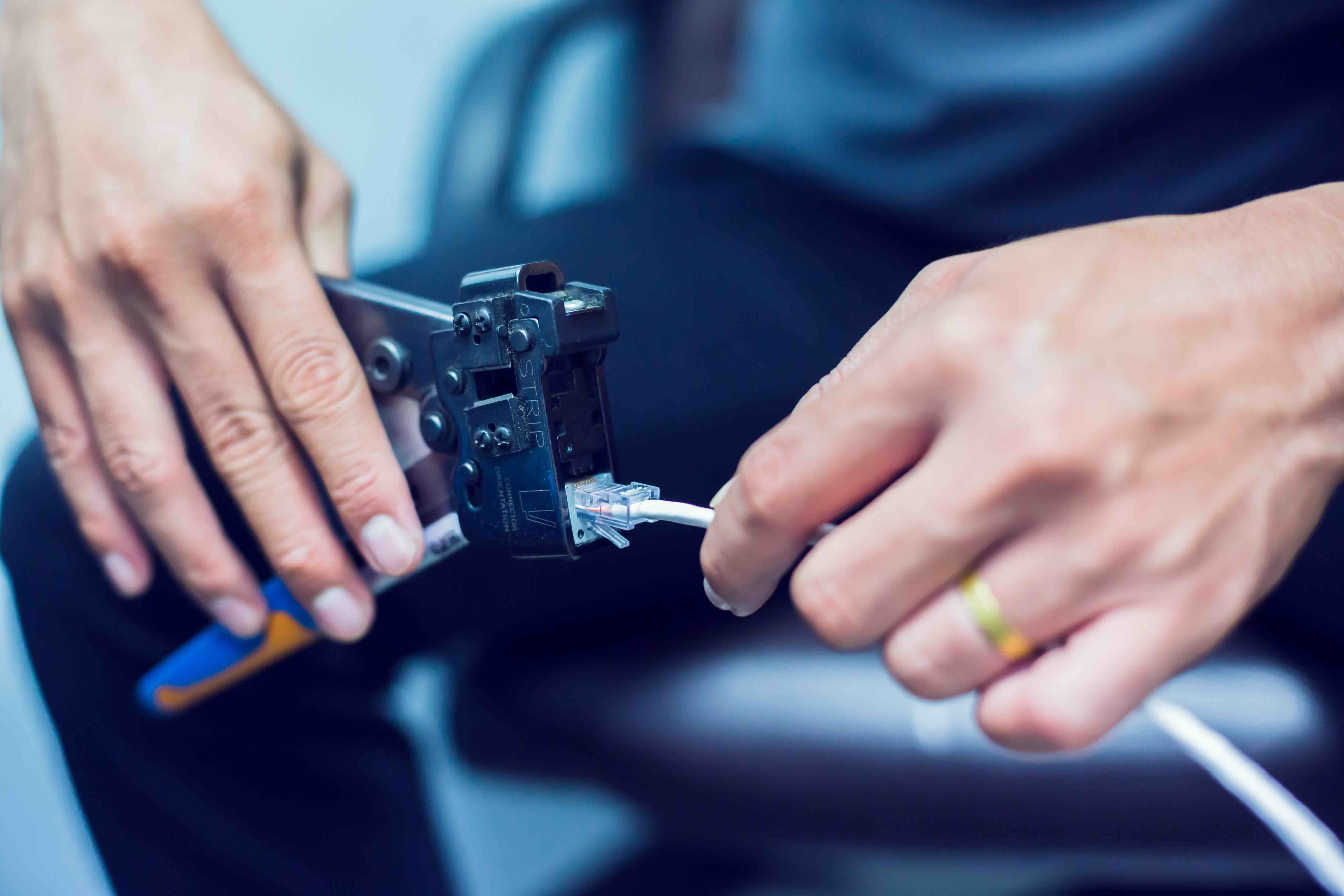
The RJ45 connector is the standardized 8-position, 8-contact modular plug that terminates virtually all Ethernet cables. It is the same physical form factor across Cat5e, Cat6, and Cat6A, which is useful -- it means you can mix and match cable categories on a network without needing different jacks or ports. That said, when terminating Cat6 cable, the tighter twist rates and the larger conductor diameter can make crimping more physically demanding. Some installers prefer keystone jacks or punch-down connections for structured cabling runs, which tend to be cleaner and more reliable in permanent installations than field-terminated plugs. One thing to watch: using Cat5e-rated keystones or patch panels with Cat6 cable will cap your performance at Cat5e levels. The whole channel needs to be rated consistently to realize the full Cat6 benefit.
Key Advantages of Cat6 Cabling
There are several concrete reasons why Cat6 has become the go-to standard for new network installations across both consumer and enterprise environments.
- Supports Gigabit Ethernet at full 100-meter runs
- Reduced crosstalk and system noise thanks to tighter twist rates and internal spline
- Compatible with all existing RJ45 infrastructure and devices
- Supports 10GbE at shorter distances, providing headroom for network upgrades
- Future-resistant for most small business and residential use cases
- Cost-effective relative to Cat6A while still delivering solid performance gains over Cat5e
These are not just spec-sheet talking points -- they translate directly into more stable connections, fewer dropped calls, lower latency for gaming and video conferencing, and a network that can handle more devices without degrading. That last part is increasingly relevant as homes and offices add more IoT devices, access points, and bandwidth-heavy applications to their infrastructure.
Common Drawbacks and Limitations to Know About
Cat6 is not without its trade-offs, and it is worth being straightforward about them. The cable is slightly thicker and stiffer than Cat5e, which can make it harder to route through tight conduit or existing wall cavities. If you are retrofitting an older building, that physical size difference adds up. The 10 Gigabit speed capability drops off significantly beyond 55 meters, so if you need full 10GbE across longer runs, Cat6A is the more appropriate investment. Field termination of Cat6 also requires more careful technique -- improper termination is one of the most common sources of performance issues in installed networks. And while Cat6 is generally affordable, the cost is slightly higher than Cat5e, so budget-conscious large-scale deployments may feel that difference when multiplied across hundreds of drops.
Practical Tips for Installing Cat6 in Your Home or Business
Installation quality has a direct impact on whether your Cat6 network actually performs to spec. A few things worth knowing before you start pulling cable. First, avoid sharp bends -- Cat6 has a minimum bend radius, and kinking the cable can damage the internal pairs and degrade performance. Second, keep Cat6 runs away from power cables and fluorescent lighting wherever possible, as electromagnetic interference is a real concern in commercial environments. Third, maintain the twist rate as close to the termination point as possible -- untwisting more than half an inch before punching down or crimping is a common mistake that introduces crosstalk right at the connection point. Finally, label everything. It sounds basic but a properly labeled patch panel and wall jack system saves enormous amounts of time during troubleshooting and future upgrades.
Who Should Use Cat6 Wiring?
Cat6 is the right call for anyone building or upgrading a wired network today. For homeowners, it is the smart choice for any new construction or renovation where you are pulling cable through walls -- there is no reason to install Cat5e when Cat6 is available at a comparable price point. For small and mid-size businesses, Cat6 provides the performance baseline needed to support modern office applications, VoIP systems, video conferencing, and cloud-based workflows. IT professionals specifying infrastructure for new builds or refresh projects will find Cat6 hits the right balance of performance, cost, and longevity. If your environment demands 10GbE at full distance or you are building a data center, Cat6A becomes the more defensible choice -- but for the vast majority of installations, Cat6 delivers everything needed and then some.
Why Monoprice Is the Smart Source for Cat6 Cabling and RJ45 Networking Supplies
When it comes to sourcing Cat6 cable, RJ45 connectors, keystone jacks, and patch panels, the quality of the components matters as much as the installation technique. Monoprice has built a strong reputation in the networking space precisely because it supplies professional-grade infrastructure products without the inflated price tags that typically come with them. Whether you are wiring a single room or a multi-floor commercial buildout, Monoprice offers the full range of structured cabling components -- bulk Cat6 cable, terminated patch cables, punch-down keystones, and everything in between -- at price points that make sense for both individual projects and large-scale deployments. For anyone serious about building a reliable, high-performance network, Cat6 Ethernet cables and RJ45 networking solutions from Monoprice represent the kind of value that does not require compromise on quality or performance. The products are built to spec, the pricing is transparent, and the breadth of the catalog means you can source an entire cabling project from a single trusted supplier.
Frequently Asked Questions About Cat6 Wiring and RJ45 Connectors
What is the maximum speed supported by Cat6 cable?
Cat6 cable supports Gigabit Ethernet at distances up to 100 meters and can support 10 Gigabit Ethernet at distances up to 55 meters under the right conditions.
Is Cat6 backward compatible with Cat5e devices and equipment?
Yes. Cat6 uses the same RJ45 connector form factor and is fully backward compatible with Cat5e and Cat5 devices. The network will operate at the speed of the lowest-rated component in the channel.
What is the difference between Cat6 and Cat6A?
Cat6A supports 10 Gigabit Ethernet at the full 100-meter distance and is rated to 500 MHz, compared to Cat6 which supports 10GbE only up to about 55 meters and is rated to 250 MHz. Cat6A cable is also physically larger and more expensive.
Can I use Cat6 cable outdoors?
Standard Cat6 cable is not rated for direct outdoor or direct burial use. For exterior runs, you need Cat6 cable with a UV-resistant outdoor jacket or direct-burial-rated shielded cable designed for those conditions.
What does the spline inside Cat6 cable do?
The plastic cross-filler or spline physically separates the four twisted pairs inside the cable jacket, reducing crosstalk and electromagnetic interference between the pairs, which improves signal integrity and overall performance.
Do I need special tools to terminate Cat6 cable with RJ45 connectors?
Yes. Proper termination requires a quality RJ45 crimping tool and, for keystone jacks, a punch-down tool. Using the correct technique and tools is critical to achieving rated Cat6 performance at the connection point.
How far can you run Cat6 cable for a Gigabit connection?
Cat6 supports Gigabit Ethernet at runs up to 100 meters, or approximately 328 feet. Runs beyond that distance require a network switch, repeater, or fiber optic solution to maintain signal quality.
Is shielded Cat6 cable necessary for most installations?
Shielded Cat6, also called STP or F/UTP, is recommended in environments with significant electromagnetic interference such as industrial settings, buildings with heavy electrical equipment, or runs near power conduit. For most residential and standard office installations, unshielded UTP Cat6 performs well.
What is the bend radius limit for Cat6 cable?
The minimum bend radius for Cat6 cable is generally four times the outer diameter of the cable. Exceeding this limit can damage the internal pairs, degrade signal performance, and cause installation failures that are difficult to diagnose after the cable is in the wall.
Can Cat6 cable be used for Power over Ethernet applications?
Yes. Cat6 cable is well-suited for Power over Ethernet applications including PoE, PoE Plus, and higher power standards. Its conductor quality and construction handle the thermal demands of PoE better than older cable categories, making it a solid choice for IP cameras, access points, and VoIP phones.


