

Cat6 Ethernet Cable- Speed, Specs, and What to Know
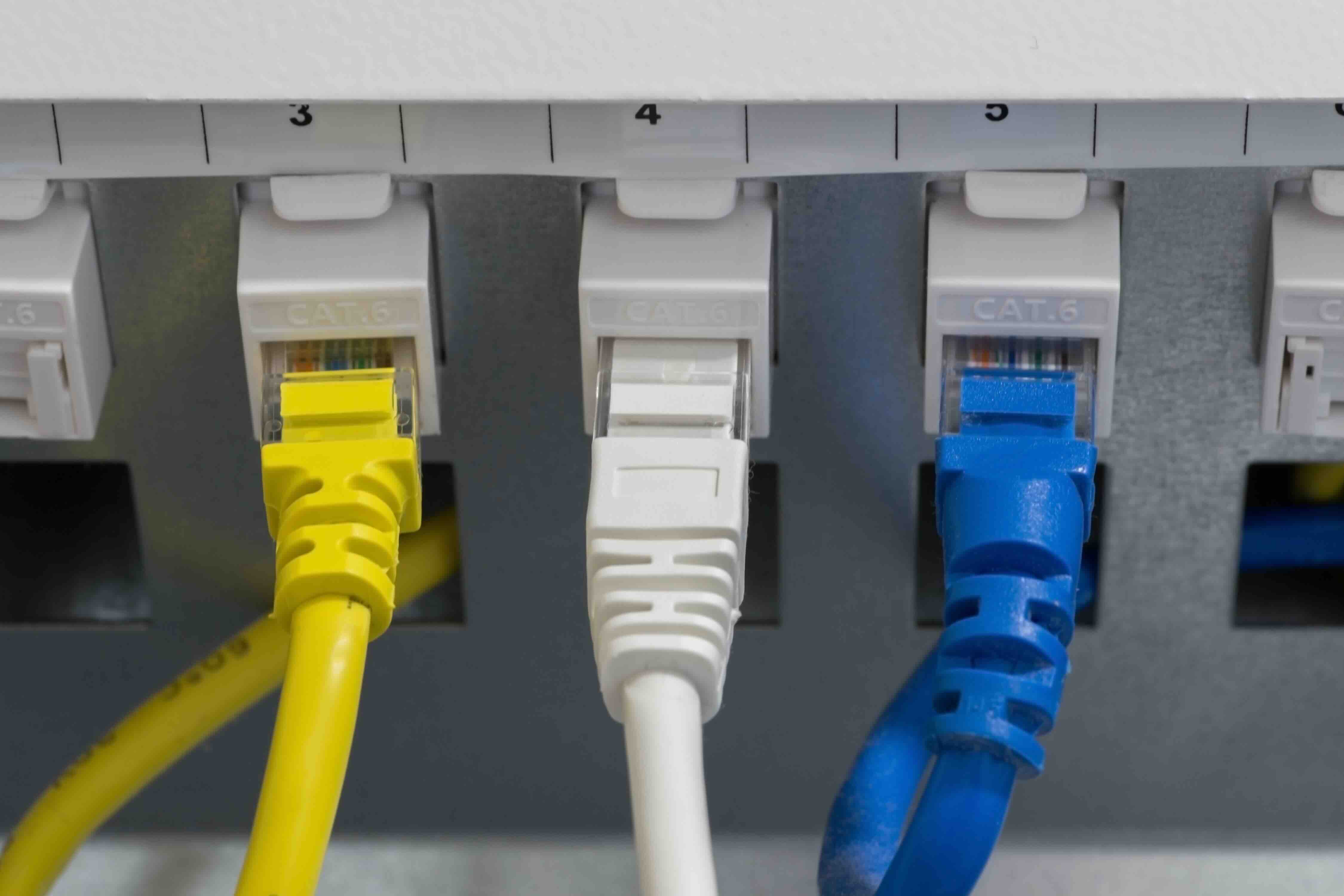
What Is Cat6 Ethernet Cable and Why Does It Still Matter in 2025?
So you're setting up a new network, or maybe you're just tired of your Wi-Fi cutting out at the worst possible moment, and someone tells you to run some Cat6. And you kind of nod along but then later wonder, okay, what actually is Cat6 and why does everyone keep recommending it? Fair question. Cat6, or Category 6, is a standardized twisted pair cable used for Ethernet networking. It's designed to support gigabit speeds and beyond, with a maximum bandwidth of 250 MHz. It's been around long enough to be proven, but it's still relevant enough to be the go-to choice for most installations happening right now. That says a lot.
How Cat6 Ethernet Cable Actually Works
Cat6 cable contains four pairs of copper wires, twisted together in a very deliberate pattern. The twisting is the key part. It reduces something called crosstalk, which is basically interference between the wire pairs that degrades signal quality. Compared to its predecessor Cat5e, Cat6 has tighter twists and often includes a longitudinal separator, sometimes called a spline, that physically divides the pairs inside the cable jacket. This keeps the signal cleaner over longer runs. The cable communicates data using electrical signals, and your connected devices translate those signals into usable network traffic. It's not complicated once you see it that way. The hardware handles the complexity; you just need to make sure the cable quality is solid from the start.
Cat6 vs Cat5e vs Cat6A: Understanding the Key Differences
This is where a lot of people get stuck. There are a few versions floating around and the naming conventions don't exactly help. Here's a straightforward breakdown of where each one fits:
- Cat5e supports up to 1 Gbps speeds and 100 MHz bandwidth, suitable for basic home and office networking
- Cat6 supports up to 10 Gbps at shorter distances (up to 55 meters) and 1 Gbps at full 100-meter runs, with 250 MHz bandwidth
- Cat6A, the augmented version, supports 10 Gbps at a full 100-meter run and operates at 500 MHz bandwidth
- Cat6A cables are thicker, heavier, and more expensive, but offer better shielding and performance headroom for demanding environments
For most home users, small businesses, and general commercial applications, standard Cat6 hits the sweet spot. You get meaningful performance gains over Cat5e without the added bulk and cost of Cat6A. If you're wiring a data center or a high-density office environment where 10 Gbps across full cable runs is a real requirement, then Cat6A becomes worth the investment. But don't overbuy if you don't need to.
Shielded vs Unshielded Cat6: Which One Do You Need?
Cat6 comes in two primary configurations: UTP, which stands for unshielded twisted pair, and STP or FTP, meaning shielded twisted pair or foiled twisted pair. UTP is the standard for most residential and light commercial setups. It's easier to terminate, more flexible, and costs less. Shielded Cat6 adds a layer of metallic foil or braided shielding around the wire pairs, which provides additional protection against electromagnetic interference, or EMI. This matters in industrial environments, locations near heavy electrical equipment, or anywhere the cable runs alongside power lines for extended distances. For a home office or a typical SMB installation, UTP Cat6 is more than adequate. For manufacturing floors, hospitals, or environments with significant electrical noise, shielded makes practical sense.
Key Advantages of Running Cat6 Ethernet Cable
There are solid, practical reasons Cat6 continues to dominate structured cabling projects. It's not just habit or legacy; the cable genuinely delivers. Some of the most important benefits include:
- Reliable gigabit performance that supports streaming, video conferencing, VoIP, and cloud applications simultaneously
- Reduced crosstalk and interference compared to older cable categories, resulting in more stable connections
- Backward compatibility with Cat5e and Cat5 infrastructure, meaning you can upgrade incrementally
- Wide availability and competitive pricing make it accessible for both small-scale and large-scale deployments
- Future-friendly design that supports 10 Gbps at shorter distances, giving installations some room to grow
That last point is worth emphasizing. Infrastructure cabling is not something most people want to redo every few years. Running Cat6 now means you're not immediately behind the curve if your network demands grow, which they usually do.
Common Drawbacks and Limitations to Know Before You Buy
No cable standard is perfect for every scenario, and Cat6 has a few honest limitations worth understanding. The 10 Gbps performance is distance-limited, dropping off significantly beyond 55 meters. If your application truly requires 10 Gbps at full 100-meter runs, you'll need Cat6A. Cat6 is also slightly stiffer than Cat5e, which can make tight routing through walls or conduit a little more challenging. Termination requires care; improper connectorization can undo all the performance benefits the cable spec promises. And while Cat6 is widely available, quality varies considerably across manufacturers. Thin copper conductors, inconsistent twist rates, and substandard jacket materials can all compromise real-world performance even when a cable is technically labeled Cat6.
Practical Installation Tips for Getting the Most Out of Cat6
Installation quality matters as much as cable quality. A few things that make a real difference: keep bend radii within spec, which is typically no tighter than four times the cable diameter. Avoid running Cat6 parallel to electrical wiring for extended distances wherever possible, and where crossing is unavoidable, cross at 90-degree angles. Use proper Cat6-rated keystone jacks and patch panels, not Cat5e hardware. Maintain the twist pairs as close to the termination point as possible, untwisting no more than half an inch is the general rule. And label everything. It sounds basic, but a well-labeled infrastructure saves significant troubleshooting time down the road. If you're doing a larger installation, a cable tester is not optional; it's how you verify the job was done right before drywall goes up.
Who Should Be Using Cat6 Ethernet Cable Right Now?
Honestly, a wide range of people. Homeowners upgrading from wireless-only setups for better reliability with smart home devices, gaming systems, or home office equipment. Small and mid-size businesses building out their first structured cabling infrastructure or replacing aging Cat5e runs. IT professionals and network integrators specifying cabling for office buildouts, retail environments, or light industrial spaces. Educational institutions, healthcare facilities, and hospitality businesses that need dependable wired connectivity throughout their spaces. Cat6 is appropriate wherever you need consistent, high-throughput network performance and you want a cable plant that has some longevity built in. It's the practical default for a reason.
Why Monoprice Is the Right Source for Your Cat6 Ethernet Cable Needs
When it comes to sourcing Cat6 cable, quality and value have to coexist, and that's exactly where Monoprice has built its reputation. The cables are manufactured to spec, with proper conductor gauges, accurate twist rates, and durable jacket materials that hold up in real installations, not just in lab conditions. Whether you're pulling a single run for a home office or specifying hundreds of feet for a commercial project, the consistency is there. Monoprice Cat6 cables are available in a range of lengths, colors, and jacket types including both UTP and shielded configurations, so you're not forced into a compromise. For integrators and IT buyers managing project budgets, the pricing is straightforward and honest. No inflated MSRP with phantom discounts. If you're ready to build or upgrade your network infrastructure with reliable, performance-tested cabling, explore the full selection of Cat6 Ethernet cables and structured wiring solutions at Monoprice and see why professionals keep coming back. The value is real, and so is the performance.
Frequently Asked Questions About Cat6 Ethernet Cable
What is the maximum speed of Cat6 Ethernet cable?
Cat6 supports up to 1 Gbps at the full standard distance of 100 meters. It can support 10 Gbps but only at distances up to approximately 55 meters under typical installation conditions.
Is Cat6 backward compatible with older network equipment?
Yes. Cat6 is fully backward compatible with Cat5e and Cat5 equipment. You can use Cat6 cable with older switches, routers, and patch panels without any performance penalties beyond what the older hardware itself supports.
What is the difference between Cat6 and Cat6A?
Cat6A is the augmented version of Cat6. It supports 10 Gbps at the full 100-meter run distance and operates at 500 MHz bandwidth compared to Cat6's 250 MHz. Cat6A cables are thicker and more expensive, and are typically used in demanding commercial or enterprise environments.
Do I need shielded Cat6 cable for my home network?
For most home installations, unshielded Cat6 (UTP) is sufficient. Shielded Cat6 is recommended in environments with significant electromagnetic interference, such as near industrial equipment, HVAC systems, or in commercial settings with dense electrical infrastructure.
How far can Cat6 cable run without a signal booster?
Cat6 supports runs up to 100 meters, or approximately 328 feet, without requiring a signal repeater or switch. Beyond that distance, signal degradation becomes a real factor and an intermediate switch or media converter is recommended.
Can Cat6 cable support Power over Ethernet (PoE)?
Yes. Cat6 supports PoE and PoE+ applications, making it suitable for powering devices like IP cameras, wireless access points, VoIP phones, and smart building equipment over the same cable that carries data.
What gauge wire is used in standard Cat6 cable?
Most Cat6 cables use 23 AWG conductors, which is slightly thicker than the 24 AWG commonly found in Cat5e. The heavier gauge supports better signal integrity and lower resistance over longer cable runs.
How do I know if a Cat6 cable is genuinely rated to spec?
Look for cables that are verified by a recognized third-party testing organization, use solid or stranded 23 AWG copper conductors, and are clearly labeled with the Category 6 designation on the jacket. Purchasing from reputable suppliers reduces the risk of encountering substandard or mislabeled cables.
Is it worth upgrading from Cat5e to Cat6?
For new installations, Cat6 is the better choice given its improved bandwidth, lower crosstalk, and 10 Gbps capability at shorter distances. For existing Cat5e infrastructure that is performing well, an upgrade may not be immediately necessary unless you're experiencing throughput limitations or planning significant network expansion.
What tools do I need to terminate Cat6 cable?
You will need a Cat6-rated crimping tool, RJ45 connectors rated for Cat6, a cable stripper, and ideally a cable tester to verify continuity and performance after termination. For keystone jack terminations, a punch-down tool is also required. Using Cat6-specific components throughout ensures you preserve the cable's rated performance.


