

Cat5e vs. Cat6 Connectors: Are They the Same?
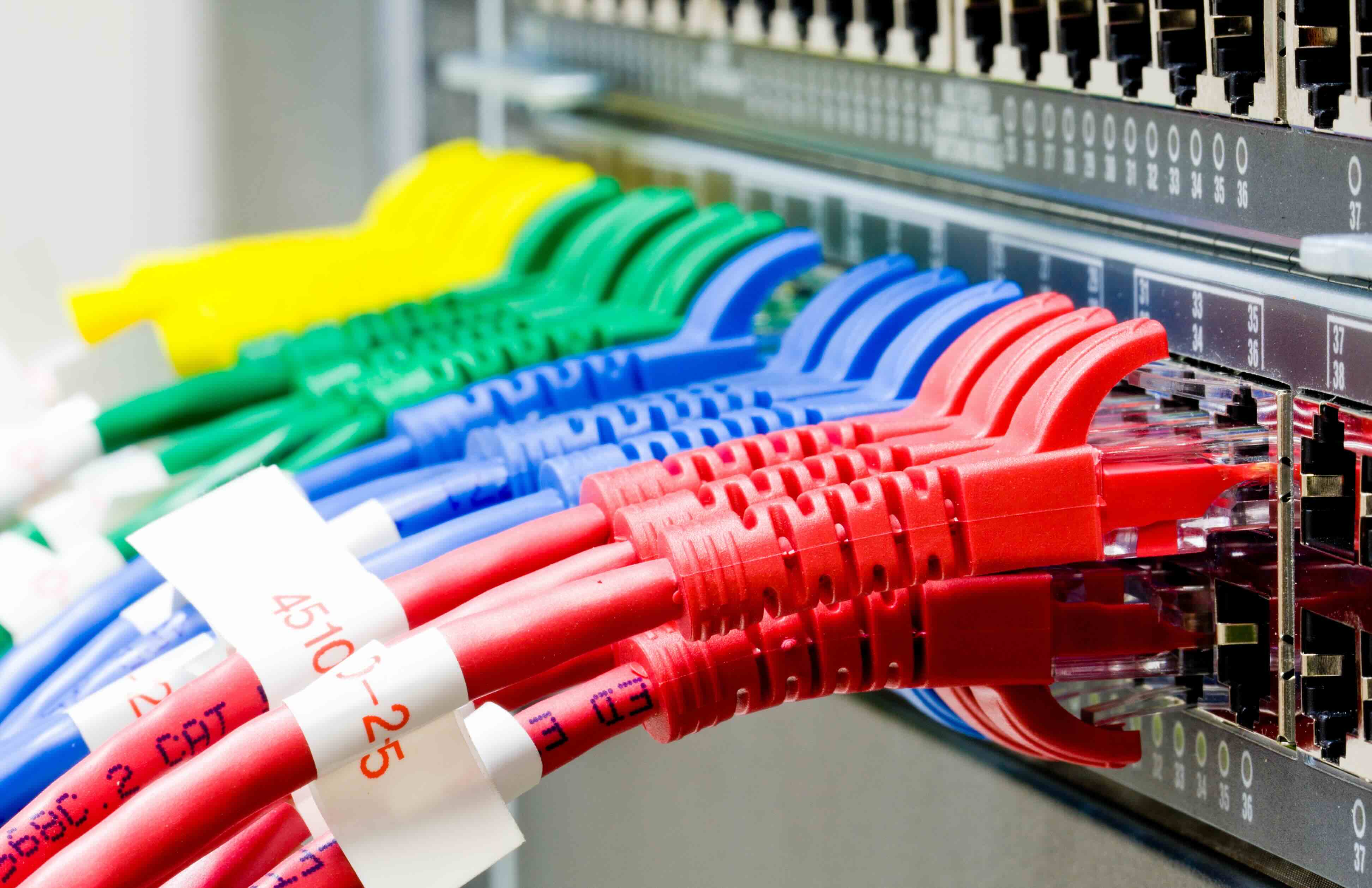
Cat5e vs. Cat6 Connectors: Are They Actually the Same?
If you have ever stood in front of a wall of network cables and connectors wondering whether Cat5e and Cat6 use the same connectors, you are not alone. It is one of those questions that comes up constantly, whether you are setting up a home office, wiring a commercial space, or just trying to patch something together without buying the wrong part. The short answer is mostly yes, but the longer answer matters a lot more when performance and reliability are on the line. Let's dig into what actually separates these two standards, what they share, and how to make a smart decision for your specific setup.
Understanding the Basics: What Are Cat5e and Cat6 Cables?
Cat5e, which stands for Category 5 Enhanced, has been the workhorse of Ethernet networking for well over two decades. It supports speeds up to 1 Gbps at distances up to 100 meters and operates at frequencies up to 100 MHz. It is solid, dependable, and widely available at very approachable price points. Cat6, or Category 6, is essentially the upgrade. It supports the same 1 Gbps at 100 meters but can push 10 Gbps at shorter distances, up to about 55 meters, and operates at frequencies up to 250 MHz. The internal construction is tighter, often including a spline or cross separator to reduce crosstalk between wire pairs. Both cable types are a staple in structured cabling environments, from small home networks to large enterprise deployments.
The Connector Question: RJ45 Is the Common Ground
Here is where the confusion tends to live. Both Cat5e and Cat6 cables terminate using the RJ45 connector, which is the standard 8-position, 8-conductor plug and jack interface used in virtually all Ethernet networking. So at a basic level, yes, they use the same connector form factor. You can physically plug a Cat5e cable terminated with an RJ45 into the same jack that accepts a Cat6 cable, and the connection will work. That physical compatibility is one of the reasons these two cable types coexist so easily in mixed infrastructure environments. However, the connectors themselves are not entirely interchangeable once you start factoring in performance specifications.
Why the Connectors Are Not Exactly the Same
This is a detail that a lot of people skip over, and it can genuinely cost you performance if you are not paying attention. While both cable standards use RJ45 connectors, the connectors themselves are often manufactured to different tolerances. Cat6-rated RJ45 plugs and keystones are built to handle the tighter conductor spacing and thicker wire gauges that Cat6 cables typically use. If you try to terminate a Cat6 cable using a Cat5e-only connector, you may run into fit issues, poor contact, or degraded signal integrity, especially at higher frequencies. The conductor size difference is real. Cat6 cables often use 23 AWG conductors compared to the 24 AWG more common in Cat5e, and that gauge difference means the connector contact channels need to accommodate slightly larger wires. Using the right connector for the right cable category is not optional if you want consistent, reliable performance.
Shielded vs. Unshielded: Another Layer of the Equation
Both Cat5e and Cat6 come in unshielded twisted pair, known as UTP, and shielded twisted pair, known as STP or FTP configurations. Shielded versions require shielded connectors to complete the ground path and actually realize the benefits of shielding. If you terminate a shielded Cat6 cable with an unshielded connector, you break the continuity of the shield and lose the interference protection you paid for. This is especially relevant in industrial environments, data centers, or any deployment near heavy electrical interference. Matching the shielding specification of your cable to your connectors is not a technicality, it is a fundamental requirement for performance.
Key Advantages of Using Category-Matched Connectors
There are real, measurable benefits to matching your connectors to your cable category rather than mixing and matching based on whatever is on hand.
- Consistent signal integrity across the full channel length
- Reduced near-end crosstalk, or NEXT, which becomes more significant at higher frequencies
- Proper fit and mechanical retention that reduces the chance of intermittent connections
- Compliance with TIA-568 structured cabling standards, which matters in commercial and enterprise environments
- Long-term reliability, especially in high-density patch panels and wall plates
Common Mistakes and Drawbacks to Watch Out For
One of the most common mistakes is assuming that because the plug looks the same, the performance will be the same. That logic holds in low-demand home network environments but breaks down when you are pushing 10 Gbps applications, running Power over Ethernet, or operating in environments with significant electromagnetic interference. Another frequent error is mixing Cat6 cable with Cat5e keystones in a wall plate installation. The connection will usually work, but you are bottlenecking the channel at that termination point and technically degrading the channel category from Cat6 to Cat5e for certification purposes. For any installation that needs to pass a Fluke or other cable certification test, this matters enormously. Also worth noting: Cat6A, the augmented version of Cat6, uses even more specialized connectors due to its larger cable diameter and more robust shielding requirements, so the compatibility question becomes even more layered as you move up the performance chain.
Practical Tips for Getting Your Terminations Right
Buying the right connectors does not have to be complicated. Here is a straightforward approach to making sure you are selecting correctly for your installation.
- Always match connector category rating to cable category rating
- Check the conductor gauge of your cable before purchasing plugs, 23 AWG and 24 AWG plugs are not always interchangeable
- For shielded cable, use shielded connectors and verify the ground path is complete end to end
- For patch panels and keystones, look for products that explicitly list both the cable category and the AWG range they support
- Do not assume a cheaper connector from an unknown supplier meets the performance specs printed on the packaging
Which Should You Choose: Cat5e or Cat6 for Your Next Install?
For most residential and small business networking applications, Cat5e is still a capable and cost-effective choice. It handles standard 1 Gbps home networks without issue, and the infrastructure investment is lower. However, if you are doing a structured cabling installation and you want some headroom for future performance upgrades, Cat6 is worth the modest additional cost. The ability to support 10 Gbps at shorter distances, the tighter construction that reduces crosstalk, and the broader frequency headroom all add up to a more future-ready infrastructure. In commercial, enterprise, and high-density deployments, Cat6 or Cat6A is typically the baseline recommendation. The key takeaway is that whichever category you choose, your connectors, patch panels, keystones, and cable all need to speak the same language for the installation to perform at its rated category level.
Why Monoprice Should Be Your Source for Cat5e and Cat6 Networking Solutions
When you are speccing out a networking installation, whether for a single room or an entire building, the quality of every component in the channel matters. Monoprice has built a reputation as a trusted supplier of high-performance networking infrastructure at prices that make sense for both residential installers and large-scale commercial projects. From Cat5e and Cat6 bulk cables to keystones, patch panels, RJ45 connectors, and couplers, every product is built to meet or exceed the category performance standards that matter in real-world deployments. If you are ready to build a reliable, high-performance network without overspending on components, explore the full range of Cat5e and Cat6 Ethernet networking cables and connectors available at Monoprice, where performance and value consistently come standard together.
Frequently Asked Questions About Cat5e and Cat6 Connectors
Are Cat5e and Cat6 connectors the same?
Both Cat5e and Cat6 cables use the RJ45 connector form factor, so they are physically compatible. However, Cat6-rated connectors are manufactured to tighter tolerances and are designed to accommodate the slightly larger 23 AWG conductors common in Cat6 cable. For best performance, use connectors rated to match your cable category.
Can I use a Cat5e connector on a Cat6 cable?
In some cases you can physically terminate a Cat6 cable with a Cat5e connector, but doing so may result in a poor fit, reduced contact reliability, and performance degradation. The channel would technically be rated as Cat5e at that termination point, not Cat6.
Will a Cat6 cable work in a Cat5e jack?
Yes, a Cat6 cable will physically connect to a Cat5e keystone or patch panel jack. However, the channel performance will be limited to Cat5e specifications. If you need Cat6-rated performance throughout, all components in the channel must be Cat6-rated.
What is the difference between Cat5e and Cat6 performance?
Cat5e supports up to 1 Gbps at 100 meters and operates at frequencies up to 100 MHz. Cat6 also supports 1 Gbps at 100 meters but can reach 10 Gbps at distances up to 55 meters and operates at frequencies up to 250 MHz with significantly reduced crosstalk.
Do shielded Cat6 cables require special connectors?
Yes. Shielded Cat6 cables require shielded RJ45 connectors and shielded keystone jacks to maintain the integrity of the shield across the full channel. Using an unshielded connector on a shielded cable breaks the ground path and eliminates the interference protection the shielding provides.
What AWG wire gauge do Cat5e and Cat6 cables typically use?
Cat5e cables commonly use 24 AWG conductors, while Cat6 cables typically use 23 AWG conductors. This difference in gauge affects which connectors will provide a secure and reliable termination, so always check connector specifications for AWG compatibility before purchasing.
Can I mix Cat5e and Cat6 components in the same network?
Yes, they are backward compatible, so mixed installations will function. However, the overall channel performance will default to the lowest-rated component in the link. For a consistent, certified Cat6 installation, all cabling, connectors, patch panels, and keystones must be Cat6-rated.
Is Cat6 worth the upgrade over Cat5e?
For new structured cabling installations, Cat6 is generally the smarter investment. The cost difference is modest, and the additional headroom for higher-speed applications, lower crosstalk, and broader frequency support makes Cat6 more future-ready, particularly for environments planning to deploy 10 Gbps switching infrastructure.
What is Cat6A and is it different from Cat6?
Cat6A, or Augmented Category 6, supports 10 Gbps at the full 100-meter distance and operates at frequencies up to 500 MHz. It uses larger, more heavily shielded cables and requires specialized connectors that accommodate its increased cable diameter. It is not the same as standard Cat6 in terms of connector compatibility.
How do I know which connector to buy for my cable?
Check both the category rating and the AWG conductor size listed on your cable jacket. Then select a connector that explicitly lists support for that category and that AWG range. For shielded cable, confirm the connector includes a shielded housing. When in doubt, purchasing connectors and cable from the same product family ensures compatibility.


