

Cat5e Cable Wiring: Standards, Specs, and Smart Installs
Cat5e Cable Wiring Explained: What It Is, How It Works, and Whether It Is Right for Your Network
If you have spent any time setting up a home network, a small office, or even a larger enterprise infrastructure, you have probably come across the term Cat5e. It shows up constantly in product listings, installation guides, IT documentation -- basically everywhere. And yet, a lot of people are still unclear on what it actually means, how it differs from other cabling types, and whether it is the right call for their specific setup. So let us break this down properly, starting from the basics and working through to the practical stuff that actually matters when you are standing in a server room or wiring a new office build-out.
What Is Cat5e Cable and Where Did It Come From
Cat5e stands for Category 5 Enhanced. It is an improved version of the older Cat5 standard, introduced to address some of the performance limitations that became apparent as network speeds climbed higher. The "enhanced" part is not just marketing -- it refers to specific technical improvements in how the cable is constructed, particularly around crosstalk reduction. Crosstalk is essentially signal bleed between adjacent wire pairs inside the cable, and it was a real problem for Cat5 when Gigabit Ethernet started becoming the baseline expectation. Cat5e tightened the twist ratios on the internal wire pairs and applied stricter manufacturing tolerances to push that interference down to acceptable levels for 1000BASE-T Gigabit operation. The standard is defined under TIA/EIA-568-B, which is the governing spec for commercial building telecommunications cabling in North America. It has been a dominant cabling choice for well over a decade, and honestly, it is still extremely relevant today for a wide range of installations.
How Cat5e Cable Is Wired and What Is Inside
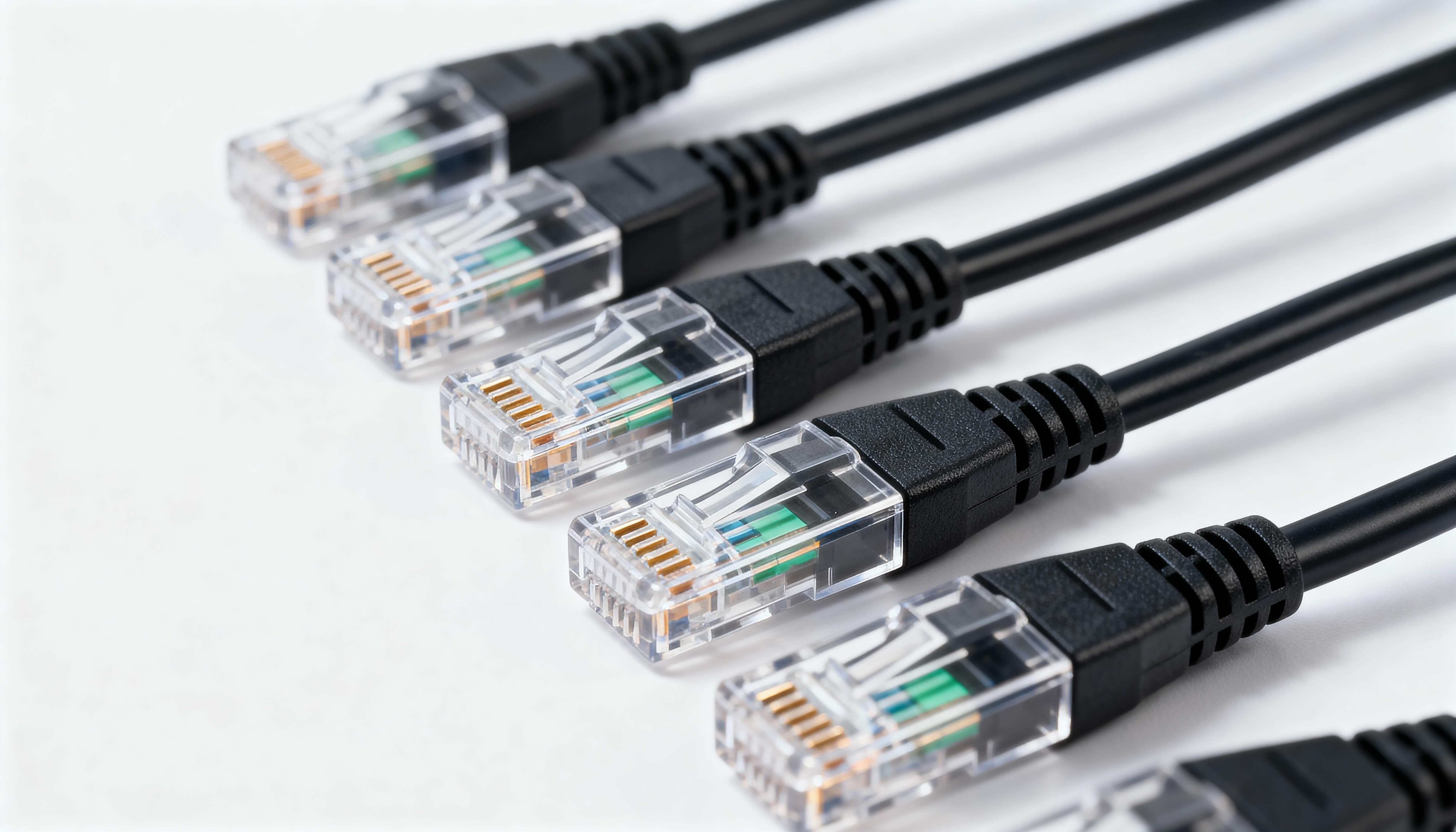
Understanding the physical construction of Cat5e is useful if you are ever terminating your own runs or troubleshooting signal issues. Inside a Cat5e cable, you will find four twisted pairs of 24 AWG copper conductors -- eight individual wires total. Each pair is twisted together at a specific rate, and those twist rates vary between pairs to reduce electromagnetic interference between them. The outer jacket material is typically PVC for standard installations, or a low-smoke zero-halogen compound for plenum-rated applications where the cable runs through air-handling spaces. When it comes to terminating Cat5e, there are two primary wiring standards: T568A and T568B. Both are technically valid, but T568B is the more commonly used configuration in North American commercial installations. The actual pinout arrangement determines how the signal pairs are mapped to the eight-position connector, which is the standard RJ45 modular plug used in virtually all Ethernet deployments. Straight-through cables use the same wiring standard on both ends and connect devices to switches or routers. Crossover cables use T568A on one end and T568B on the other and were historically used to connect like devices directly -- though most modern network equipment handles this automatically through auto-MDI/MDIX detection.
Key Performance Specifications You Should Know
Cat5e supports data transmission speeds up to 1 Gbps at a maximum operating frequency of 100 MHz. The maximum recommended segment length for a structured cabling run is 100 meters, which includes the horizontal cable run plus patch cables on each end. That 100-meter limit is important -- exceeding it introduces signal attenuation and reliability issues that will degrade performance in ways that are sometimes hard to diagnose. Cat5e is rated for use with both 10BASE-T and 100BASE-TX Ethernet as well, so it is backward compatible with older network equipment. Power over Ethernet is also supported, which opens up use cases like IP cameras, VoIP phones, and wireless access points that draw power directly through the cable rather than requiring a separate power supply.
Unshielded vs Shielded Cat5e: Which One Do You Need
Cat5e comes in two primary shielding configurations. Unshielded Twisted Pair, or UTP, is the most common. It relies entirely on the twisted pair construction to manage interference and is perfectly adequate for most office and residential environments. Shielded Twisted Pair, or STP, adds a foil or braided shield around the wire pairs -- sometimes around individual pairs, sometimes around the entire bundle, sometimes both. Shielded Cat5e is used in environments with elevated electromagnetic interference, like manufacturing floors, medical facilities, or anywhere there is significant electrical equipment running nearby. The tradeoff is that shielded cable requires proper grounding at both ends to be effective; if the grounding is incomplete or inconsistent, the shield can actually make interference worse rather than better. For most standard office or home deployments, UTP Cat5e is the right and most cost-effective choice.
Advantages of Cat5e Cable for Modern Networking
There are real, practical reasons why Cat5e has maintained such a long run as a go-to cabling standard. Here is where it genuinely delivers:
- Supports Gigabit Ethernet, which covers the majority of real-world bandwidth demands for endpoints
- Cost-effective compared to Cat6 and Cat6a, making it easier to justify large-scale deployments
- Widely available in bulk spools, patch cable lengths, and pre-terminated assemblies
- Compatible with PoE and PoE+ applications, supporting a broad range of powered devices
- Easy to terminate in the field with standard RJ45 tooling
- Sufficient for most enterprise edge connections, VoIP systems, and access-layer switching
Limitations and Drawbacks Worth Considering
No cabling standard is a universal solution, and Cat5e does have its ceilings. The 1 Gbps speed cap is the most obvious one -- if you are planning infrastructure that needs to support 2.5GBASE-T, 5GBASE-T, or 10GBASE-T at the access layer, Cat5e simply is not the right foundation. Those higher multi-gigabit speeds require Cat6 or Cat6a respectively. Cat5e also has less headroom for alien crosstalk in bundled installations compared to Cat6, which uses a larger diameter and tighter construction to push performance further. If you are running dense cable bundles through conduit, the interference management characteristics of Cat6 become more meaningful. Additionally, while Cat5e technically can support shorter runs of 2.5GBASE-T in some configurations, this is not a standard or guaranteed application -- it is more of an edge case than a deployment strategy.
Cat5e vs Cat6: When the Upgrade Actually Makes Sense
This comes up constantly, and the honest answer depends entirely on your performance requirements and project timeline. If you are wiring a new building or doing a full infrastructure refresh, the incremental cost difference between Cat5e and Cat6 bulk cable is relatively modest at the per-foot level. In that scenario, going Cat6 future-proofs the installation for multi-gigabit access speeds without a significant budget hit. On the other hand, if you are extending an existing Cat5e network, replacing a few runs, or deploying in a cost-sensitive environment where Gigabit is fully sufficient for the foreseeable future, Cat5e is a practical and defensible choice. It is not outdated -- it is appropriate for a large number of real-world use cases right now, today.
Practical Tips for Installing Cat5e Cable Correctly
Installation quality has a direct impact on Cat5e performance, and a lot of problems in the field come down to avoidable mistakes during the physical installation rather than cable quality issues. A few things to keep in mind:
- Do not exceed the 100-meter maximum segment length including patch cables on both ends
- Maintain the twist of each wire pair as close to the termination point as possible -- untwisting more than half an inch introduces crosstalk
- Avoid sharp bends in the cable; the minimum bend radius for Cat5e is typically four times the cable diameter
- Do not over-cinch cable ties or staple guns too tightly, as crushing the cable changes its electrical characteristics
- Keep Cat5e runs away from high-voltage electrical wiring and fluorescent lighting ballasts where possible
- Label both ends of every run during installation -- it saves significant time during troubleshooting later
Why Monoprice Is the Right Source for Your Cat5e Networking Needs
When you are sourcing Cat5e cable for any installation -- whether it is a single home run or a multi-thousand-foot commercial project -- quality consistency and honest value matter more than most people give credit for. Monoprice has built a well-earned reputation as a reliable supplier for exactly this kind of infrastructure purchase. The cables meet the relevant TIA/EIA performance standards, the pricing is straightforward and competitive, and the product range covers everything from individual patch cables to bulk spools in various jacket ratings including plenum. For IT professionals, integrators, and facilities managers who need to spec out reliable, cost-effective cabling without the premium markup of bigger brand names, Cat5e Ethernet cables and structured cabling solutions from Monoprice represent exactly the kind of smart purchasing decision that holds up over time. The performance is there, the price is right, and the availability is consistent -- which is what actually matters when you are mid-project and need to order confidently.
Frequently Asked Questions About Cat5e Cable Wiring
What is the maximum speed supported by Cat5e cable?
Cat5e cable supports a maximum data transmission speed of 1 Gbps (Gigabit Ethernet) at an operating frequency of 100 MHz over a standard segment length of up to 100 meters.
What is the difference between Cat5 and Cat5e?
Cat5e is an enhanced version of Cat5 with stricter manufacturing tolerances and improved twist rates on the internal wire pairs. These improvements reduce crosstalk significantly, making Cat5e capable of supporting Gigabit Ethernet where Cat5 cannot reliably do so.
What wiring standard should I use for Cat5e -- T568A or T568B?
Either standard works, but T568B is the most commonly used configuration in North American commercial installations. The most important rule is consistency -- both ends of a straight-through cable must use the same wiring standard.
Can Cat5e support Power over Ethernet?
Yes. Cat5e cable is compatible with standard PoE (15.4W) and PoE+ (30W) applications, making it suitable for powering IP cameras, VoIP phones, and wireless access points over the network cable.
How far can a Cat5e cable run before signal degradation occurs?
The maximum recommended segment length for Cat5e is 100 meters (approximately 328 feet), which includes both the horizontal run and any patch cables connected at each end. Exceeding this distance introduces attenuation and reliability issues.
Is Cat5e still worth using in new installations?
Cat5e is still a practical choice for new installations where Gigabit Ethernet is sufficient for the foreseeable future, particularly in cost-sensitive environments or for extending existing Cat5e infrastructure. For brand-new structured cabling projects, Cat6 may offer better long-term value given the modest price difference at scale.
Do I need shielded Cat5e cable for my installation?
Shielded Cat5e is recommended for environments with significant electromagnetic interference, such as industrial facilities or areas with dense electrical equipment. For most office and residential deployments, unshielded Cat5e (UTP) is fully adequate and more straightforward to install correctly.
What tools do I need to terminate Cat5e cable?
Basic Cat5e termination requires an RJ45 crimping tool, a cable stripper, RJ45 modular plugs, and a cable tester to verify the completed connection. For keystone jack terminations, a punch-down tool is also required.
Can Cat5e handle 10 Gigabit Ethernet?
No. Cat5e is not rated for 10GBASE-T operation. Reliable 10 Gigabit Ethernet over copper requires Cat6a cabling at a minimum. Some short-distance 2.5GBASE-T operation may be possible with Cat5e, but this is not a standardized or recommended deployment approach.
What is the difference between plenum-rated and non-plenum Cat5e cable?
Plenum-rated Cat5e uses a jacket compound that produces significantly less toxic smoke when exposed to flame and is required by code for cable runs through air-handling spaces such as raised floor plenums or dropped ceiling return-air spaces. Standard PVC-jacketed Cat5e is appropriate for in-wall and conduit runs in non-air-handling spaces.


