

Cat5 Cable Gauge Explained: Why 24 AWG Still Delivers
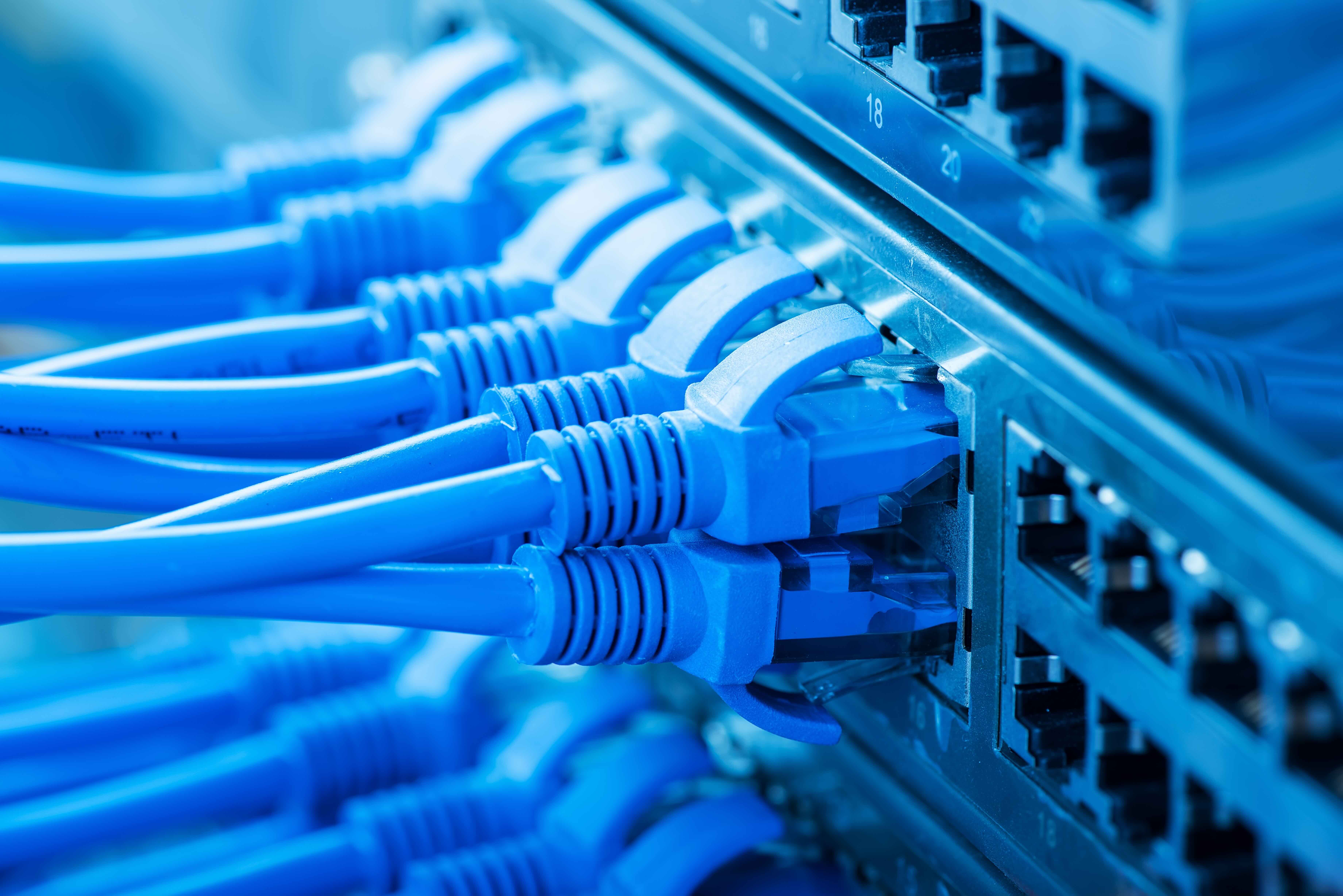
What Is Cat5 Cable Gauge and Why Does It Matter?
If you have spent any time sourcing network cable for a home setup or a professional installation, you have probably seen the term AWG come up more than once. AWG stands for American Wire Gauge, and it is the standard measurement used to describe the thickness of copper conductors inside a cable. For Cat5 and Cat5e cables, the standard gauge is 24 AWG. That number tells you a lot about what the cable can do, how far it can push a signal, and whether it fits your actual use case. Thicker conductors carry lower AWG numbers, so a 24 AWG wire is thinner than an 18 AWG wire. It sounds counterintuitive at first, but once it clicks, the whole spec sheet starts making a lot more sense. This article breaks down what 24 AWG Cat5 cable actually means in practice, where it performs well, and what you should know before running it through your walls or across your office floor.
Understanding AWG: The Basics of Wire Gauge in Ethernet Cables
The American Wire Gauge system dates back well over a century, originally standardized to bring consistency to wire manufacturing. In Ethernet applications, the gauge of the internal conductors directly affects resistance, signal loss over distance, and how much heat the cable generates under load. A 24 AWG conductor has a nominal diameter of approximately 0.511 millimeters. That is the standard for Cat5, Cat5e, and most Cat6 cables you will encounter. Some premium Cat6 and Cat6a cables push down to 23 AWG for reduced resistance and improved high-frequency performance, but 24 AWG is the workhorse of the industry. It balances copper efficiency with cost, flexibility, and compatibility with standard RJ45 terminations. For most installations running standard Ethernet protocols at typical distances, 24 AWG delivers everything needed without overcomplicating the build.
How 24 AWG Cat5 Cable Works Inside Your Network
Inside a Cat5 cable, you will find four twisted pairs of 24 AWG copper conductors. Those twists are not random. Each pair is twisted at a specific rate to reduce electromagnetic interference and crosstalk between pairs. The twisting creates a natural cancellation effect that keeps signal integrity clean even in environments with other cables nearby. When data travels down a 24 AWG conductor, the signal degrades gradually over distance due to resistance and capacitance. That is why the maximum recommended run length for Cat5 is 100 meters or about 328 feet. Within that distance, the cable handles 100 Mbps with ease and supports Gigabit Ethernet under Cat5e specifications. The physics are straightforward. Adequate conductor size, consistent geometry, and quality insulation combine to keep the signal reliable from one end to the other.
Key Advantages of 24 AWG Cat5 Cable
There are real reasons this cable gauge has remained the standard for decades. It is not just tradition. The performance-to-cost ratio is hard to argue with, especially for installations that do not require extreme bandwidth or extended run lengths. Here is what makes it worth understanding:
- Cost efficiency is significant. Copper is priced by weight, and 24 AWG uses less material per foot than thicker gauges, which keeps bulk pricing accessible for large projects.
- Flexibility is a practical advantage. Thinner conductors make the cable easier to route through conduit, around tight corners, and across furniture runs without the stiffness that comes with heavier gauge wire.
- Compatibility is broad. Standard 24 AWG conductors terminate cleanly into RJ45 keystone jacks and plugs without requiring specialized tooling.
- Availability is consistent. This is the most widely stocked Ethernet cable specification in the market, which matters when you need to source quickly.
- Performance within spec is reliable. For standard 10/100 and Gigabit Ethernet applications under 100 meters, 24 AWG Cat5e holds up without compromise.
Common Drawbacks to Keep in Mind
No cable specification is universal, and 24 AWG Cat5 has real limitations that should be part of the decision-making process. The most significant constraint is the 100-meter maximum run. Push beyond that and signal degradation becomes a problem, which means you will need a switch or repeater to extend the network. For applications demanding 10 Gigabit Ethernet, Cat5 is simply not the right tool, regardless of gauge. That bandwidth level requires Cat6a or higher to achieve reliable performance. In environments with heavy electromagnetic interference, like industrial floors or areas dense with electrical conduit, unshielded Cat5 can pick up noise that affects performance. In those cases, shielded cable or a higher-rated category becomes the more appropriate choice. Knowing these limitations upfront saves time, money, and a lot of troubleshooting later.
Cat5 vs Cat5e: Does the Gauge Change?
Here is something that surprises a lot of people: Cat5 and Cat5e both use 24 AWG conductors. The difference between them is not the wire gauge. It is the performance specification around crosstalk and signal return loss. Cat5e was developed to support Gigabit Ethernet more reliably by tightening the manufacturing tolerances on the twisted pairs. The conductors themselves are the same diameter. This means if you are already running 24 AWG Cat5e, you are getting a cable that physically resembles standard Cat5 but is built to a higher electrical spec. For most modern installations, Cat5e at 24 AWG is the practical minimum, since true Cat5 is largely phased out of new deployments. Understanding this distinction helps when auditing existing infrastructure or comparing products on a spec sheet.
Practical Tips for Installing 24 AWG Cat5 Cable
Getting good performance out of any cable starts with proper installation. Even solid 24 AWG Cat5e can underperform if it is pulled too tight, kinked, or terminated sloppily. A few things consistently make a difference in real-world installs:
- Do not exceed the minimum bend radius. Forcing tight bends changes the geometry of the twisted pairs and introduces signal problems that are difficult to diagnose after the fact.
- Avoid running parallel to power cables for extended distances. Even short crossings should happen at a 90-degree angle to minimize interference pickup.
- Maintain pair twist as close to the termination point as possible. Untwisting more than half an inch before terminating degrades crosstalk performance noticeably.
- Test after installation. A basic cable tester confirms continuity and correct wiring, and a more advanced tester can catch return loss or crosstalk issues before the network goes live.
- Label both ends during installation. This is one of those habits that pays off immediately the first time troubleshooting is needed months later.
When to Upgrade Beyond Cat5 and 24 AWG
Cat5 and 24 AWG serve a wide range of applications well, but there are clear indicators that a higher-spec cable is the right call. If you are planning infrastructure to support 10 Gigabit Ethernet to the desktop, Cat6a with 23 AWG conductors is the standard to meet. If the cable run exceeds 100 meters without an intermediate switch, a different topology is needed regardless of cable category. If the environment involves significant RF or electromagnetic interference, shielded cable becomes necessary. For most home networks and standard business office environments running Gigabit Ethernet across reasonable distances, 24 AWG Cat5e remains a completely sound choice. The upgrade conversation is worth having for new builds where future-proofing matters, but for existing installations operating at Cat5e spec, replacement is rarely necessary if the cable is performing as expected.
Why Monoprice Is the Right Source for Your Cat5 Networking Needs
When it comes to sourcing networking cable that actually performs to specification, consistency and value are non-negotiable. Monoprice has built a well-established reputation in the networking and AV space for delivering exactly that. Whether you are wiring a single room or pulling hundreds of feet of cable through a commercial space, the quality of the cable and the reliability of the supplier matter from the first foot to the last. Monoprice Cat5e cables are manufactured to meet TIA-568 performance standards, which means the 24 AWG conductors, pair geometry, and insulation materials are not guesswork. They are engineered to spec. For integrators, IT professionals, and serious home users who want dependable Gigabit performance without paying inflated prices, shop Cat5e and Ethernet networking cables at Monoprice and see how far a smart purchase decision can go. The combination of proven performance, broad product availability, and accessible pricing makes Monoprice a practical choice for anyone who takes their network infrastructure seriously.
Frequently Asked Questions About Cat5 Cable Gauge
What does 24 AWG mean in Cat5 cable?
24 AWG refers to the diameter of the individual copper conductors inside the cable. In the American Wire Gauge system, 24 AWG corresponds to a conductor diameter of approximately 0.511 millimeters. It is the standard conductor size used in Cat5 and Cat5e Ethernet cables.
Is 24 AWG Cat5 cable good enough for Gigabit Ethernet?
Yes. Cat5e cable with 24 AWG conductors fully supports Gigabit Ethernet at distances up to 100 meters. It meets the TIA-568 specification required for 1000BASE-T operation in standard network environments.
What is the maximum run length for 24 AWG Cat5 cable?
The maximum recommended run length is 100 meters, or approximately 328 feet. Beyond that distance, signal attenuation increases to the point where reliable data transmission is no longer guaranteed without a network switch or repeater in between.
Is 23 AWG better than 24 AWG for Cat5?
Cat5 and Cat5e cables are specified at 24 AWG. The 23 AWG conductor size is associated with Cat6 and Cat6a cables, where reduced resistance helps support higher-frequency transmission. For Cat5e applications, 24 AWG is the correct and appropriate specification.
Can I use 24 AWG Cat5e for Power over Ethernet?
Yes, 24 AWG Cat5e supports standard PoE and PoE Plus applications. For high-power PoE installations delivering 60W or more per port, consulting the cable manufacturer's power handling specifications is recommended, as heat buildup in bundled runs can affect performance.
What is the difference between Cat5 and Cat5e if both use 24 AWG?
The difference is in the electrical performance standard, not the conductor size. Cat5e has tighter manufacturing tolerances for crosstalk and return loss, which makes it more reliable for Gigabit Ethernet. Both use 24 AWG conductors, but Cat5e performs at a higher spec under the same physical construction.
Does cable gauge affect flexibility in Cat5 cable?
Yes. A 24 AWG conductor is thinner than larger gauge alternatives, which makes the overall cable more flexible and easier to route through conduit, around corners, and in tight spaces. This is a practical advantage for both residential and commercial installations.
How does wire gauge affect signal loss in Cat5 cable?
Thinner conductors have higher resistance per unit length, which contributes to signal attenuation over distance. At the 24 AWG standard for Cat5, this is engineered to stay within acceptable limits up to the 100-meter maximum run, ensuring reliable signal delivery within that range.
Is solid or stranded 24 AWG better for Cat5 installations?
Solid 24 AWG conductors are recommended for permanent in-wall or in-ceiling installations because they offer lower resistance and better long-distance performance. Stranded 24 AWG conductors are better suited for patch cables and short flexible runs where movement and repeated bending are expected.
When should I consider upgrading from Cat5e 24 AWG to a higher category cable?
Consider upgrading when your application requires 10 Gigabit Ethernet speeds, when run lengths exceed 100 meters, or when you are building new infrastructure and want to future-proof for higher bandwidth demands. For those scenarios, Cat6 or Cat6a with 23 AWG conductors is the appropriate next step.


