

Audio Cable Y Splitter: Uses, Types, and Buying Tips
What Is an Audio Cable Y Splitter and Why Does It Matter?
If you have ever needed to send one audio signal to two destinations at the same time, or combine two sources into one input, you have probably encountered the audio cable Y splitter. It is one of those deceptively simple tools that shows up constantly in home studios, live sound rigs, consumer electronics setups, and professional AV installations. And yet a lot of people are not entirely sure how it works, when to use it, or what the actual difference is between a Y splitter and a Y combiner. So let us sort that out clearly, because the distinction matters more than most people realize.
How an Audio Y Cable Actually Works
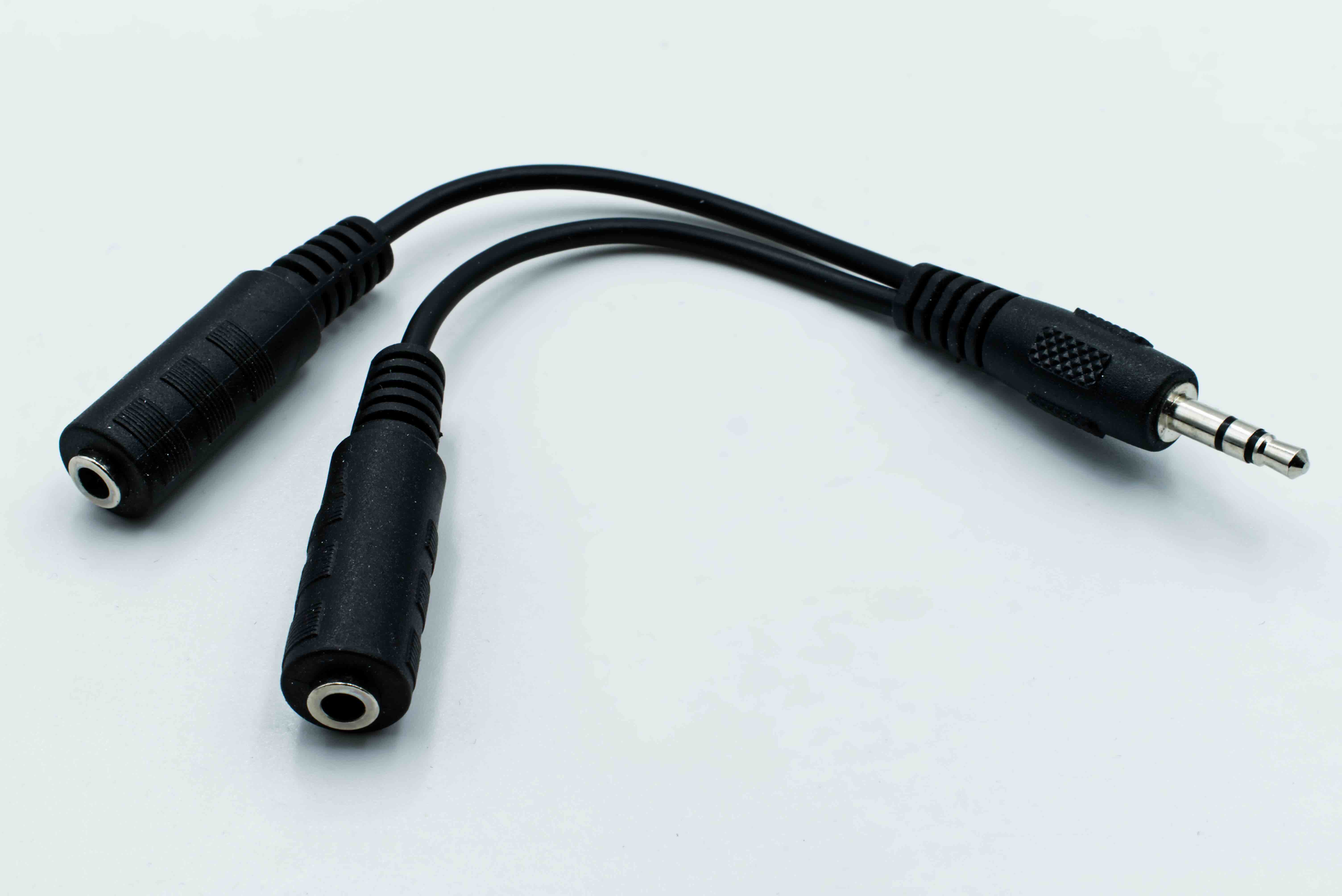
An audio Y cable is a single cable that splits into two branches, or joins two branches into one. The shape is basically what the name suggests. One connector on one end, two connectors on the other. Electrically speaking, the signal paths are connected in parallel. That means both output legs share the same signal from the single source. When used as a splitter, one input feeds two outputs simultaneously. When used as a combiner, two sources are merged into a single input. The connector types vary quite a bit depending on the application. You will commonly see 3.5mm stereo to dual 3.5mm mono, RCA to dual RCA, dual RCA to 3.5mm stereo, and TRS or XLR configurations in more professional contexts. Each has a different use case, and matching the right format to your setup is where people sometimes go wrong.
Splitting vs. Combining: Understanding the Two Directions
This is probably the most important distinction to understand before purchasing or using a Y cable. Splitting and combining are not always interchangeable, even if the physical cable looks identical in both configurations. When you split, you are taking a single audio output and sending it to two inputs simultaneously. This works reasonably well in consumer setups, like sending your phone audio to both a speaker and a recording device. Combining is the trickier direction. Merging two outputs into one input can cause impedance mismatches, signal degradation, and in some cases, actual damage to the source devices. This is where passive Y cables have real limitations compared to active mixers or dedicated summing devices. For low-stakes home use, combining often works fine. In professional environments, a mixer or a proper summing amplifier is almost always the better answer.
Common Types of Audio Y Cables and Their Connector Formats
Not all Y cables are the same, and knowing the common formats helps narrow down exactly what you need for a given situation. Here is a quick overview of the most widely used types:
- 3.5mm stereo to dual 3.5mm mono -- used to split a stereo headphone signal into two separate mono channels
- Dual RCA to single 3.5mm stereo -- common for connecting consumer electronics to stereo receivers
- Single RCA to dual RCA -- often used in subwoofer or car audio applications
- 3.5mm stereo to dual RCA -- bridges modern mobile devices to older AV equipment
- XLR Y cables -- used in professional stage and studio applications for balanced signal splitting
Each of these serves a genuinely different purpose. The 3.5mm stereo to dual mono format is particularly interesting because it is actually performing a channel separation function, not just a signal duplication. Understanding what your connectors are doing electrically, not just physically, is what separates a clean setup from a noisy one.
Key Advantages of Using an Audio Y Cable
There are several legitimate reasons to reach for a Y cable rather than a more complex solution. First, cost. A good quality Y cable is inexpensive and eliminates the need for a powered splitter or mixer in situations where signal quality is not critically sensitive. Second, simplicity. There is nothing to configure, power, or troubleshoot. It is a passive solution that works immediately. Third, space and portability. In a touring setup, a home recording space with limited room, or a travel kit, a Y cable takes up almost no space and adds almost no weight. For the right scenario, it really is the most practical option available. The key is knowing what the right scenario actually is.
Common Drawbacks and When to Avoid a Y Cable
Y cables do have real limitations that matter depending on how demanding the application is. When splitting a signal passively, the impedance load on the source increases because both output legs are drawing from it simultaneously. This can cause a drop in signal level, increased noise floor, or subtle degradation in audio quality, particularly in longer cable runs or high-gain signal chains. In professional studio recording, broadcast environments, or live sound reinforcement, these compromises are often unacceptable. Active DI boxes, signal distribution amplifiers, or dedicated audio splitters with buffered outputs are significantly better options in those contexts. Similarly, using a Y cable to combine two outputs from separate devices runs a real risk of creating ground loops, signal interference, or loading issues. The passive approach works, but it has a ceiling.
Practical Tips for Choosing the Right Audio Y Cable
Before buying, run through a few quick questions. First, are you splitting or combining? If combining, consider whether a passive Y cable is truly appropriate for your signal levels and devices. Second, what connector types are on your devices? Match them correctly rather than stacking adapters, which each introduce additional potential for signal loss. Third, how long does the cable need to be? Longer Y cables with thinner conductors can introduce more noise. Look for cables with proper shielding, especially in environments with a lot of electronic interference. Fourth, are you working with balanced or unbalanced signals? Balanced connections using TRS or XLR reject noise far better and should be used whenever available in professional applications. Fifth, what is your budget tolerance for signal quality? For background music playback, a basic cable is fine. For critical listening or recording, quality materials and construction make a measurable difference.
Audio Y Cables in Real-World Setups
Where do Y cables actually show up? More places than most people think. In home studios, they route a single monitor output to both studio monitors and a secondary listening device. In DJ setups, they split the main mix output to both the PA system and a recording interface. In home theater setups, they connect a single subwoofer output to a dual-input powered sub. In conference rooms and presentation spaces, they allow a single laptop audio output to feed both a speaker system and a recording device simultaneously. Even in simple consumer setups, like splitting a phone audio output to two pairs of headphones, a Y cable is the straightforward, cost-effective solution. The format is old, honestly -- but it is not going anywhere because the use cases are persistent.
Why Monoprice Is Worth Considering for Your Audio Cable Needs
When it comes to sourcing audio cables that actually perform without inflating your budget, Monoprice has built a genuine reputation in both consumer and professional markets. The quality of construction at the price point is consistently strong, with proper shielding, reliable connector contacts, and build materials that hold up over time and repeated use. Whether you need a simple 3.5mm Y splitter for a home setup or a more specialized configuration for a studio or AV installation, the catalog covers a wide range of formats and lengths. If you are building out an audio infrastructure and want dependable components from a source that pros and integrators have trusted for years, exploring professional-grade audio cables and Y splitters for home and studio use is a practical starting point. The value proposition is straightforward: high-performance specs, fair pricing, and enough variety to cover almost any signal routing need you are likely to encounter.
Frequently Asked Questions About Audio Y Cables
What is an audio Y cable used for?
An audio Y cable is used to either split one audio signal into two outputs or combine two audio signals into one input. Common uses include sending a single source to two speakers, routing audio to both a speaker and a recorder, or bridging different connector formats between devices.
Does using an audio Y splitter reduce sound quality?
Passive Y splitters can reduce signal level slightly and increase noise in sensitive or long-run setups due to impedance loading on the source device. For casual consumer use the difference is often negligible, but in professional recording or live sound applications, a buffered or active splitter is a better choice.
Can I use a Y cable to combine two audio outputs into one input?
Technically yes, but it carries risks. Combining two active outputs passively can cause ground loops, signal interference, and in some cases damage to source equipment. For reliable combining, a dedicated mixer or summing amplifier is the recommended approach.
What is the difference between a stereo Y cable and a mono Y cable?
A stereo Y cable carries both left and right channels within the same cable run, while a mono Y cable carries a single channel. A common configuration is a stereo 3.5mm plug on one end that splits into two separate mono plugs, effectively separating the left and right channels.
What connector types are most common for audio Y cables?
The most common formats include 3.5mm stereo to dual 3.5mm mono, dual RCA to single 3.5mm stereo, single RCA to dual RCA, and XLR Y configurations for professional balanced audio applications. The right format depends entirely on the devices being connected.
Are balanced Y cables better than unbalanced ones?
Yes, for professional and longer cable runs, balanced Y cables using TRS or XLR connectors provide significantly better noise rejection than unbalanced RCA or 3.5mm configurations. Balanced connections are preferred in studio, broadcast, and live sound environments where signal integrity is critical.
Can I use a Y cable to connect a stereo device to two separate mono inputs?
Yes, this is actually one of the most practical uses for a Y cable. A 3.5mm stereo to dual mono configuration splits the left and right channels from a stereo source into two independent mono signals, which is useful when connecting to mixers, amplifiers, or interfaces with separate mono channel inputs.
How long can an audio Y cable be before signal quality suffers?
For unbalanced consumer cables, signal degradation can become noticeable at runs beyond about 15 to 20 feet, especially in environments with electrical interference. Shorter runs with well-shielded cables perform best. For longer distances, balanced connections or signal distribution amplifiers are recommended.
Is a Y cable the same as a headphone splitter?
Functionally they are similar. A headphone splitter is a specific type of Y cable designed to send a single stereo audio output to two or more pairs of headphones simultaneously. The underlying principle is the same passive signal splitting, though headphone splitters are optimized for that particular use case.
What should I look for when buying an audio Y cable?
Look for proper shielding to minimize interference, quality connector contacts to ensure reliable signal transfer, appropriate cable length for your setup, and the correct connector types for your specific devices. Build quality and conductor thickness also matter for durability and signal integrity over time.


