

3.5mm Audio Jack: What It Is and Why It Still Matters
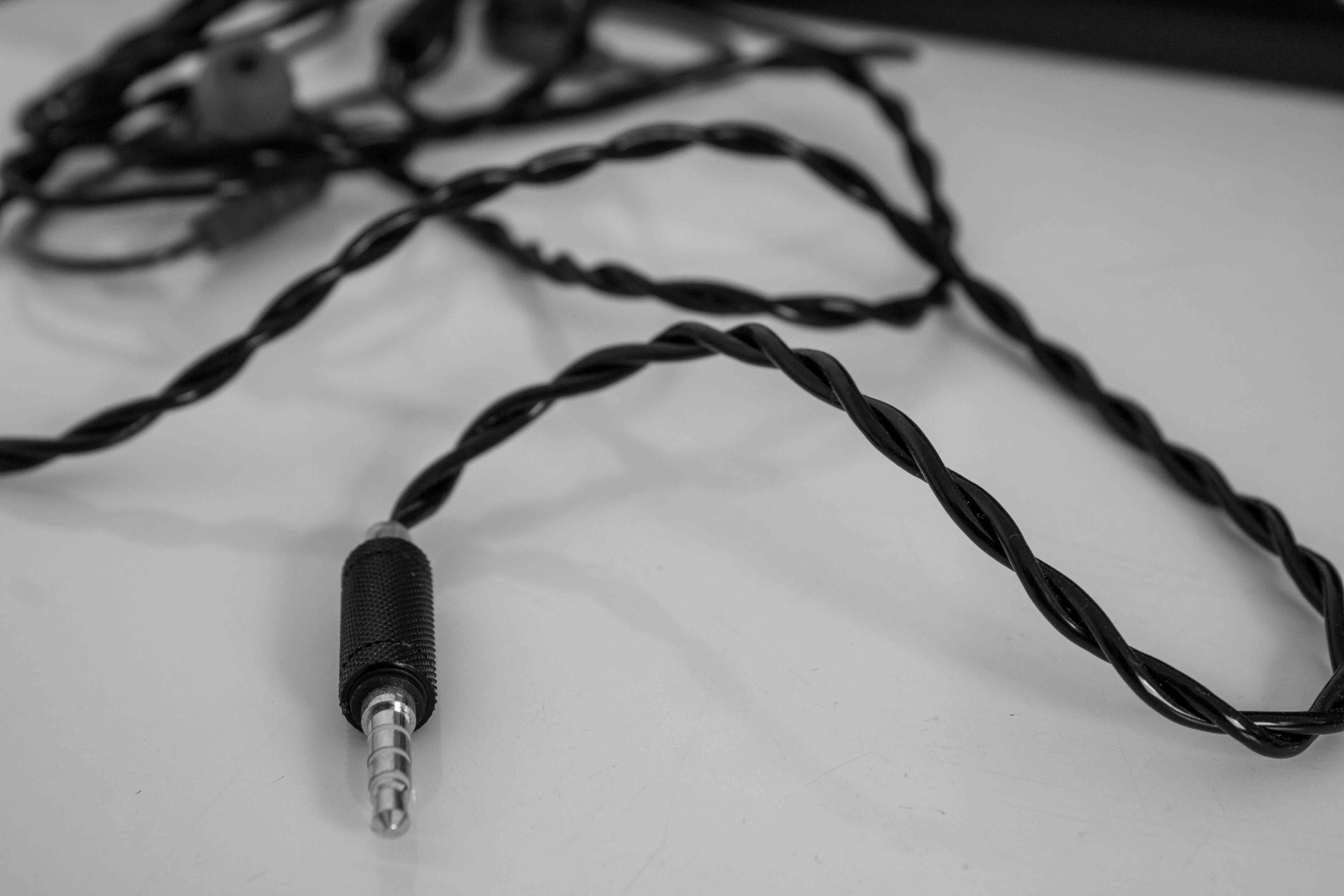
What Is a 3.5mm Audio Jack and Why Does It Still Matter?
So, the 3.5mm audio jack. It's one of those things that's been around forever and yet somehow still sparks debate in tech circles every single year. You've seen it -- that small, round port on your headphones, your laptop, your phone maybe, your car stereo, your gaming headset. It's technically called a 3.5mm TRS or TRRS connector, and despite repeated predictions of its death, it keeps showing up. And for good reason. Understanding what this connector actually is, how it works, and where it still makes sense is genuinely useful whether you're setting up a home studio, wiring a conference room, or just trying to figure out which headphones to buy without getting a migraine.
A Quick History of the 3.5mm Connector
The 3.5mm connector is actually a scaled-down version of the original quarter-inch phone plug, which dates back to the 1870s -- yes, the 1800s. That larger plug was used by telephone switchboard operators. By the mid-20th century, a miniaturized version had emerged for transistor radios and small consumer electronics. The 3.5mm format became the global standard for personal audio by the 1980s and 1990s, and from there it was everywhere. Walkmans, Discmans, iPods, laptops, smartphones. For decades it was just the thing you plugged in without thinking about it. That ubiquity is honestly a big part of why it still matters.
How Does a 3.5mm Connection Actually Work?
At a physical level, the 3.5mm connector transmits analog audio signals. The plug has a tip, a ring or two, and a sleeve -- which is where the acronyms TRS and TRRS come from. Each segment carries a specific signal. On a standard stereo TRS connector, the tip carries the left audio channel, the ring carries the right audio channel, and the sleeve is the ground. Add a second ring and you have TRRS, which introduces a microphone channel -- that's what makes it work for headsets with built-in mics. The signal itself is analog, meaning it's a continuous electrical waveform rather than a stream of digital data. That distinction matters, actually. Analog transmission through a well-built cable can be remarkably clean and low-latency when the components are quality-made.
Types of 3.5mm Connectors You Should Know
Not all 3.5mm plugs are the same, and confusing them can cause real problems -- like getting no audio, distorted output, or a mic that doesn't work. Here are the main variants you'll encounter:
- TS (Tip, Sleeve) -- mono audio, often used for instruments or basic applications
- TRS (Tip, Ring, Sleeve) -- stereo audio or balanced mono signal, standard for headphones
- TRRS (Tip, Ring, Ring, Sleeve) -- stereo audio plus microphone, used for smartphone headsets
- TRRRS -- four rings, less common, used in some advanced multifunction headsets
It's worth noting that TRRS connectors can follow different wiring standards. CTIA and OMTP are the two most common, and they're not cross-compatible for mic functionality. Most modern Android and Apple devices use CTIA, but older or region-specific hardware sometimes uses OMTP. If your mic isn't working or sounds wrong, this is a likely culprit.
Key Advantages of the 3.5mm Jack
There are real, practical reasons the 3.5mm jack has survived this long. It's not just nostalgia. The connector is passive -- it requires no power, no drivers, no pairing, no charging. You plug it in, it works. That simplicity translates to reliability. In professional and commercial AV environments, reliability is everything. Beyond that, the 3.5mm standard is universally supported across virtually every category of audio device imaginable. Latency is effectively zero compared to Bluetooth alternatives, which matters enormously in gaming, live monitoring, and broadcast scenarios. And from a cost perspective, 3.5mm cables and adapters are among the most affordable connectivity solutions available, making them a smart choice for installations that require multiple audio runs without ballooning the budget.
Common Drawbacks and Limitations to Consider
That said, the 3.5mm connector has real limitations, and pretending otherwise doesn't help anyone make good decisions. First, it's an analog signal path, which means it's susceptible to interference -- radio frequency noise, ground loops, and poor shielding can all introduce audible hum or hiss. Second, the physical connector itself is a mechanical weak point. The plug and jack experience wear over time, and a damaged port on a laptop or phone is an annoying and sometimes costly fix. Third, the 3.5mm standard doesn't support high-resolution digital audio natively -- you're limited by the quality of the digital-to-analog conversion happening upstream in your device. For audiophile-grade applications or high-channel-count professional audio, you'll need to look beyond 3.5mm. And of course, the industry's trend toward USB-C and wireless has resulted in many newer devices simply not including the port at all, which creates its own friction.
Where 3.5mm Audio Is Still the Right Call
Here's where it gets practical. The 3.5mm jack is absolutely the right solution in a number of real-world scenarios -- gaming headsets where latency is a dealbreaker, classroom and conference room audio setups where simplicity and reliability trump features, field recording and broadcast environments where passive connectivity reduces the failure-point count, personal audio use where users don't want to manage battery life on their headphones, and any installation environment where cost-per-connection matters at scale. For integrators running audio in commercial environments, the ability to deploy 3.5mm connections across dozens of endpoints without worrying about pairing issues, charging schedules, or driver conflicts is genuinely valuable. Wireless is great until it isn't. Wired analog is consistent.
3.5mm vs. USB-C Audio vs. Bluetooth: Quick Comparison
The transition away from 3.5mm has pushed many users toward USB-C audio or Bluetooth, and both have their place. USB-C audio moves the digital-to-analog conversion into the cable or headphones themselves, which can actually improve audio quality but introduces dependency on active components. Bluetooth eliminates the cable entirely, offering mobility, but introduces compression, latency, and battery management. The 3.5mm jack sits in a specific lane -- passive, reliable, universally compatible, low-cost, and zero-latency. It's not always the best option, but in the right context it's unmatched. The honest answer is that most users benefit from having access to all three, depending on the task at hand. Choosing one format as a definitive winner ignores the reality of how diverse audio use cases actually are.
Why Monoprice Is the Right Source for 3.5mm Audio Cables and Accessories
When it comes to sourcing 3.5mm cables, adapters, and audio accessories, the quality of the connector and cable construction makes a measurable difference in signal integrity, durability, and overall performance -- and that's where Monoprice consistently delivers. Monoprice offers a wide selection of 3.5mm audio cables and connectors for professional and personal audio setups built with the kind of attention to shielding, contact plating, and strain relief that separates a cable that lasts from one that fails at the worst possible moment. Whether you need a straightforward stereo aux cable, a right-angle TRRS headset cable, or a splitter for dual-output applications, the product lineup is comprehensive and the pricing reflects a commitment to delivering real value without compromise. For integrators managing large-scale deployments and for individual users who just want reliable audio connectivity, Monoprice has consistently proven itself as a trusted source that doesn't ask you to choose between performance and affordability.
Frequently Asked Questions About 3.5mm Audio
What does 3.5mm refer to in audio cables?
The 3.5mm measurement refers to the diameter of the connector plug used in audio cables. It is the global standard for consumer and semi-professional analog audio connections, used in headphones, microphones, and a wide range of personal and commercial audio devices.
What is the difference between TRS and TRRS 3.5mm connectors?
A TRS connector has three contact segments and carries stereo audio or balanced mono signal. A TRRS connector has four contact segments and adds a microphone channel, making it suitable for headsets with integrated microphones such as those used with smartphones.
Can I use a 3.5mm to USB-C adapter without losing audio quality?
Yes, in most cases. A quality USB-C to 3.5mm adapter performs the digital-to-analog conversion in the adapter itself. Audio quality depends largely on the DAC quality built into the adapter, but for standard listening purposes the difference is minimal with a well-made adapter.
Why does my microphone not work with a 3.5mm TRRS cable?
This is often caused by a wiring standard mismatch. The two common TRRS standards, CTIA and OMTP, place the microphone and ground connections differently. If your device uses CTIA and your cable or headset uses OMTP, the mic channel will not function correctly.
Is a 3.5mm connection better than Bluetooth for gaming?
For competitive gaming and any scenario where audio latency is critical, a wired 3.5mm connection is generally preferable. Bluetooth introduces processing delay that, while often small, can be noticeable and impactful in fast-paced gaming environments.
What causes hum or static noise in a 3.5mm audio connection?
Noise in analog 3.5mm connections is usually caused by electromagnetic interference, poor cable shielding, ground loops, or low-quality connectors with inadequate contact. Using a shielded cable with quality connectors significantly reduces these issues.
Are all 3.5mm cables the same?
No. Cable construction, shielding quality, connector plating, and strain relief vary significantly between products. These differences directly affect signal quality, durability, and long-term reliability, particularly in professional or high-use environments.
Can a 3.5mm cable carry balanced audio?
A TRS 3.5mm connector can carry a balanced mono signal, which is used in some professional audio and broadcast applications. However, standard stereo consumer use is unbalanced. Balanced 3.5mm is more common in semi-professional gear and field recording equipment.
Is the 3.5mm audio jack being phased out?
Some manufacturers have removed the 3.5mm jack from flagship smartphones, but the connector remains widely present across laptops, desktop computers, gaming peripherals, automotive audio systems, professional audio gear, and a broad range of consumer devices. It is not disappearing from the broader technology landscape.
What should I look for when buying a 3.5mm audio cable?
Focus on shielding quality to reduce interference, connector plating such as gold for improved conductivity and corrosion resistance, strain relief at the connector ends for durability, and the correct connector type for your specific application, whether that is TRS or TRRS.


